Trump’s Gaza peace plan faces a bigger threat than a pre-election clash with Netanyahu - opinion
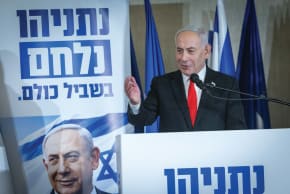
There is an important calculation taking place in Washington about Israel, the Israeli elections, and President Donald Trump’s Gaza peace plan. Trump and the Board of Peace have apparently concluded that a public confrontation with Prime Minister Benjamin Netanyahu before Israelis vote could be counterproductive.
Netanyahu would immediately turn American pressure into an election campaign argument, telling Israelis that only he is strong enough to stand up to everyone – Europe, the Arabs, the international community, and even Trump.
There is logic in not giving Netanyahu that political gift. That calculation also helps explain why Washington is not now forcing full implementation of the Board of Peace’s 15-point Gaza roadmap, agreed on July 30 as the mechanism for implementing Trump’s broader peace plan.
The 15-point plan is extremely important. It provides for a phased process leading to the demilitarization of Hamas and other armed groups under the principle of “One Authority, One Weapon, One Law”; the complete Israeli withdrawal from Gaza in stages; the transfer of civilian authority to the Palestinian National Committee for the Administration of Gaza; the deployment of an International Stabilization Force between Israeli forces and Palestinian-administered areas; new Palestinian police responsible for internal security; and large-scale reconstruction under Palestinian administration.
It also connects these arrangements to a political path toward Palestinian self-determination and statehood.

It is, in other words, not merely another ceasefire agreement. It is supposed to create an alternative both to Hamas rule and to permanent Israeli military control of Gaza.
The American calculation is that the final push to implement the plan should wait until Israelis elect their next government rather than allowing Netanyahu to make resistance to Trump a central issue in his campaign.
That may be politically wise. But there is a dangerous difference between postponing a confrontation with Netanyahu and allowing Netanyahu and his coalition partners to determine the reality that will exist when the election is over.
The most dangerous arena today is the West Bank.
Netanyahu’s political survival increasingly depends on the most extreme forces in his coalition. Their objective goes far beyond keeping Netanyahu in power. They want to destroy the possibility of Palestinian statehood by creating irreversible facts on the ground: expanding Israeli control, accelerating settlement, removing Palestinian communities from vulnerable areas, talking about plans for the ethnic cleansing of the Palestinians, and making territorial separation impossible.
The danger is that the West Bank becomes the place where the next regional fire is ignited. That is why US Ambassador Mike Huckabee’s visit on Saturday to Turmus Aiya was so important. Turmus Aiya has a large Palestinian-American population and has suffered repeated settler attacks. Huckabee, an ambassador strongly identified with support for Israel and the settlement movement, described violent settlers as terrorists and called for them to be prosecuted. That should not be a one-time intervention. It should point toward American policy between now and the Israeli election.
Trump does not need a public confrontation with Netanyahu. He needs to prevent Netanyahu and his extremist partners from creating irreversible facts before Israelis vote.
Trump should warn Netanyahu over the West Bank
The first step should be private and unmistakable red lines. Trump should tell Netanyahu directly that Washington will not accept an Israeli escalation deliberately designed to ignite the West Bank, the forced displacement of Palestinian communities, major steps toward annexation, or organized settler violence intended to provoke a Palestinian response.
These warnings do not need to be delivered at a press conference. In fact, they should not be. Netanyahu cannot campaign against pressure that Trump does not publicly dramatize. But he must know that the red lines are real.
Washington should simultaneously increase its presence on the ground. Huckabee and senior embassy officials should regularly visit Palestinian communities threatened by violence, particularly communities with American citizens.
The political framing should be simple and consistent: Terrorism is terrorism, whether committed by Palestinians or Jews. Allies are expected to enforce the law.
For now, the United States should concentrate consequences on perpetrators rather than on Israel as a country. Individuals who organize or carry out serious attacks should face visa restrictions and financial sanctions. Organizations financing systematic violence should face scrutiny and consequences.
At least until after the elections, the message must not become “Trump is punishing Israel.” It should be: America is acting against terrorists and those who finance them.
At the same time, delaying full implementation of the Gaza roadmap must not mean freezing it. That would be an enormous mistake. Every month in which nothing changes strengthens Hamas, weakens the Palestinian alternative, and convinces Palestinians and Arab governments that promises of new governance and reconstruction are meaningless.
The Board of Peace should therefore use the period before the election to prepare everything that does not require a public showdown with Netanyahu.
The Palestinian technocratic administration should be ready to govern. Palestinian police should be trained and equipped. The International Stabilization Force should be assembled and its deployment plans completed. Arrangements for crossings, humanitarian assistance, utilities, public services, reconstruction financing, weapons decommissioning, and the transfer of administrative authority should all be ready. Israeli withdrawal maps should already exist.
There should not be another six months of committees and negotiations after Israelis vote. The board should have a Day One, Day 30, Day 60, and Day 90 implementation plan ready before election day. Where limited implementation can begin earlier, it should.
The sequence is already inherent in Trump’s plan: Hamas begins to turn over its weapons to the agreed-upon body; Israeli forces withdraw from a defined area; the International Stabilization Force deploys; Palestinian police and civilian administration enter; reconstruction begins.
Trump’s plan specifically allows implementation to proceed in areas transferred from Israeli forces even if Hamas delays elsewhere.
Even one functioning area would demonstrate something enormously important: There is an alternative to permanent Israeli military control and to Hamas rule.
Trump should also create a regional firewall against escalation. Egypt, Jordan, Syria, Lebanon, Saudi Arabia, the UAE, Qatar, and Turkey have different kinds of influence. Until the Israeli election, they should be coordinated around one immediate objective: Nobody lights another fire.
The purpose during this interim period is not to solve the entire Israeli-Palestinian conflict. It is to prevent anyone from destroying the possibility of solving it.
Trump himself should resist the temptation to fight publicly with Netanyahu. No insults. No public ultimatums. No daily argument about Israeli politics. Instead, Trump should keep talking about his objectives: ending wars, defeating terrorism, protecting Israel, preventing regional escalation, rebuilding Gaza, and creating a political future for Palestinians.
Netanyahu would like nothing more than to campaign as the Israeli leader who stood up to Trump. Trump should refuse to play the role Netanyahu has written for him.
The strategic principle is simple: Do not publicly pressure Netanyahu in a way that could help him win the election. But do not allow him to use the period before the election to destroy Trump’s peace plan.
The United States should not choose Israel’s next prime minister. Israelis must do that. But electoral neutrality does not mean strategic passivity. It does not require Washington to tolerate settler terrorism, Palestinian displacement, annexation, or an avoidable explosion in the West Bank.
Trump can postpone the final push until after the Israeli election. What he cannot afford to do is discover, the morning after Israelis vote, that the ground on which his peace plan was supposed to be built no longer exists.
The writer is the Middle East director of the International Communities Organization and the co-head of the Alliance for Two States.
KioskNews shows a cleaned-up reading view extracted from the publisher’s page — the original always lives on their site, not ours.