CDC warns storm raises the risk of some diseases
CHAMPI RISKS REMAIN: People should be careful while cleaning up after flooding, as pathogens might have been flushed onto the ground, a health official said
By Lee I-chia / Staff reporter


Strong wind and heavy rain brought by Typhoon Champi increases the risk of some diseases, so people should take protective actions during cleanup activities, CDC Deputy Director-General and spokesman Lin Min-cheng (林明誠) said yesterday.
Wind and heavy rain can disrupt soil and sediment, stirring up pathogens and causing them to spread into the environment, increasing the risk of contracting diseases such as melioidosis, leptospirosis and tetanus, Lin said.
Melioidosis is an infectious disease caused by Burkholderia pseudomallei, bacteria found in tropical and subtropical soil and surface water, he said.
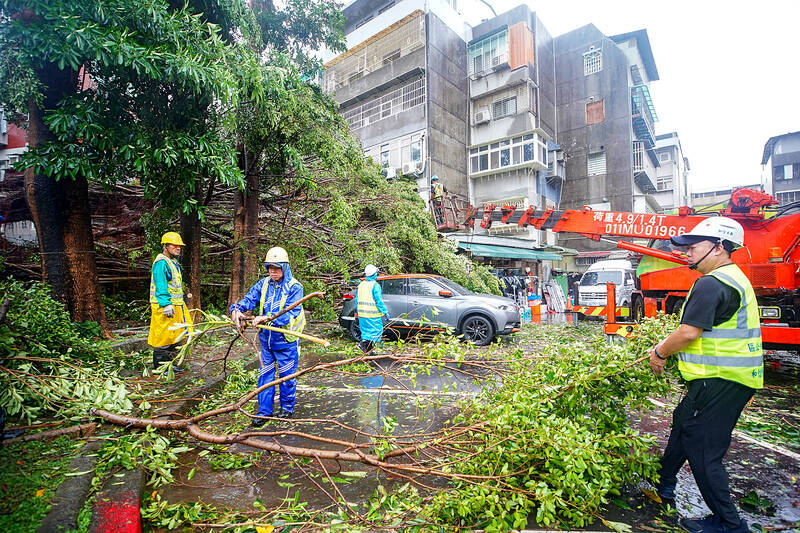
Workers remove debris after Typhoon Champi toppled trees in Taipei yesterday.
Photo: CNA
The bacteria can be transmitted through cuts or abrasions exposed to contaminated soil or water, breathing in dust or water droplets, or consuming contaminated water or food, especially during typhoons or flooding after typhoons, he said.
Leptospirosis is a bacterial infection caused by Leptospira bacteria, which spreads from infected animals to humans through wounds or mucous membranes coming into direct contact with contaminated water, soil or animal urine, as well as consuming contaminated water or food, he said.
Elderly people and people with chronic medical conditions, including diabetes and liver disease, have increased risk of severe melioidosis infection, which can cause pneumonia, sepsis or septic shock, Lin said.
People who frequently come into contact with wastewater, wildlife, aquaculture or livestock, as well as veterinarians and others who work with animals, and people who live or work in areas with severe rodent infestations are the main groups susceptible to leptospirosis, he said.
However, following a typhoon, torrential rain and flooding, the pathogens are easily flushed in large quantities onto the ground and into standing water, so people with open skin wounds who walk through water without proper protection are susceptible to the two diseases, he added.
Standing water after heavy rain is an ideal breeding ground for mosquitoes, increasing the risk of vector-borne infectious diseases such as dengue fever, Lin said, adding that people should also pay close attention to food hygiene after a typhoon to prevent gastrointestinal infections.
The CDC urges people to wear appropriate protective gear when cleaning and restoring their living environment after a typhoon or flooding, thoroughly clean and tidy the surroundings before and after a storm to eliminate mosquito breeding sites, do not consume water or food that has spoiled or been contaminated, and thoroughly clean and disinfect the home environment, he said.
Protective gear includes long waterproof boots, thick waterproof rubber gloves, medical masks, and protective eyewear or face shields, he said, adding that before cleaning up, people who have open wounds should dress and bandage them, and strictly avoid direct contact with contaminated water or mud.
The CDC recommends using bleach for environmental cleaning and disinfection, he said.
Wipe flood-affected surfaces with bleach diluted 1:100 with water, disinfect kitchenware and tableware with boiling water, or a solution of 40ml of bleach and 10 liters of water, then thoroughly rinse them with clean water before use, Lin said.
People should also wash their hands thoroughly with soap to eliminate pathogens, he said, adding that if they experience fever, headache, muscle soreness, diarrhea or jaundice after contact with floodwater, they should see a doctor immediately and inform the doctor about their exposure to floodwater.
KioskNews shows a cleaned-up reading view extracted from the publisher’s page — the original always lives on their site, not ours.