The 8 Greatest '60s Movies Worth Watching Over and Over

Jessica is a young writer from Brisbane, Australia. An avid consumer and lover of all things Film and TV, you will never tear her away from a screen. A tendency rooted from childhood, she once had dreams of becoming a member of the famed kids-band 'Hi-5'. Perhaps that's what pushed her to secure an education with a theater background. But now, as dreams evolved, her passions have turned to admiring performances from afar. Frankly, she's just grateful that she can put her binging skills to good use. Outside of work, Jessica recently completed her undergraduate double degree in Arts/Communications. Other than that, she spends most of her free time with family and friends, probably never forgetting to talk about the new movie or show she watched the day prior.
Sign in to your Collider account
The 1960s were a transformative decade for cinema as they produced films that challenged conventions, redefined genres, and introduced audiences to some of the most memorable characters in movie history. And yet, more than 60 years later, many of these movies remain just as compelling, whether you're revisiting an old favorite or discovering a classic for the very first time.
Of course, not every great film needs a twisted ending or a spectacular set piece to warrant a second viewing. Sometimes, it's just a magnetic performance, a perfectly timed joke, an unforgettable soundtrack, or a story that reveals something new as you get older. So, if you're looking for a little dose of nostalgia—or a film that never loses its magic—these are the '60s classics worth rewatching again and again.
8 'The Graduate' (1967)

Fresh out of college and unsure what to do with his life, Benjamin Braddock (Dustin Hoffman) returns to his home to a future that feels as empty as the swimming pool he spends his days floating in. But things become complicated when he begins an affair with family friend Mrs Robinson (Anne Bancroft)—only to later fall in love with her daughter, Elaine (Katharine Ross).
While The Graduate came out decades ago, it still perfectly captures the peculiar anxiety of being young and completely directionless. Benjamin's awkward silences and half-hearted attempts at rebellion feel just as recognizable today, while the film's dry humor and iconic Simon & Garfunkel soundtrack give it an unmistakable personality. Better still, it's a movie that refuses to deliver a neat and triumphant ending. Just look at that final bus scene. Watch it again, and you'll wonder whether the young couple really escaped the lives they were running from, or simply traded one uncertain future for another.
7 'Mary Poppins' (1964)

When young Jane (Karen Dotrice) and Michael Banks (Matthew Garber) become in need of a new nanny, Mary Poppins (Julie Andrews) arrives with an umbrella, a bottomless carpetbag, and a rather unconventional approach to childcare. Alongside a cheerful chimney sweep, Bert (Dick Van Dyke), the magical nanny takes the children on fantastical adventures, while also partaking in a little mending of their family—particularly with the children's distant, work-obsessed father, George Banks (David Tomlinson).
Few films make childhood feel quite as magical as Mary Poppins, which blends live-action thrills, quirky animation, and musical spectacle with a confidence that's still delightful to watch. Naturally, the songs are practically impossible to shake. And yet, the film's emotional center is what gives all that whimsy staying power. Mary doesn't simply entertain the children, she helps their father recognize what he's been missing all along. It's a charming reminder that growing up doesn't have to mean losing your sense of wonder, and that sometimes the most important thing a parent can do is show up.
6 'To Kill A Mockingbird' (1962)
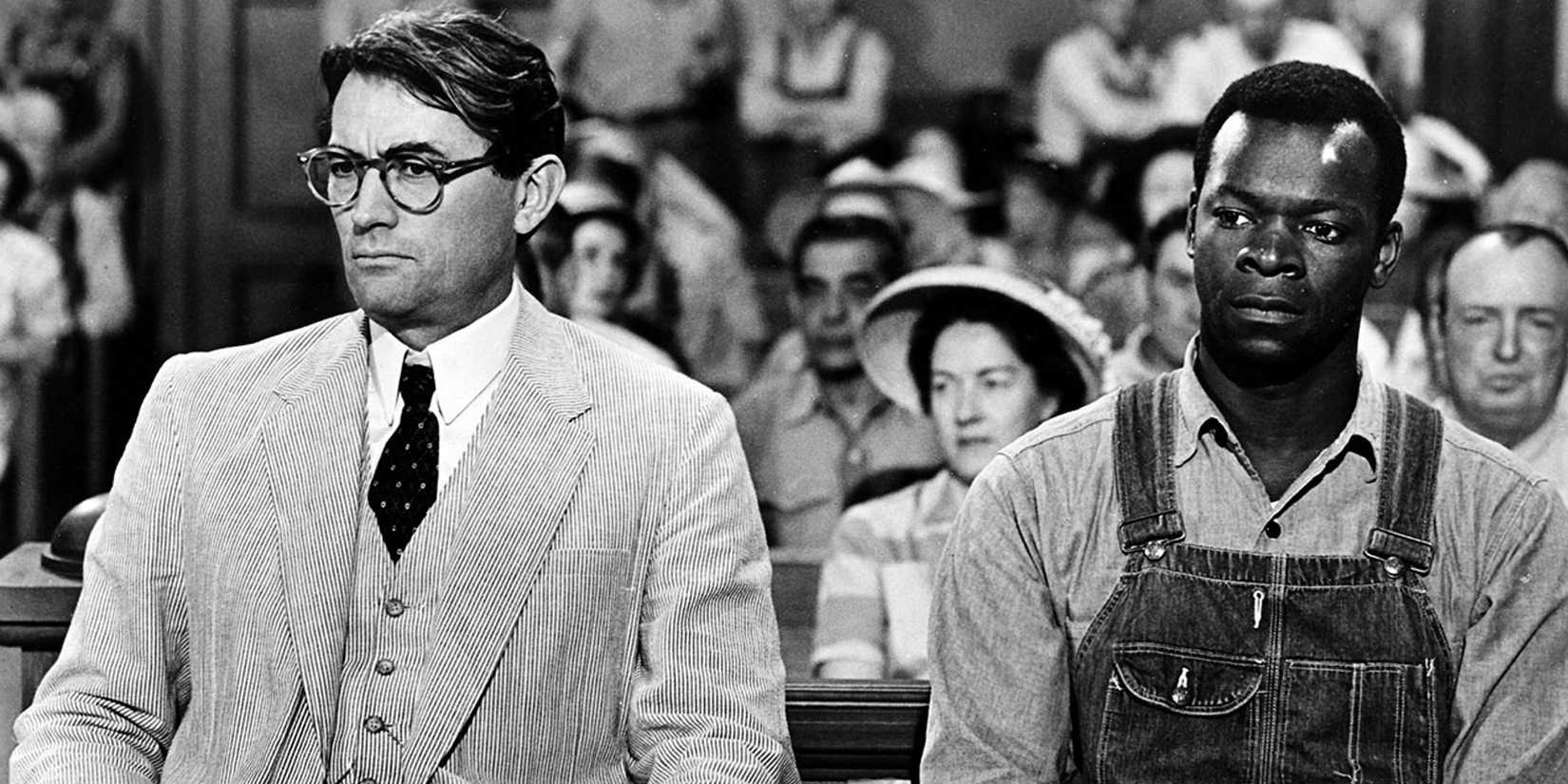
Set in the Depression-era, young siblings Scout (Mary Badham) and Jem Finch (Phillip Alford) navigate childhood in their small Southern Alabama town. Their father, Atticus Finch (Gregory Peck), is a principled lawyer who agrees to defend Tom Robinson (Brock Peters), a Black man falsely accused of assaulting a white woman. And as the trial exposes the community's deep-rooted racism, Scout and Jem begin to understand that the adult world is far less fair than they'd imagined.
What makes To Kill a Mockingbird so enduring is its ability to examine injustice through the eyes of a child—all without diminishing the seriousness of what unfolds. Peck gives Atticus a quiet moral authority that never feels showy, while the Scout's curiosity prevents the film from becoming a simple lecture about right and wrong. Its themes of empathy and prejudice haven't lost their relevance, and revisiting this literary classic often means discovering something new as audiences witness what children are taught about fairness and how the world actually behaves.
5 'The Good, The Bad, The Ugly' (1966)
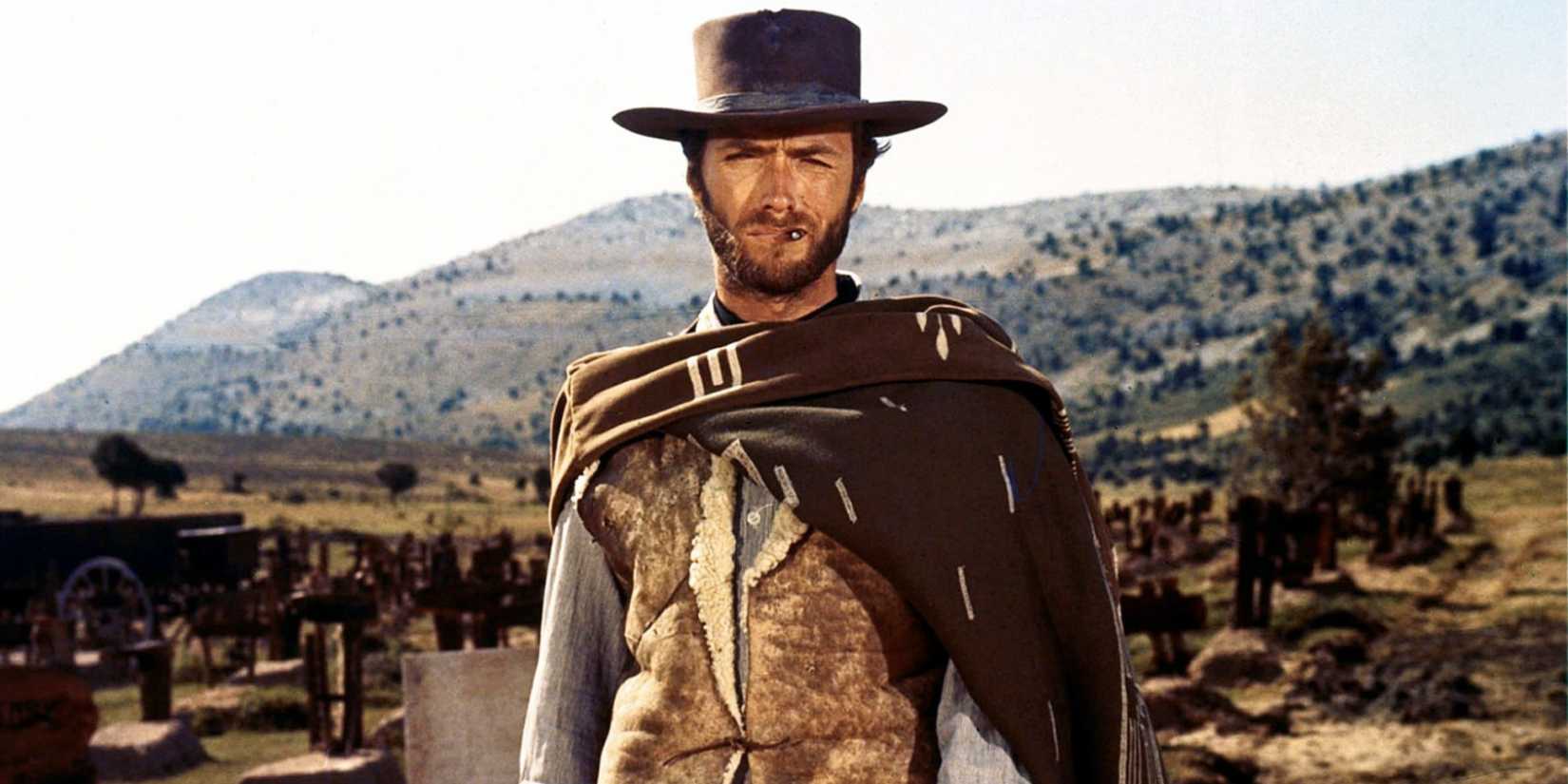
During the American Civil War, three gunslingers find themselves chasing a stash of Confederate gold buried in a cemetery. But their shifting alliances turn the search into a dangerous game of deception, with each man trying to outsmart the others while the brutality of the war rages around them.
Sergio Leone's epic western is a masterclass in building tension, proving that a showdown can be every bit as gripping as a full-blown gunfight. Leone stretches moments of silence, trades rapid action for lingering close-ups, and lets its unmistakable score do as much storytelling as the dialogue. The result is a film that feels almost operatic, with its sheer command of atmosphere making it remarkably easy to get swept up in all over again—even at a nearly three-hour runtime.
4 'Charade' (1963)

Regina "Reggie" Lampert (Audrey Hepburn) returns to Paris to not only discover that her husband has been murdered, but that several dangerous men believe she's sitting on a fortune he stole with them during WWII. With her husband's former associates closing in, Reggie turns to Peter Joshua (Cary Grant), a charming stranger she met on holiday who seems (oddly) determined to help her.
Part romantic (screwball) comedy, part murder mystery, Charade makes a delicious game out of keeping both its heroine and its audience guessing. Hepburn brings a playful, quick-witted energy to Reggie, while Grant is wonderfully slippery as a man who may be a savior, a suspect, or something in between. Their chemistry gives the film its spark, but trust that the shifting identities, sharp dialogue, and bursts of danger keep it from settling into any one genre for too long.
Collider Exclusive · Oscar Best Picture Quiz
Which Oscar Best Picture
Is Your Perfect Movie?
Parasite · Everything Everywhere · Oppenheimer · Birdman · No Country
Five Oscar Best Picture winners. Five completely different visions of what cinema can be — and what it can do to you. One of them is the film that was made for the way your mind works. Ten questions will figure out which one.
🪜Parasite
🌀Everything Everywhere
☢️Oppenheimer
🐦Birdman
🪙No Country for Old Men
01
What kind of film experience do you actually want? The best movies don't just entertain — they leave something behind.
02
Which idea grabs you most in a film? Great films are driven by a central obsession. What's yours?
03
How do you like your story told? Form is content. The way a story is shaped changes what it means.
04
What makes a truly great antagonist? The opposition defines the protagonist. What kind of opposition fascinates you?
05
What do you want from a film's ending? The final note is the one that lingers. What do you want it to sound like?
06
Which setting pulls you in most? Where a film takes place shapes everything — mood, stakes, what's even possible.
07
What cinematic craft impresses you most? Every great film has a signature — a technical or artistic element that makes it unmistakable.
08
What kind of main character do you root for? The protagonist is the lens. Who you choose to follow says something about you.
09
How do you feel about a film that takes its time? Pace is a choice. Some films sprint; others let tension accumulate slowly, deliberately.
10
What do you want to feel walking out of the cinema? The best films leave a mark. What kind of mark do you want?
The Academy Has Decided Your Perfect Film Is…
Your answers have pointed to one Oscar Best Picture winner above all others. This is the film that was made for the way your mind works.
Parasite
You are drawn to films that operate on multiple levels simultaneously — that begin in one genre and quietly, brilliantly migrate into another. Bong Joon-ho's Parasite is a film about class, desire, and the architecture of inequality that manages to be darkly funny, deeply suspenseful, and genuinely shocking across a single extraordinary running time. Your instinct is for cinema that hides its true intentions until the moment it's ready to reveal them. Parasite is exactly that — a film that rewards close attention and punishes assumptions, right up to its devastating final image.
Everything Everywhere All at Once
You want it all — and this film gives you all of it. The Daniels' Everything Everywhere All at Once is one of the most maximalist films ever made: action comedy, multiverse sci-fi, family drama, existential crisis, and a genuinely earned emotional core that sneaks up on you amid the chaos. You are someone who responds to ambition, who doesn't want cinema to choose between being entertaining and being meaningful. This film refuses that choice entirely. It is overwhelming by design, and its overwhelming nature is precisely the point — because the feeling of being crushed by infinite possibility is exactly what it's about.
Oppenheimer
You are drawn to cinema on a grand scale — films that understand history not as a backdrop but as a force, and that place their characters inside that force and watch what happens. Christopher Nolan's Oppenheimer is a film about the terrifying gap between what we can do and what we should do, told with the full weight of one of the most consequential moments in human history behind it. You want your films to feel important without feeling self-important — to earn their ambition through sheer craft and the gravity of their subject. Oppenheimer does exactly that. It is enormous, complicated, and refuses easy comfort.
Birdman
You are drawn to films that foreground their own construction — that make the how of the filmmaking part of the what it's about. Alejandro González Iñárritu's Birdman, shot to appear as a single continuous take, is cinema examining itself through the cracked mirror of a fading actor's ego. You respond to formal daring, to the feeling that a film is doing something that probably shouldn't be possible. Michael Keaton's performance and Emmanuel Lubezki's restless camera create something genuinely unlike anything else — a film that is simultaneously about creativity, relevance, self-destruction, and the impossibility of ever truly knowing if your work means anything at all.
No Country for Old Men
You are drawn to cinema that trusts silence, that refuses to explain itself, and that treats dread as a form of meaning. The Coen Brothers' No Country for Old Men is a film about the arrival of a new kind of evil — implacable, arbitrary, and utterly indifferent to the moral frameworks we use to make sense of the world. It is one of the most formally controlled films ever made, and its controlled restraint is what makes it so terrifying. You want your films to haunt you, not comfort you. You are not interested in resolution if resolution would be dishonest. No Country for Old Men is honest in a way that most cinema never dares to be.
3 'Goldfinger' (1964)

James Bond (Sean Connery) is tasked with investigating Auric Goldfinger (Gert Fröbe), a wealthy businessman whose obsession with gold conceals a much more dangerous scheme that involves a dirty bomb at Fort Knox. And as the stakes rise, 007 must use his trademark charm, ingenuity, and license to kill to stop the man from pulling off a heist with international consequences.
If you want to understand why James Bond became such a timeless pop-culture phenomenon, Goldfinger is essential viewing. For one, the film helped establish so many of the franchise's signature ingredients: extravagant villains, ingenious gadgets, outrageous set pieces, and a theme song that hypes up Bond's arrival before he's even on screen. Better still, Connery is at his most effortlessly charismatic as he balances suave confidence with a sharp sense of humor. Yes, some elements haven't exactly aged gracefully, but its mix of espionage, spectacle, and cheeky excess still makes for a hugely entertaining watch.
2 'The Sound of Music' (1965)

Maria (Julie Andrews) is a spirited young novice who's sent from her convent to serve as governess to the seven children of widowed naval Captain Georg von Trapp (Christopher Plummer). There, she finds a household ruled by military discipline and emotional distance. But through her warmth and sense of adventure, Maria gradually brings light and music back into the family's lives, winning over the children and drawing their father out of his grief.
There are so many reasons why The Sound of Music remains a film people return to for comfort. For one, Andrews gives Maria an infectious sense of joy without making her feel impossibly perfect, while Plummer's initially stern Captain becomes all the more affecting as his reserve gives way to tenderness. Let's also not forget how the songs are an undeniably big draw, especially since it's the emotional progression that makes the music resonate so much. Just look at how music allows the family to reconnect, find courage, and eventually stand together against their frightening political reality.
1 'The Apartment' (1960)

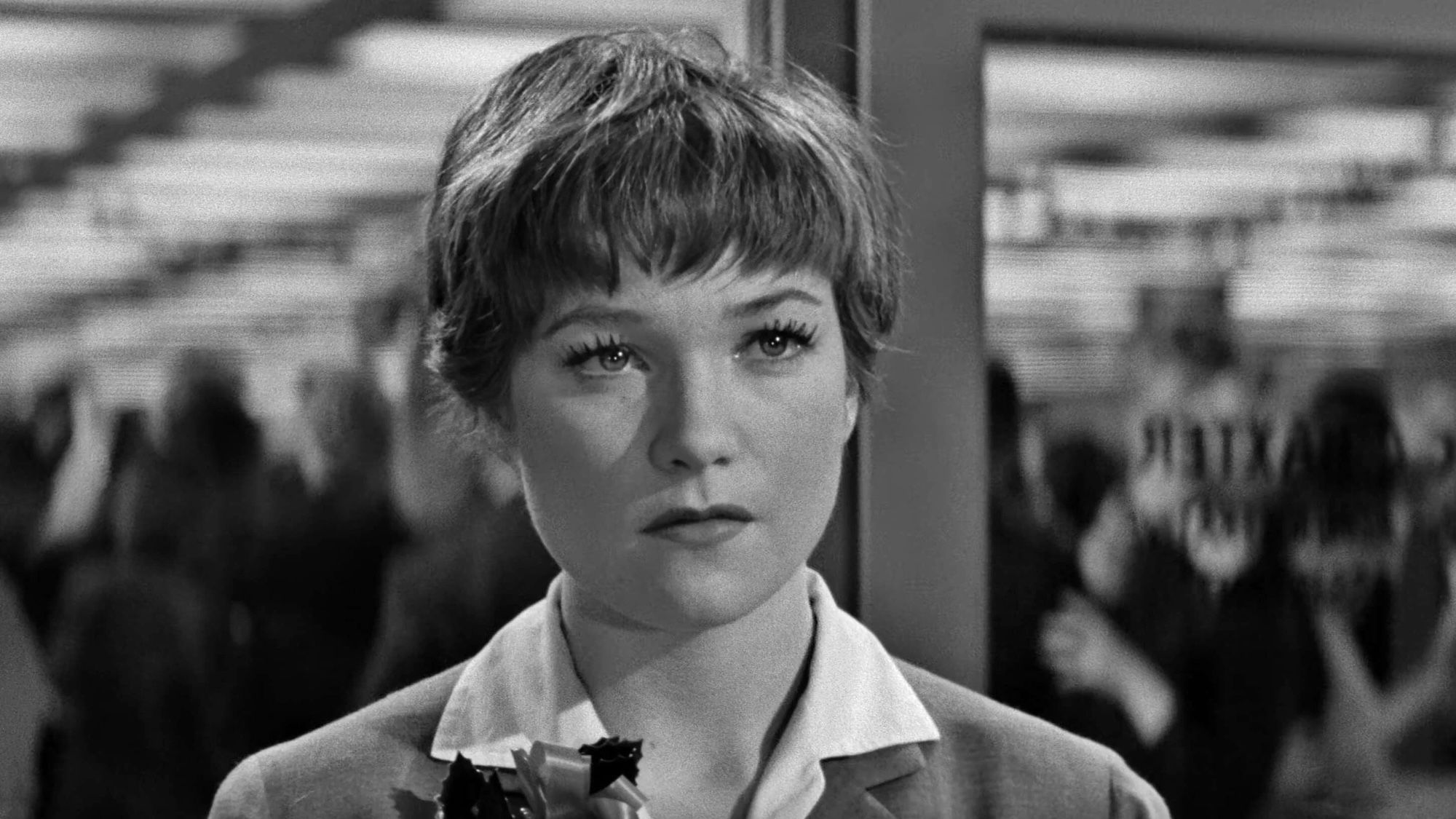
C.C. Baxter (Jack Lemmon) is an ambitious office worker with a rather questionable route to success: he lends his apartment to senior colleagues so they can conduct their extramarital affairs, hoping their gratitude will help him climb the corporate ladder. At first, the arrangement seemed to be paying off. That is, until Baxter falls for Fran Kubelik (Shirley MacLaine), an elevator operator who's secretly involved with his married boss.
Billy Wilder's The Apartment is a brilliant balancing act. On one hand, Lemmon makes Baxter's eagerness to please both funny and quietly heartbreaking, while MacLaine gives Fran a vulnerability that never reduces her to a mere romantic prize. It's what makes the central arrangement so clever. While it sounds like the setup of a farce, Wilder uses it to explore how easily people can be treated as tools and fools. It's a romantic film that proves how romance doesn't magically fix every problem. Instead, it offers something more satisfying: a tale of two imperfect people recognizing their own worth.

The Apartment
- Release Date
- June 21, 1960
- Runtime
- 126 minutes
- Director
- Billy Wilder
- Writers
- Billy Wilder, I.A.L. Diamond
KioskNews shows a cleaned-up reading view extracted from the publisher’s page — the original always lives on their site, not ours.