SC to Congress: ‘Injustice’ to delay antidynasty law
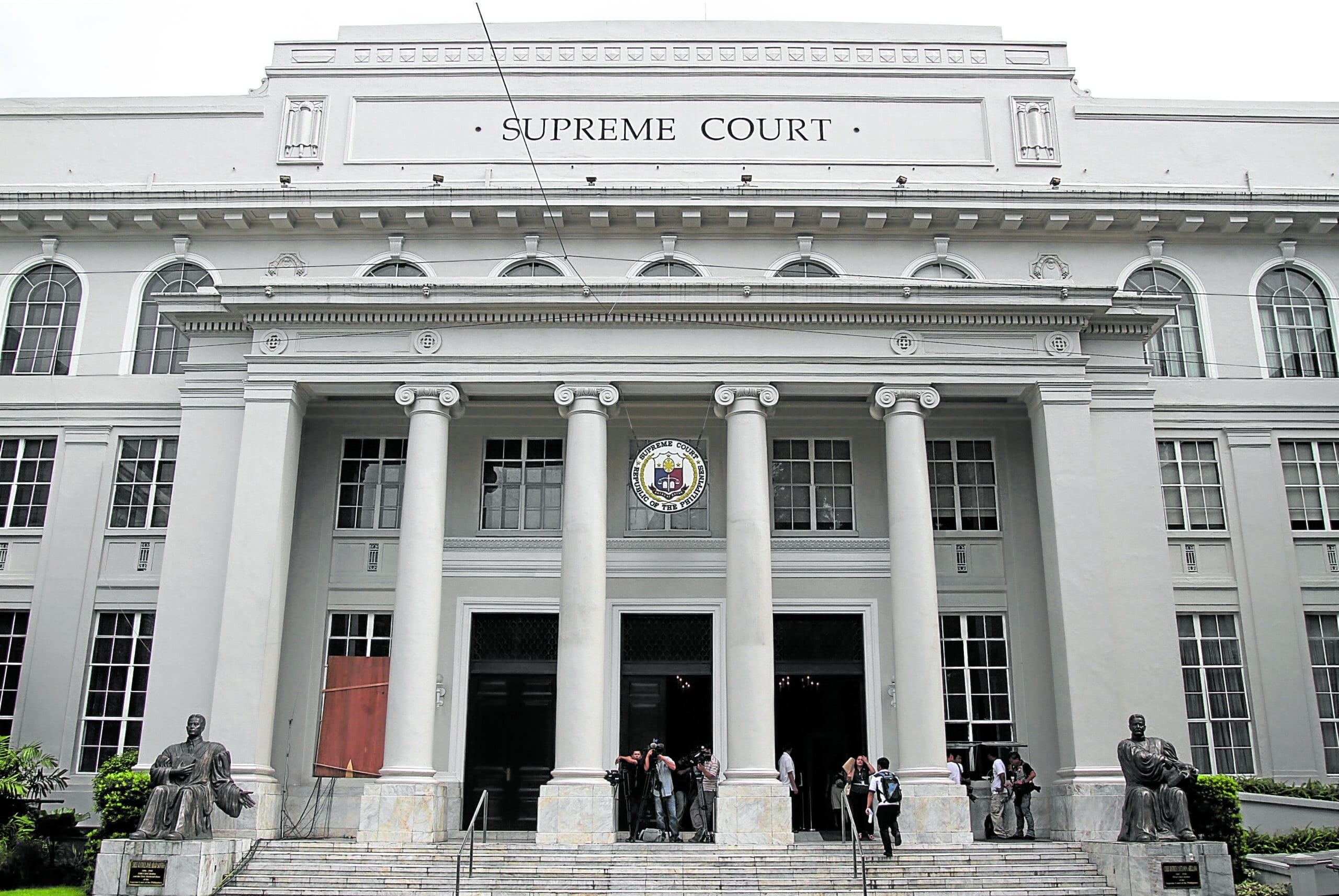

MANILA, Philippines — The Supreme Court has directed Congress to finally ban political dynasties, describing its refusal to perform its constitutional duty for the last 39 years as a “grave abuse of discretion” and “manifest injustice.”
The high court did not set a timeframe for the enactment of a game-changing law in the country’s political landscape. But one of the petitioners said the ruling should prod the Senate and the House of Representatives to craft and pass an antidynasty law before the 2028 national elections.
“This does not allow Congress to postpone its constitutional duty indefinitely. The Court found that 39 years is beyond a reasonable period to carry out the constitutional command,” SC spokesperson Camille Ting said in a press conference on Wednesday.
Article continues after this advertisement
READ: Hontiveros wants anti-dynasty bill tackled despite chairmanship change
FEATURED STORIES
NEWSINFO
NEWSINFO
NEWSINFO
On President Marcos’ directive, the House on June 3 approved on third and final reading an antipolitical dynasty measure, but it was slammed by big business and advocacy groups for seeking to do the opposite—entrench political families. The Senate has yet to pass its counterpart measure.
Past Congresses have tried but failed in their attempts to craft a law defining and prohibiting dynasties, as mandated by the 1987 Constitution. Studies have shown that dynasties contribute to the worsening poverty in some of the poorest areas, as they control the majority of the elective posts.
The multibillion-peso flood control scandal involving senators, congressional representatives, public works officials and private contractors has fueled calls for the urgent passage of such a measure.
Mandatory duty
Marcos, Senate President Sherwin Gatchalian and Speaker Faustino Dy belong to political dynasties and so do many other members of Congress. In the Senate alone sit three pairs of siblings.
Article continues after this advertisement
Ting said the SC en banc unanimously granted the four consolidated petitions for certiorari and mandamus filed by various groups that urged the high court to compel Congress to pass a law that defines and bans political dynasties.
Ting said that the high tribunal cited Article II, Sec. 26 of the 1987 Constitution, which explicitly says that the “State shall guarantee equal access to opportunities for public service and prohibit political dynasties as may be defined by law.”
Article continues after this advertisement
She stressed that the use of the word “shall” in the Constitution means that it “does not give Congress a choice whether to prohibit political dynasties.” Rather, it gives both the Senate and the House authority and affirms their mandatory duty to legislate the issue, she added.
“The Supreme Court noted that political dynasties have remained widespread and have extended even into the party list system. Despite changes in the composition of Congress over the years, no comprehensive antipolitical dynasty law has been enacted, implying either a lack of interest, avoidance for convenience, or service of self-interest,” the spokesperson said.
Blanket ban
Ting noted that while there are existing laws restricting political dynasties, the Constitution requires Congress to impose a blanket ban, and on select sectors, as they “do not fully satisfy the constitutional command.”
Among the laws addressing political dynasties are the Sangguniang Kabataan Reform Act, the Bangsamoro Electoral Code, and the Bangsamoro Local Governance Code.
The high court explained that its grant of the mandamus petition, a judicial remedy sought in compelling a lower court or a government agency or official in performing a specific duty, was appropriate in “highly exceptional case[s]” even as it usually does not order a coequal branch of government.
It cited the “clear showing of grave abuse of discretion and manifest injustice” in the Congress’ “refusal to perform a mandatory constitutional duty.”
“The Constitution gives Congress no discretion on whether to enact a law prohibiting political dynasties. Its discretion is limited to determining what the law should contain. The specific definition, scope, and other provisions of the law remain for Congress to decide,” said Ting.
While the high tribunal pressed Congress to carry out its obligation with “utmost urgency,” it did not set a timeframe for the enactment of the law because there is no such provision in the Charter.
‘Workable law’ before 2028
Lawyer Rico Domingo, one of the petitioners, welcomed the decision and noted that the absence of a deadline may be due to the high court’s regard for the separation of powers between the judiciary and legislature.
Even so, Domingo, a former president of the Philippine Bar Association, told the Inquirer that the “next task is to turn the ruling into an effective legislation” as lawmakers have sufficient time before the 2028 presidential polls.
“Congress has enough time before the 2028 presidential elections to deliberate seriously, enact a workable law and allow orderly implementation—provided it acts now. It should settle the coverage, close avenues for evasion and give the Commission on Elections (Comelec), prospective candidates and voters clear rules well before candidacies are filed,” he said in a Viber message.
“Waiting until the election approaches would manufacture the very time pressure lawmakers could later invoke to justify another postponement,” added Domingo.
Domingo’s co-petitioners were Jorge Cabildo, Ceasar Oracion and Wilfredo Trinidad, who are also lawyers from the University of the Philippines.
Other petitioners were 1Sambayan Coalition, represented by retired SC Associate Justice Antonio Carpio, retired Ombudsman Conchita Carpio Morales, retired military officials, priests, academics; and the Kapatiran Party, chaired by Edilberto Cuenca.
The high court however dismissed for “lack of merit” another case seeking to order the Comelec to issue rules banning political dynasties, filed by Bishop Gerardo Alminaza of San Carlos City, Negros Occidental.
Your subscription could not be saved. Please try again.
Your subscription has been successful.
Ting said the high court ruled that it could not compel the poll body to release implementing rules disqualifying or nullifying the candidacies of certain candidates because there is currently no law defining the prohibition on dynasties. /cb
KioskNews shows a cleaned-up reading view extracted from the publisher’s page — the original always lives on their site, not ours.