Egypt thwarts Israel’s plans to build Suez Canal alternative: Deputy Prime Minister
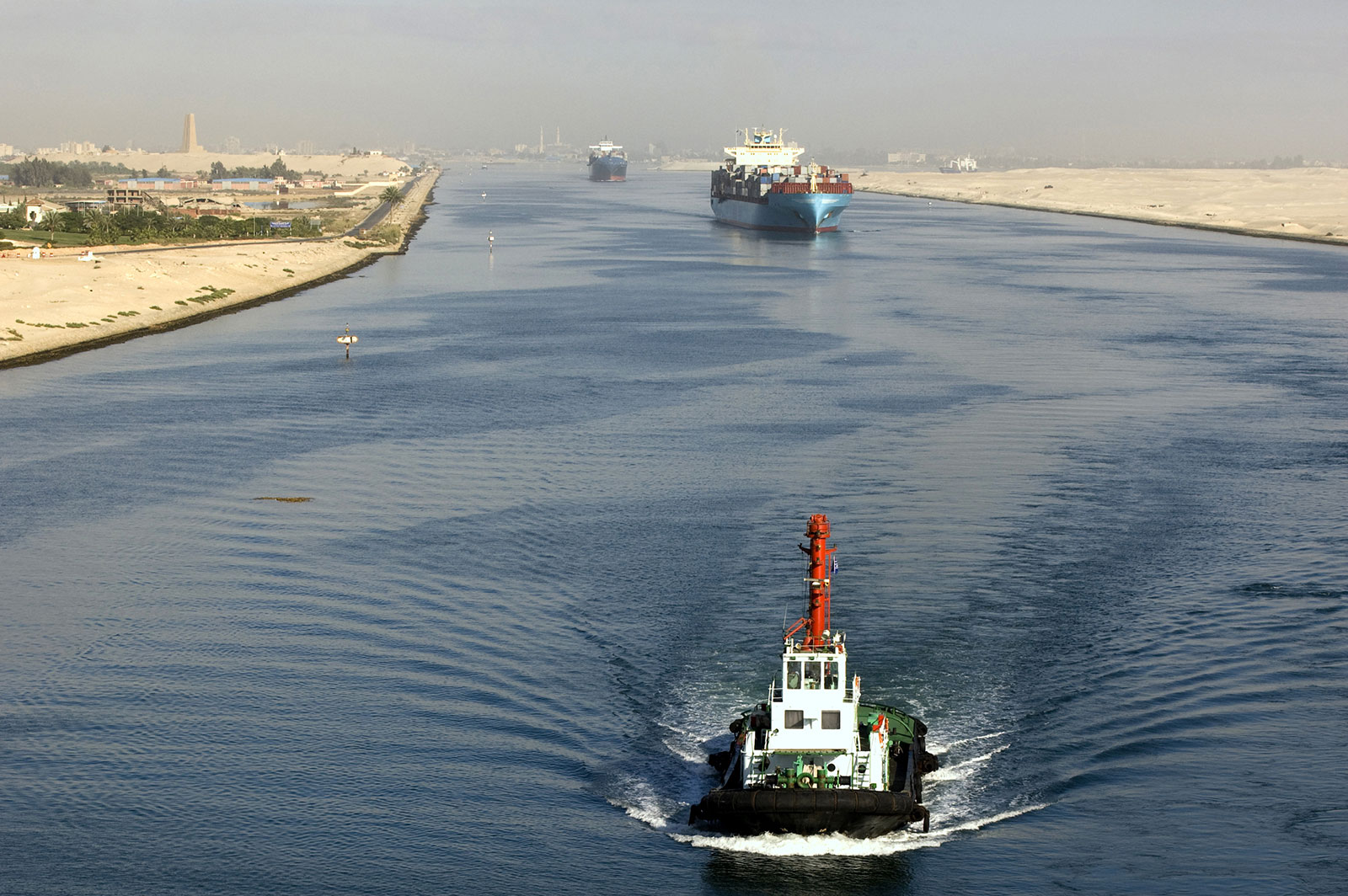
Egypt’s Deputy Prime Minister for Industrial Development and Minister of Industry and Transport, Kamel al-Wazir, commented on reports regarding an Israeli plan to establish an alternative waterway to the Suez Canal—widely referred to as the “Ben Gurion Canal.”
Speaking during an interview on the Kalam Fi al-Siasa (Talks in Politics) program on the Extra News channel, Al-Wazir stated that Egypt actively monitored and countered all potential alternative maritime and land transport routes designed to bypass or weaken the Suez Canal.
Evaluating alternative trade routes
Al-Wazir addressed rumors surrounding alternative projects, including the proposed Ben Gurion Canal connecting the Gulf of Aqaba (Eilat) to the Mediterranean Sea, as well as railway projects linking the Arabian Gulf to Haifa or ports in Israel and Jordan.
He clarified that Egypt has conducted comprehensive technical and economic feasibility studies on every reported proposal.
The analysis determined that none of these alternative projects—whether canals or rail corridors—possess the geographic, operational, or economic capacity to replace or match the efficiency of the Suez Canal.
Strategic upgrades to the Suez Canal corridor
The minister emphasized that Egypt did not rely solely on its geographic advantage, but took proactive measures to solidify the Suez Canal’s dominance in global trade:
- Expanding maritime capacity: The execution of the New Suez Canal project doubled the waterway’s operational capacity, significantly reduced vessel transit times, and accommodated larger modern container ships.
- Integrated logistics network: Egypt developed comprehensive logistical corridors connecting the Red Sea to the Mediterranean via high-speed railways, modern highways, and dry ports.
- Port infrastructure overhaul: Major investments were directed toward upgrading Red Sea and Mediterranean ports (such as Sokhna, East Port Said, Alexandria, and Gargoub) to ensure Egypt remains the primary maritime and logistics hub in the region.
Economic viability and geographic superiority
The Deputy Prime Minister concluded that creating an artificial waterway across complex, mountainous terrain to compete with the Suez Canal is financially unviable and operationally impracticable.
He reiterated that the Suez Canal remains the fastest, safest, and most cost-effective maritime route connecting East and West, and that Egypt’s ongoing infrastructure developments have effectively neutralized competing regional concepts.
KioskNews shows a cleaned-up reading view extracted from the publisher’s page — the original always lives on their site, not ours.