In US-China rivalry, middle powers urged to be ‘indispensable’ chokepoints
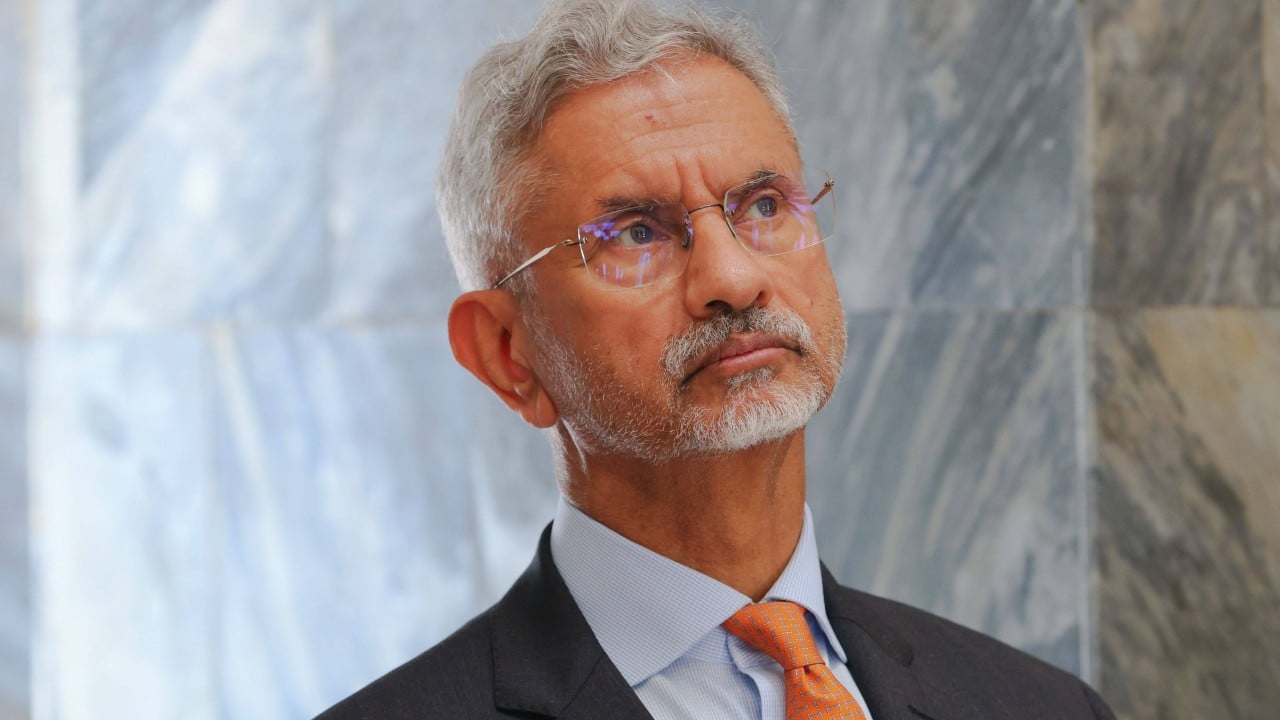
Middle powers are urged to transform themselves into “indispensable” chokepoints to safeguard strategic autonomy and survive the power rivalry between the US and China, former leaders and top diplomats said at a summit in India.
The assessment came as smaller and middle-tier countries seek to protect themselves from mounting geopolitical uncertainties arising from the tariff war launched by US President Donald Trump.
The trade conflict that hit America’s allies and foes alike has grown complicated amid volatility in the global energy market following the US-Israel war on Iran, now in its eighth month with no sign of ending soon.
Changing dynamics between Beijing and Washington also loomed since Trump and Chinese President Xi Jinping met last month in Washington, raising concerns among countries in between that they risk being squeezed out of global decision-making.
Trump rejects working with China on AI despite Xi’s recent visit
“Whilst these middle powers can’t operate at the scale of the big ones, what they can do is make themselves indispensable,” said former British prime minister Rishi Sunak at a panel discussion at the annual Bloomberg New Economy Forum in New Delhi on Wednesday.
Sunak, who stepped down in 2024 after 20 months in office, also cited the examples of non-superpower countries that have embedded themselves deeply into global supply chains to achieve strategic leverage.
Dutch company ASML is the world’s sole producer of EUV photolithography machines, for example, while Germany produces the ultra-precise, atomically smooth optical components, both essential to manufacturing the world’s most advanced computer chips to enable AI development.
Meanwhile, South Korea leads global memory chip manufacturing, and Japan controls the supply of the high-purity chemicals used in silicon wafer fabrication.
“You don’t have to provide the whole buffet,” Sunak said. “You just need the one dish that is the best.”
Supporting the idea of building “strategic stocks” in energy, AI and critical minerals, Canadian Foreign Minister Anita Anand argued that countries should use their advantages constructively.
Anand said the question being put to middle powers was, “Do we want to be passive observers, or are we going to shape the international order?”
Canada is now locked in a bitter trade war with the US following Trump’s threats to impose 50 per cent tariffs on about US$20 billion worth of imports from its northern neighbour.
In a highly publicised address to the World Economic Forum in Davos in January, Canadian Prime Minister Mark Carney called on middle powers to band together to protect themselves from a decline in global order.
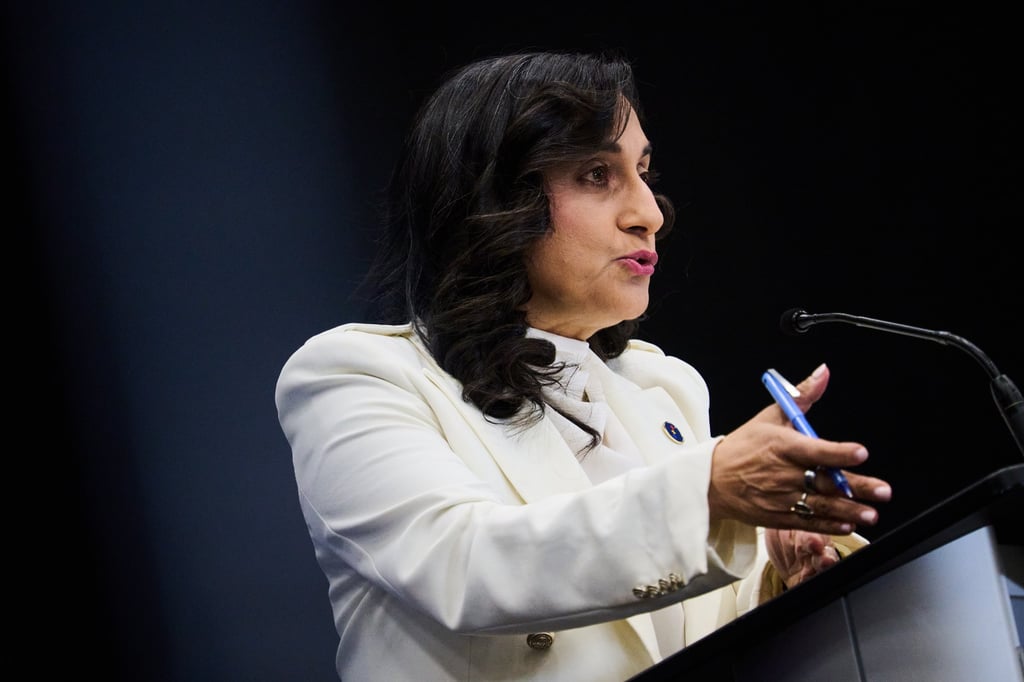
Anand, who is on a two-day visit to India, said Ottawa sought to double its non-US trade over the next decade through bilateral and multilateral trade agreements.
“It’s for us, for Canada. It’s not just about working with middle powers,” she added.
“It’s also about furthering our domestic economic resilience. It’s also about diversifying trade relationships, and so working with middle powers is part of a broader foreign policy package.”
Addressing the forum, Indian Foreign Minister Subrahmanyam Jaishankar described the current shift as an expansion of global leadership.
“What we are now moving towards is a different kind of order,” India’s top diplomat said. “The shareholding is changing. The board of directors is expanding.”
“In our case, we were not members of an alliance, so we’ve always sort of learned to be in the rain without an umbrella,” Jaishankar added, noting India’s long-standing foreign policy of non-alignment.
India should not be called a “middle power”, he continued, saying such labelling would be “limiting itself” and that, in fact, India was the “power in the middle”.
Touching on the Xi-Trump summit in Washington in September, former Australian prime minister Kevin Rudd downplayed fears that the event signalled a new era of superpower co-management.
Rudd, a former Australian ambassador to the US, called the likelihood of a functional “G2” agreement between China and the US “close to zero”, citing the countries’ deep-seated strategic rivalry.
Still, diplomats cautioned that middle powers needed to prioritise building domestic resilience, making it a long-term imperative driven by broader structural shifts in global geopolitics rather than the actions of individual figures like Trump.
“If you look at US foreign policy pre-Trump 2.0, you will notice that under [former US president Joe] Biden as well, there was increased protectionism,” Anand said.
KioskNews shows a cleaned-up reading view extracted from the publisher’s page — the original always lives on their site, not ours.