Who was left in the dark on Trump’s ‘magnificent’ PH-US deal?

Already have Rappler+?
to listen to groundbreaking journalism.
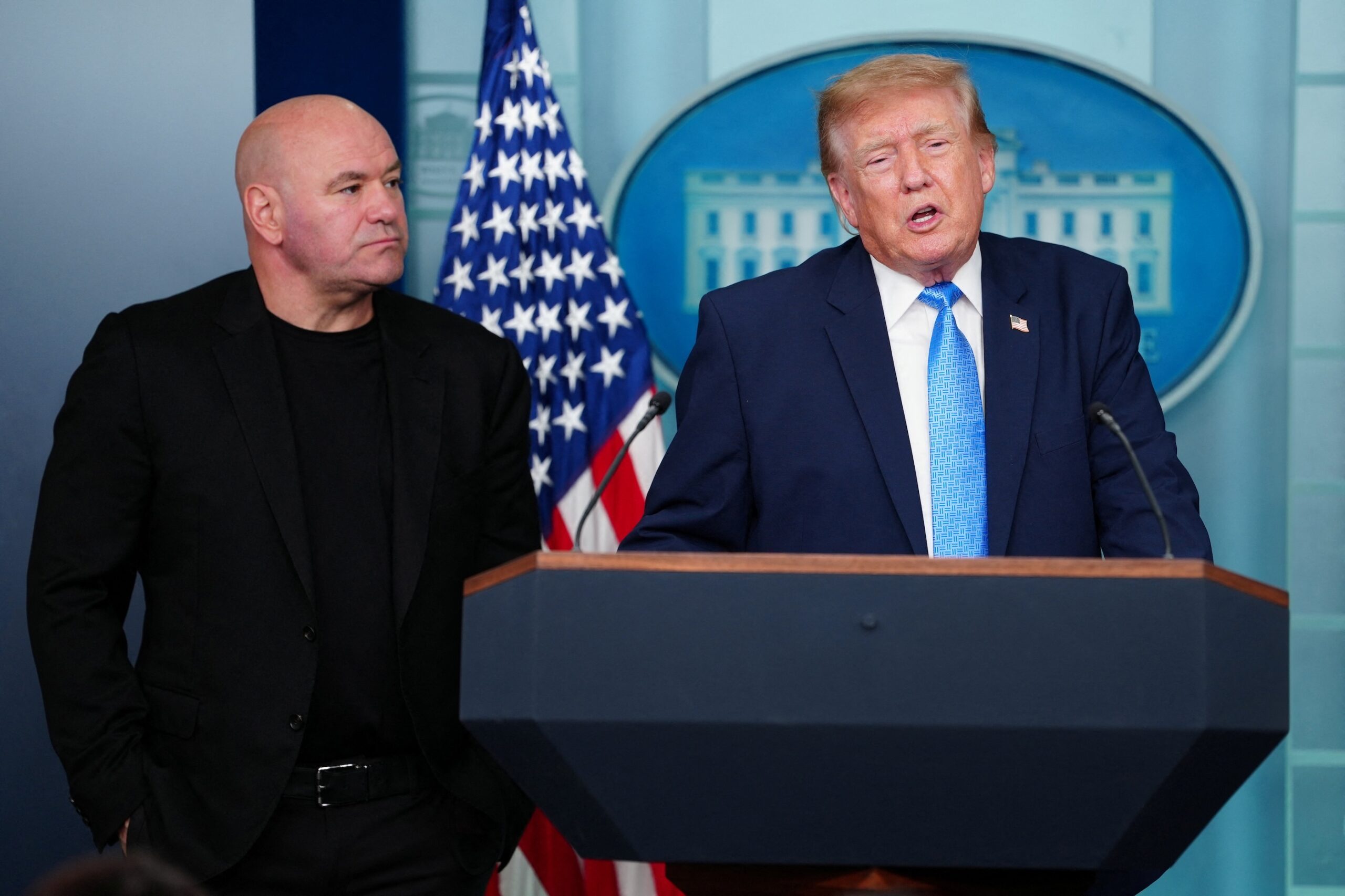
SURPRISE APPEARANCE. UFC CEO Dana White listens as US President Donald Trump speaks in the James S. Brady Press Briefing Room at the White House in Washington, DC, US, November 9, 2026.
Aaron Schwartz/REUTERS
Senator Erwin Tulfo, sponsor of the DFA budget, says the agency was 'taken aback' by Trump's pronouncements
AT A GLANCE
- Senator Imee Marcos questioned the Department of Foreign Affairs (DFA) about US President Trump's claims regarding a trade deal that would have the Philippines sourcing all its energy and agricultural imports from the US.
- The DFA, represented by Senator Erwin Tulfo, indicated they were unaware of Trump's assertions and that the economic aspects were managed by the Department of Trade and Industry and the Department of Agriculture.
This is AI-generated. Read the article for full context. Report any errors.
Was the Department of Foreign Affairs (DFA) left out of the loop on what US President Donald Trump claimed to be the “biggest trade deal” between the Philippines and the United States?
During the plenary debates on the DFA’s proposed P35.2-billion budget on Tuesday, November 24, Senator Imee Marcos sought clarification on Trump’s claim that the Philippines had agreed to source 100% of its energy and agricultural imports from the US, a supposed highlight of his recent state visit to Manila.
Imee also flagged Trump’s “very thinly veiled threat” that there would be “trouble” if the Philippines failed to uphold its end of the bargain.
Senator Erwin Tulfo, sponsor of the DFA budget, referred the questions to the Department of Trade and Industry (DTI) and the Department of Agriculture (DA). Malacañang had tasked these agencies to handle the economic aspects of the agreement, he said, while the DFA continued to monitor developments.
Tulfo also said the Philippines and the US would hold a bilateral meeting in March 2027, where security issues would be in the agenda.
Imee pressed the DFA on the implications of Trump’s warning. “I’m compelled to ask the DFA that trouble is defined how? Certainly, neither the DTI nor the DA is capable of understanding what that threat actually meant,” she said.
Following his Asia trip, Trump claimed the Philippines had accepted his offer to source all its imported agricultural requirements from the US instead of other countries, including Brazil. He also claimed that Manila had agreed to stop relying on the Middle East for its energy supplies.
Responding to Marcos’ questions, Tulfo said the DFA was “taken aback” by Trump’s claims.
“I think there’s an admission on the part of the DFA that they were kept in the dark regarding this announcement and that hereafter the matters have been assigned to others,” Imee said. “It’s really alarming that, in fact, there are no prior consultations with the foreign policy and diplomacy experts in the DFA.”
Senate Majority Leader Juan Miguel “Migz” Zubiri, for his part, cast doubt on Trump’s announcement, describing the supposed commitments as “impossible.”
“We know US President Trump, he probably said that to be able to gain local popularity in the US. I’m sure that’s not what they agreed on because that is impossible. I don’t think the country could get 100% agricultural products from the US, or power as well,” Zubiri said.
Executive Secretary Ralph Recto, in a separate interview, also expressed skepticism over Trump’s claims.
“I doubt very much that, that would happen. What’s important is we are diversifying sources of energy and food,” Recto said.
For now, the administration appears to be tempering Trump’s sweeping claims. But Marcos’ questions raise another concern: If it were true, why was the country’s foreign policy experts not consulted on the supposed commitments, and what did the Philippines exactly agree to? – Rappler.com
KioskNews shows a cleaned-up reading view extracted from the publisher’s page — the original always lives on their site, not ours.