US consumer advocacy group slams Coupang’s ‘weaponization’ of US trade policy against Korean regulation
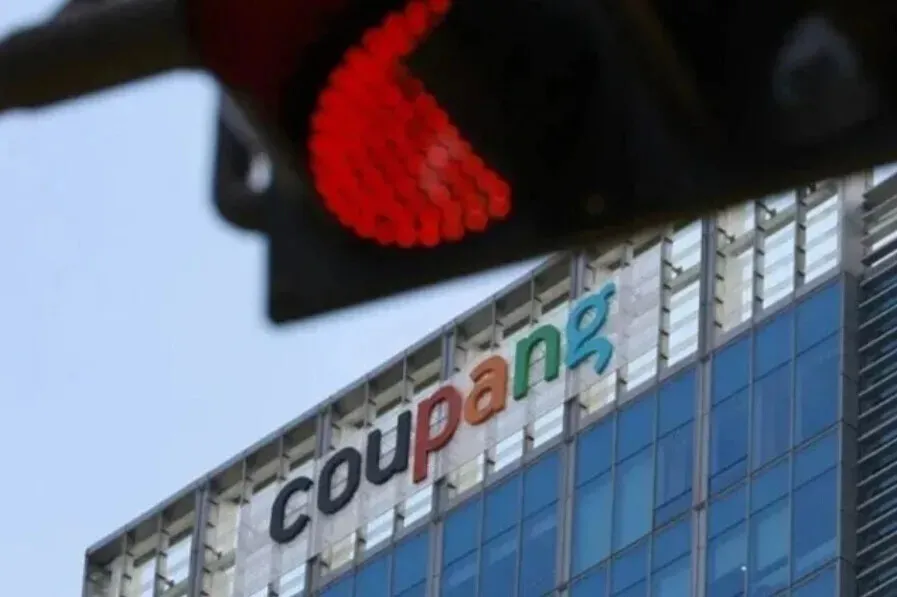
Coupang’s headquarters in Seoul. (Jung Yong-il/Hankyoreh)
A reputable American consumer advocacy group condemned Coupang for using its financial muscle to lobby Washington against legitimate Korean regulatory and law enforcement measures.
Public Citizen, a non-profit group founded by American consumer protection advocate Ralph Nader in 1971, released a report titled “Coupang Corporation’s Inappropriate Pressure Campaign to Weaponize US Trade Policy Against South Korea’s Digital Regulation” on Thursday (local time).
Public Citizen is a well-known American public watchdog organization that does not receive donations from private companies or the government; instead, it relies on individual donors and foundation grants. As such, the organization is known for its independence and objectivity.
Thursday’s report was based on US Trade Representative emails that the organization obtained through the non-profit’s Freedom of Information Act requests and subsequent litigation.
The non-profit begins its memo by stating that while Coupang is indeed incorporated in the US and listed on the New York Stock Exchange, over 90% of its total net revenues are from Korea. It proceeded to criticize Coupang for labeling Korea’s regulatory measures over the massive data breach in 2025 and its unethical labor practices as discriminatory measures against US-based companies, while also noting how the company is enlisting the US Congress and the Trump administration to add pressure on the Korean government.
According to the memo, Coupang spent US$2.27 million on lobbying in the US in 2025, and employed lobbying firms with ties to Trump, such as Ballard Partners and Miller Strategies. The report noted that Coupang employed 32 lobbyists and had a 56% revolving door rate, meaning that most of its hired lobbyists had moved from public sector government jobs to private sector positions.
Coupang donated US$1 million to Trump’s inaugural committee and made US$200,000 in campaign contributions — mostly to relevant committee chairs — in 2025. Coupang reported US$3.62 million in lobbying expenses from January to September 2026, over double the amount reported over the same period in 2025 (US$1.69 million).
The report noted how Coupang’s lobbying appears to have paid off, citing a letter signed by 50 members of Congress on the Coupang case to Korea in April 2026, and a House Judiciary Committee report in July that accused Korea’s regulatory actions of discriminating against US-based companies.
US Secretary of State Marco Rubio also mentioned during a congressional hearing in June that Korea’s treatment of American companies was affecting trade agreement procedures.
Coupang’s US investors issued a notice of intent to bring an investor-state dispute settlement claim against Korea under the US-Korea Free Trade Agreement, and filed a petition under Section 301 of the Trade Act before the US Trade Representative — which could lead to punitive tariffs against Korea — but subsequently withdrew the petition.
The report condemned the withdrawal, saying that the Section 301 investigation headed by the US government was likely a “sham proceeding” designed to reimpose tariffs on Korea and to pressure Korea into lifting its regulations.
The non-profit thoroughly refuted the argument that the Korean government was discriminating against American companies through its regulations against Coupang. The report argues that Korea has been fair with its law enforcement against both Korean and overseas companies by modernizing its digital sector regulations — an independent enforcement unit to oversee digital competition concerns was established in the Korean Free Trade Commission in 2019, and the Personal Information Protection Commission was reestablished as an independent regulator in 2020.
The report emphasized that the Korean Free Trade Commission and Personal Information Protection Commission have bolstered their enforcement actions against both domestic and foreign companies, and argued that Coupang’s larger fine was part of a justifiable penalty.
The penalty was not issued because of the country in which Coupang is based, but was proportional to the unprecedented scale of customer harm and the company’s market dominance, the report argued.
The non-profit also pointed out that there was no proof that the investigation was politically motivated because, during the enforcement proceedings, Coupang was given ample opportunity to present evidence and defend itself, and some of the proceedings were resolved through the imposition of corrective measures or consent-decision procedures.
“Instead of attacking other countries’ modern data protection and competition laws, US policymakers should focus on implementing and enforcing regulations domestically to hold Big Tech companies accountable,” the non-profit urged.
KioskNews shows a cleaned-up reading view extracted from the publisher’s page — the original always lives on their site, not ours.