TSEC optimistic as green energy demand picks up
TOUGH YEAR: In the first nine months of this year, TSEC’s revenue dropped by about 38 percent annually, while losses in the first two quarters topped NT$304 million, data showed
By Lisa Wang / Staff Reporter


Solar cell and module manufacturer TSEC Corp (元晶) yesterday said that its business is bottoming out this year, and it is optimistic that new rooftop solar installation incentives and strong green energy demand would revitalize the nation’s solar sector next year.
This anticipated policy push comes at a critical time. Over the past two years, the nation’s solar companies have struggled to turn a profit, weighed down by sluggish deployment of large-scale solar systems after subsidy-related corruption scandals.
Abroad, Taiwanese firms remain locked in intense price competition with low-cost Chinese counterparts.
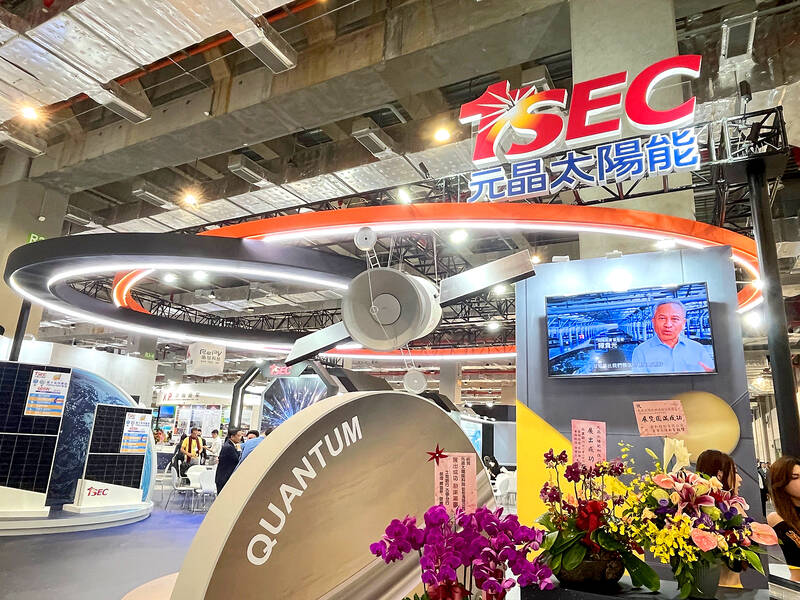
The TSEC Corp logo is pictured at the company’s booth at a trade show in Taipei in an undated photograph.
Photo: Chang Hui-wen, Taipei Times
“We are experiencing a gradual improvement in momentum,” TSEC chief executive officer William Liao (廖偉然) told reporters at the Net-zero Taiwan and Energy Taiwan exhibitions in Taipei.
“This year should be the trough for TSEC. We are seeing a far better business outlook for the company and for the industry next year, compared with this year,” he said.
Domestic solar panel installations are expected to grow 25 percent to 1 gigawatt next year, from an estimated 800 megawatts (MW) to 900MW this year, Liao said.
About one-third of the total solar panels installed next year are expected to be on rooftops, he said.
The rooftop solar sector is more stable than fishery-solar or agrivoltaics infrastructure due to a streamlined regulatory approval process involving fewer government agencies, Liao said.
TSEC’s revenue plummeted about 38 percent annually in the first nine months of this year to NT$904 million (US$28.19 million). Losses in the first half of the year were NT$304 million, company data showed.
However, robust green energy demand from local artificial intelligence supply chains has boosted green power prices to about NT$6 per kilowatt-hour lately, benefiting the company’s business outlook, TSEC said.
The government’s new solar policy and replacement demand would also drive the domestic market, it said.
After a new amendment to the Regulations on the Installation of Solar Photovoltaic Power Generation Equipment in Buildings took effect on Aug. 1, newly constructed or expanded buildings with a building area of 1,000m2 or more must install solar power generation systems.
United Renewable Energy Co (URE, 聯合再生) chief executive officer Richard Chang (張為策) yesterday said that the new policy meant a new growth driver, adding 200MW to 300MW of solar panel installations a year to the existing 500MW to 700MW rooftop solar market.
More enterprises are deploying rooftop solar systems across their facilities to boost green energy capacity, Chang said.
TSEC and URE showcased new solar modules such as low-reflection solar panels, perovskite-silicon tandem modules and full-color semitransparent solar modules for buildings at the exhibition.
KioskNews shows a cleaned-up reading view extracted from the publisher’s page — the original always lives on their site, not ours.