Los Angeles Rams And Las Vegas Raiders Players Face Possible NFL Fines After Week 7
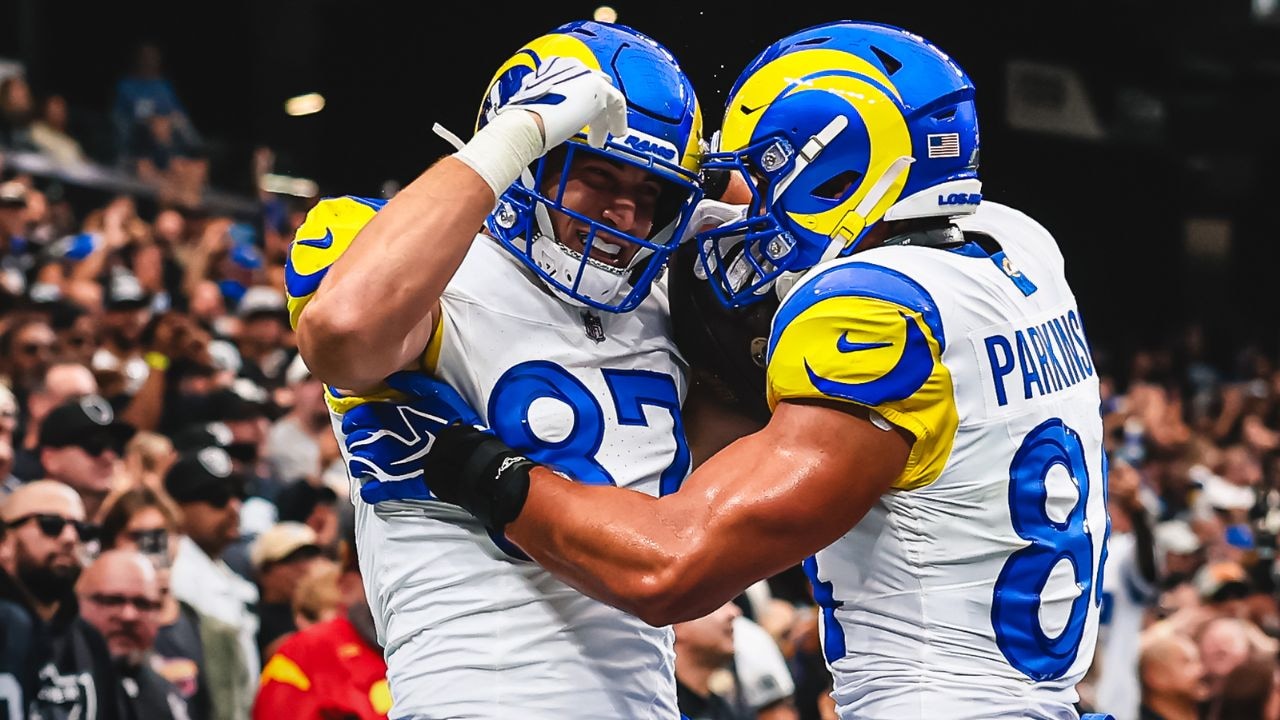
Los Angeles Rams players celebrate during the game.© X/@RamsNFL
The Los Angeles Rams left Las Vegas with a 35-21 win, but a handful of plays from their Week 7 meeting could cost players more than penalty yards. Quentin Lake and Steve Avila were flagged for separate infractions, and the NFL could review both incidents before deciding whether to issue fines. Two Las Vegas Raiders players, Tommy Eichenberg and Tredan Stukes, could face similar punishment after drawing flags of their own. None of the four fines had been confirmed, leaving the league's weekly review to determine the next step.
Why Quentin Lake and Steve Avila could face NFL fines
Lake drew a third-quarter flag after helping stop Raiders tight end Ian Thomas following an eight-yard catch from quarterback Kirk Cousins. Officials ruled that the Rams defensive back had lowered his head to make forcible contact, an offense covered by the NFL's helmet-use rules.
“Per the NFL, a player can be fined up to $23,882 for a first offense of impermissible use of the helmet, while a second offense can incur a fine as high as $47,762.”Josh Buckhalter of Heavy wrote.
The Rams could face another issue if the league records a strike against Lake for the violation. Certain repeat offenses count toward a disciplinary system in which three strikes can trigger a one-game suspension. The strike can carry into future seasons, making the review more significant than the immediate financial penalty.
Avila's situation came during a promising Rams scoring opportunity. The offensive lineman was penalized for grabbing a defender's facemask in the third quarter, wiping out Blake Corum's 43-yard touchdown run. A first facemask offense can carry a fine of up to $11,941, although offensive players mostly receive smaller penalties than defensive players.
Neither player was guaranteed to receive a fine. The NFL reviews game footage after each week and can punish actions beyond those flagged by officials.
Raiders players Tommy Eichenberg and Tredan Stukes could face punishment
The Raiders had two incidents of their own under review after their fourth straight loss.
Eichenberg was penalized for unnecessary roughness in the first quarter following a five-yard run by Corum. The linebacker appeared to strike at the ball in an attempt to force a fumble. The flag gave Los Angeles an additional 15 yards and a fresh set of downs.
Stukes drew a fourth-quarter flag for a horse-collar tackle on another Corum run. Under the NFL's schedule, that offense can bring a fine of up to $17,911 for a first violation and $23,882 for a second.
The league's decision could come with different consequences for each player, depending on its review and disciplinary history. For the Rams, the win improved their position after a difficult start. For Las Vegas, the defeat extended a losing streak that had already raised questions about the team's defense.
KioskNews shows a cleaned-up reading view extracted from the publisher’s page — the original always lives on their site, not ours.