6 Reasons Twin Peaks' Rotten Tomatoes Score Is Lower Than Expected

Ben Sherlock is a Tomatometer-approved film and TV critic who runs the massively underrated YouTube channel I Got Touched at the Cinema. Before working at Screen Rant, Ben wrote for Game Rant, Taste of Cinema, Comic Book Resources, and BabbleTop. He's also an indie filmmaker, a standup comedian, and an alumnus of the School of Rock.
Twin Peaks is rightly ranked alongside The Sopranos and The Wire and Breaking Bad and Chernobyl as one of the greatest TV shows ever made. But if you look it up on Rotten Tomatoes, you’ll find a much lower rating than those shows. The Sopranos has a near-perfect Rotten Tomatoes score of 92%, The Wire is closer to perfect with 94%, and Breaking Bad is even closer to perfect with 96%. But Twin Peaks has a pretty tepid 77% approval rating from critics.
It’s still “fresh,” and a good few percentage points above the “rotten” threshold, but it’s far below its fellow TV masterpieces. 77% indicates that almost a quarter of all critics gave Twin Peaks a negative review, which seems insane considering just how seminal it is. But you have to remember that the seminal texts aren’t seminal texts when they first come out; they’re just another new TV release for every working critic to give their two cents on. Plus, Twin Peaks’ critical reviews took a critical hit after it killed the golden goose and revealed who killed Laura Palmer in season 2.
Twin Peaks has the exact same Rotten Tomatoes score as Lioness, a safe and serviceable Taylor Sheridan action series. It’s the kind of score that goes to a show that’s more than watchable, but doesn’t necessarily do anything special or unique to stand out. And that’s crazy, because Twin Peaks couldn’t possibly have done more to stand out and be unique and special.
So, why is Twin Peaks’ Rotten Tomatoes score so low? There are a few reasons — David Lynch’s lessened involvement, a brazen refusal to appease casual viewers, the fact that Twin Peaks: The Return counts as its own separate thing, etc. — so let’s dive in.
The Critical Backlash To Twin Peaks Season 2 Is Dragging Down Its Overall Score

The first season of Twin Peaks was met with almost unanimous praise from critics, but the second season didn’t fare so well. Twin Peaks killed the golden goose in season 2, and it effectively killed off the series itself. The mystery surrounding the murder of Laura Palmer was the hook in season 1 — that was the unanswered question that the entire series hinged on — but ABC spent the summer between seasons 1 and 2 teasing that season 2 would reveal who killed Laura, forcing Lynch to explain who the killer was, which killed the central hook of the series. Shortly thereafter, it was canceled, and we had to wait two-and-a-half decades for the cliffhanger ending to be resolved.
The reviews for season 1 were great, but the reviews for season 2 were a lot more mixed, and those reviews are dragging down the overall score. Rotten Tomatoes is just an aggregate of every review score they can scrape off the internet for a given title, and Twin Peaks’ average went down when season 2’s divisive reviews were factored into the algorithm. On its own, Twin Peaks season 1 has an impressive 91% score, but season 2 has a near-rotten 64% score, and the score for the entire series is essentially a median of those two scores.
Twin Peaks' Unconventional Narrative Approach Was Polarizing

Twin Peaks changed what a TV show could be. Lynch and his co-creator Mark Frost tore up the rulebook. They set up a typical small-town soap opera, but the gonzo supernatural odyssey that followed turned out to be anything but conventional. Twin Peaks’ narrative approach proved to be polarizing; some critics recognized its revolutionary genius, but it wasn’t everyone’s cup of tea.
Television traditionally wraps things up in a nice, neat bow — Columbo always solves the case in time for the end credits, etc. — but Twin Peaks was mired in mystery and ambiguity. It refused to give its audience closure, or even explain anything in plain and simple terms (except who killed Laura), and instead left things up to interpretation. Lynch had already been doing that on the big screen for years in movies like Eraserhead and Blue Velvet, but Twin Peaks introduced TV audiences to that distinctly disturbing cinematic voice.
There's A Big Gap Between Contemporary '90s Reviews & Retrospective Praise

Rotten Tomatoes isn’t a very reliable metric in general, but it’s especially unreliable when it comes to old classics like Twin Peaks. The RT score of something like Casablanca or Citizen Kane or The Godfather doesn’t necessarily reflect their contemporary critical reception, because the Tomatometer includes a bunch of retrospective reviews that have been written in the years since. My retrospective review of Goodfellas is included on Rotten Tomatoes, and I wasn’t even alive when that movie came out.
Today, Twin Peaks is remembered as a seminal masterpiece, and the retrospective reviews reflect that. But there’s a big difference between modern commentary on Twin Peaks and the newspaper reviews that were printed during the show’s run in the early ‘90s. Twin Peaks has grown enormously in stature and reputation since its original cancelation, so there are a lot of different opinions flying around that Rotten Tomatoes page.
Twin Peaks Abandoned David Lynch's Vision Due To Network Pressures

Despite setting up an investigation into Laura’s increasingly inexplicable murder in Twin Peaks’ first season, Lynch never felt that the resolution of that mystery was the most important part of the show. He and Frost had just used that mysterious death as a springboard into this strange world, and the messy lives of these colorful characters.
Laura’s death was the goose that laid golden eggs, but the network pressured Lynch to reveal Laura’s killer, so they could promote the big reveal as appointment TV. When Twin Peaks abandoned Lynch’s original vision in favor of what the money-grubbing network executives could sell, the critical reception naturally took a nosedive.
Twin Peaks Is Aggressively Unorthodox
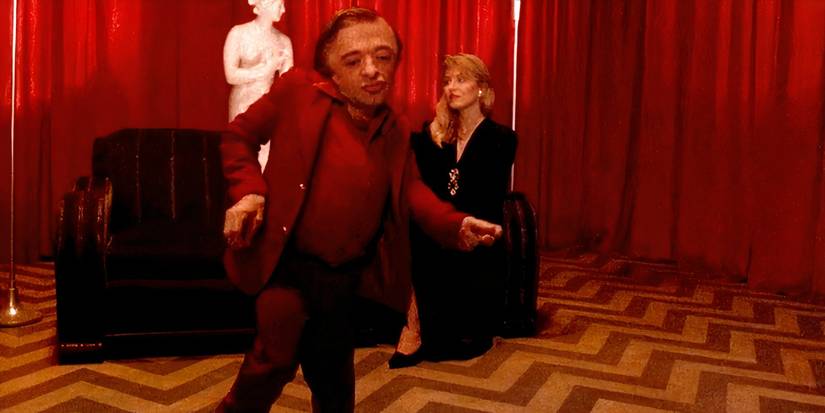
While The Sopranos and Breaking Bad and Mad Men all tell universal (if very dark) stories, Twin Peaks is deliberately alienating. It keeps its audience at arm’s length with unsettling imagery and unexplained phenomena. There’s a giant, there’s an evil doppelgänger, there’s a sinister alternate dimension on the edge of town — naturally, a show that flagrantly weird won’t be for everyone.
Twin Peaks is a show that, despite enormous acclaim and influence, doesn’t really fit the critical orthodoxy the way that other TV GOATs of comparable stature do. No matter how beautifully acted and shot it might be, there are always going to be a handful of viewers who just don’t get Twin Peaks, and they make up the 23% of “rotten” reviews.
Rotten Tomatoes Considers Twin Peaks: The Return Its Own Series

At the end of Twin Peaks’ initial run, we were promised, “I’ll see you again in 25 years.” 25 years later, almost to the day, Lynch brought the show back for its long-awaited third season. But Showtime didn’t promote it as Twin Peaks season 3, possibly because they didn’t technically have the rights to do so; they promoted it as a brand-new show called Twin Peaks: The Return.
So, despite reprising various familiar characters and storylines from the original Twin Peaks, Twin Peaks: The Return is technically its own separate thing, and Rotten Tomatoes considers it its own series. When Twin Peaks: The Return first aired in 2017, it was showered with critical acclaim; Cahiers du Cinéma and Sight & Sound both named it one of the best films of the century (even though it’s not really a film). But none of those rave reviews count toward Twin Peaks’ Rotten Tomatoes score; otherwise, they could’ve boosted it to the mid-90s level of a Sopranos or a Breaking Bad.
Twin Peaks

10/10
KioskNews shows a cleaned-up reading view extracted from the publisher’s page — the original always lives on their site, not ours.