PILLAR TO POST: Biko inquest investigator tells of missing records, incomplete dockets
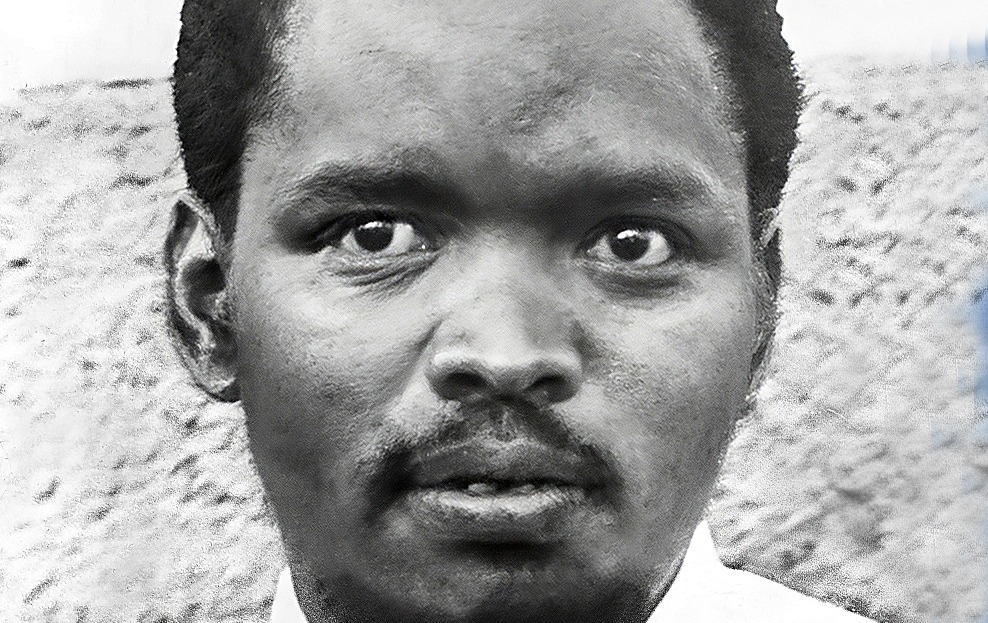
The investigator tasked with piecing together the circumstances of anti-apartheid activist and the leader of the Black Consciousness Movement Steve Biko’s death was sent from pillar to post by missing docket pages and incomplete records, but managed to secure an affidavit from a witness who treated Biko in prison just months before his own death and the start of the reopened inquest.
Sergeant Fundiswa Dingiswayo, an investigator attached to the Directorate for Priority Crime Investigation (DPCI) in KuGompo City (formerly East London), was the first witness to testify in the reopening of the inquest into Biko’s death in September 1977.
Dingiswayo testified in the Eastern Cape Division of the High Court in Gqeberha on 27 August 2026 that she was assigned the investigation in August 2021, and from the jump encountered several obstacles, including dockets with missing pages and others that appeared to “stop in the middle of nowhere”.
Dingiswayo, who said investigations into cases of this nature required investigators to “scrap around”, turned to the National Archives in search of pieces of the puzzle. But there she found little of use. She was, however, able to recover some of the missing pieces relating to Biko’s death from the archives of the University of the Witwatersrand.
/file/attachments/2993/12AV_00007446_600204.jpg "SOUTH AFRICA: Biko Steve having a smoke with Mamphele Ramphele. Circa 1970s. (Photo by Gallo Images/Daily Dispatch)")
Her investigation also involved tracing witnesses who could shed light on what happened to Biko after he was arrested in the Eastern Cape and transported to Pretoria.
The witness she traced was Gabriel Ndlovu, a former detainee at Pretoria Central Prison – now known as the Kgosi Mampuru II Correctional Centre – who worked in the prison’s hospital section.
Ndlovu died in April 2026, but Dingiswayo managed to obtain an affidavit from him before his death. Part of the affidavit was read into the record on Thursday.
According to Ndlovu’s statement, Biko arrived at the Pretoria prison alone and was kept in the hospital section.
‘Bruised, unable to speak’
Ndlovu said in his affidavit that Biko had bruising on his face, appeared to have been assaulted and was unable to speak.
Biko, who died at the age of 30 on 12 September 1977, had been arrested with fellow activist Peter Jones at a roadblock near Makhanda (formerly Grahamstown) on 18 August 1977 after breaching a banning order restricting his movement to Qonce (former King William’s Town).
He was taken to the Walmer police station in Gqeberha, where he was detained by members of the Security Branch.
Biko was subsequently transported to Pretoria in the back of a police vehicle while unconscious, naked and shackled.
His death was attributed to an extensive brain injury and acute kidney failure.
At the original inquest in November 1977, Security Branch members involved in his detention and interrogation claimed that Biko had sustained his fatal injuries after banging his head against a wall.
The National Prosecuting Authority announced in September 2025 that it would reopen the inquest.
Two surviving former police officers – Daniel Petrus Siebert and Jacobus Johannes Oosthuysen Benecke – have been identified as persons of interest in Biko’s death.
Apartheid spy Craig Williamson
approached for affidavit
Dingiswayo’s investigation also brought her into contact with former apartheid spy Craig Williamson, whose possible appearance at the inquest has become a point of contention.
Williamson infiltrated anti-apartheid organisations while working for the apartheid government before his cover was exposed in 1980.
He testified last year at the separate inquest into the deaths of the Cradock Four – Fort Calata, Sicelo Mhlauli, Sparrow Mkonto and Matthew Goniwe – where he was questioned about his role in the apartheid security apparatus.
It was during that evidence that Williamson said he had monitored Biko.
/file/dailymaverick/wp-content/uploads/2025/10/DSC_2182-copy.jpg "Craig Williamson testifies at the Cradock Four inquest at the Eastern Cape High Court in Gqeberha on 21 October. (Photo: Deon Ferreira)")
Dingiswayo told the court that she had since made contact with Williamson through his attorney. He is now preparing an affidavit, she said, and it was expected to be available to the inquest by Friday.
Dingiswayo also clarified that Williamson’s surveillance of Biko formed part of his broader surveillance of ANC members and other anti-apartheid activists. Biko came on to his radar as part of that work, she said.
Through their legal representative, Ngqiqo Sakhela, the Biko family made it clear this week that they want Williamson to be compelled to give oral evidence before the inquest.
Sakhela argued that Williamson’s knowledge of the apartheid security machinery, coupled with his testimony that he had monitored Biko, made his evidence important to the reopened inquest.
Family lawyer asks to interdict proceedings
Meanwhile, a brief stand-off between Sakhela and retired KwaZulu-Natal deputy Judge President Mjabuliseni Isaac Madondo, who presides over the inquest, followed when Sakhela informed the court that he had been instructed by the Biko family to circulate a notice indicating an intention to approach senior judges for an order interdicting the proceedings.
Sakhela referred to Judge President of the KwaZulu-Natal Division of the High Court, Judge Thoba Poyo-Dlwati, and the Acting Judge President of the Eastern Cape Division of the High Court, Judge Zamani Mzwasi Nhlangulela.
The move follows Madondo’s dismissal of the family’s postponement application on Wednesday.
/file/attachments/orphans/IMG_5945copy_981935.jpg "Anti-apartheid leader Steve Biko’s son, Nkosinathi Biko (in green), with Ngqiqo Sakhela, who is representing the Biko family at the Steve Biko Inquest, currently under way in the Gqeberha High Court on 25 August 2026. (Photo: Deon Ferreira)")
Judge Madondo questioned Sakhela about the seriousness of naming a judge as a respondent in legal proceedings, saying it was “unheard of” for a judge to be a respondent.
Madondo ultimately moved on without making any definitive ruling on the matter and directed the State to call its first witness.
The standoff followed two days of contentious proceedings in which the Biko family sought more time to prepare for the inquest.
Sakhela had only recently been appointed to represent the family and argued that the legal team needed additional time to work through a “voluminous” record running into thousands of pages.
Some of the material from the original inquest is in Afrikaans and requires translation into English. Sakhela told the court earlier this week that the translation alone could take weeks and cost about R100,000.
The family had also been left without some of its previous legal representatives after advocate Tembeka Ngcukaitobi SC, who had represented the family pro bono, was appointed an acting judge of the Constitutional Court, while other lawyers assisting the family had taken on new matters.
Madondo nevertheless refused the postponement, saying the inquest had to proceed while witnesses were still available.
Dingiswayo is expected to return to the witness stand on Friday, when she is likely to face cross-examination. DM
KioskNews shows a cleaned-up reading view extracted from the publisher’s page — the original always lives on their site, not ours.