The Best Quote From Every Stark In A Song Of Ice And Fire
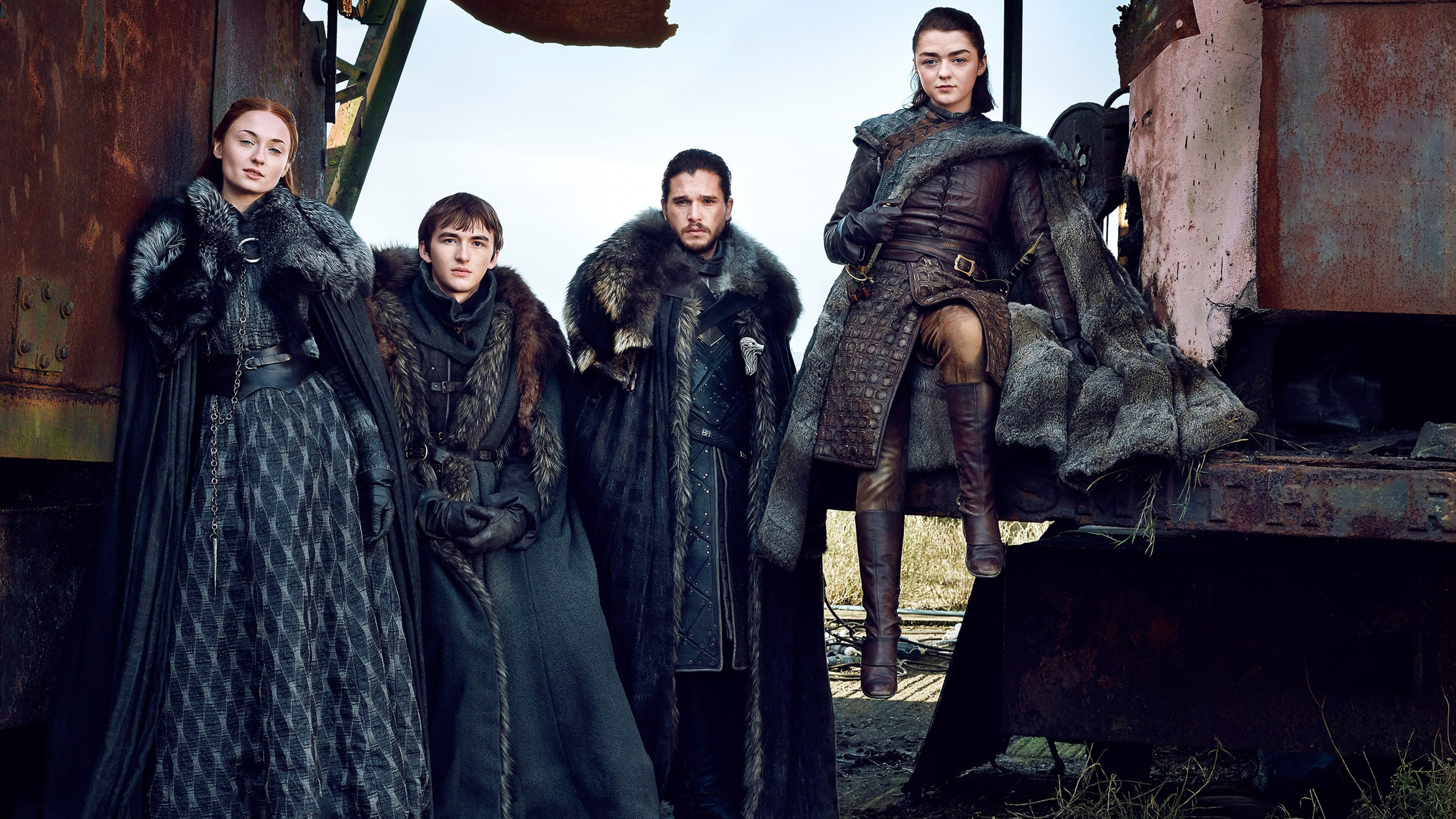
A Song of Ice and Fire may have spawned a global fantasy phenomenon with its various adaptations, redefining fantasy television with Game of Thrones, House of the Dragon, and A Knight of the Seven Kingdoms, but the original novels by George R.R. Martin remain the foundation of the entire franchise. Across five published books, Martin built a world filled with memorable houses, rivalries, betrayals, and characters whose words carry just as much weight as their actions.
Few families are more central to that story than House Stark. Defined by honor, duty, resilience, and an often-fatal sense of responsibility, the Starks have produced some of the series' most memorable dialogue. From Ned's lessons about justice to Arya's defiant rebelliousness, Sansa's hard-earned wisdom, and Jon Snow's struggle with identity and duty, their best lines reveal exactly who they are at their core. These are the best quotes from the most prominent Starks across Martin's A Song of Ice and Fire series.
Eddard "Ned" Stark
Lord of Winterfell, Warden of the North

"The winters are hard," Ned admitted. "But the Starks will endure. We always have." - A Game of Thrones
In an early exchange between Robert Baratheon and Ned in the Winterfell crypts, Ned delivers what first appears to be a somewhat innocuous and typical line about his family surviving the winters. However, "the Starks will endure" ultimately becomes a fitting prediction for the family's fate throughout A Song of Ice and Fire.
Ned's confidence reflects both his stoic nature and the resilience ingrained in the Stark identity, even as neither man realizes how quickly that resilience will be tested. Ned's journey south ends with his execution, while his children are scattered across Westeros and beyond and Winterfell itself eventually falls. Despite everything thrown at them, the Starks endure. The setting makes the line even more poignant, with Ned surrounded by generations of dead Starks while unknowingly foreshadowing his family's greatest test yet.
Catelyn Stark (née Tully)
Dowager Lady of Winterfell, aka Lady Stoneheart

“No, don't, don't cut my hair, Ned loves my hair.” - A Storm of Swords
Perhaps one of the most tragic and now-iconic moments in the franchise, Catelyn's last words are heartwrenching and perfect. Under the assumption her entire family is doomed, she's seen Robb slain at the hands of Roose Bolton and reaches the absolute breaking point of her grief. By the time her own death arrives, Catelyn is no longer thinking like the politically astute woman readers have followed for three books, but as a wife and mother whose entire world has collapsed around her.
Her final thought turns to Ned, with her plea about not cutting her hair recalling the husband she lost long before the Red Wedding. It is devastating precisely because it strips away everything else, leaving only Catelyn's love for her family at the moment she believes she has lost them all.
Robb Stark
The Young Wolf, or The King Who Lost The North
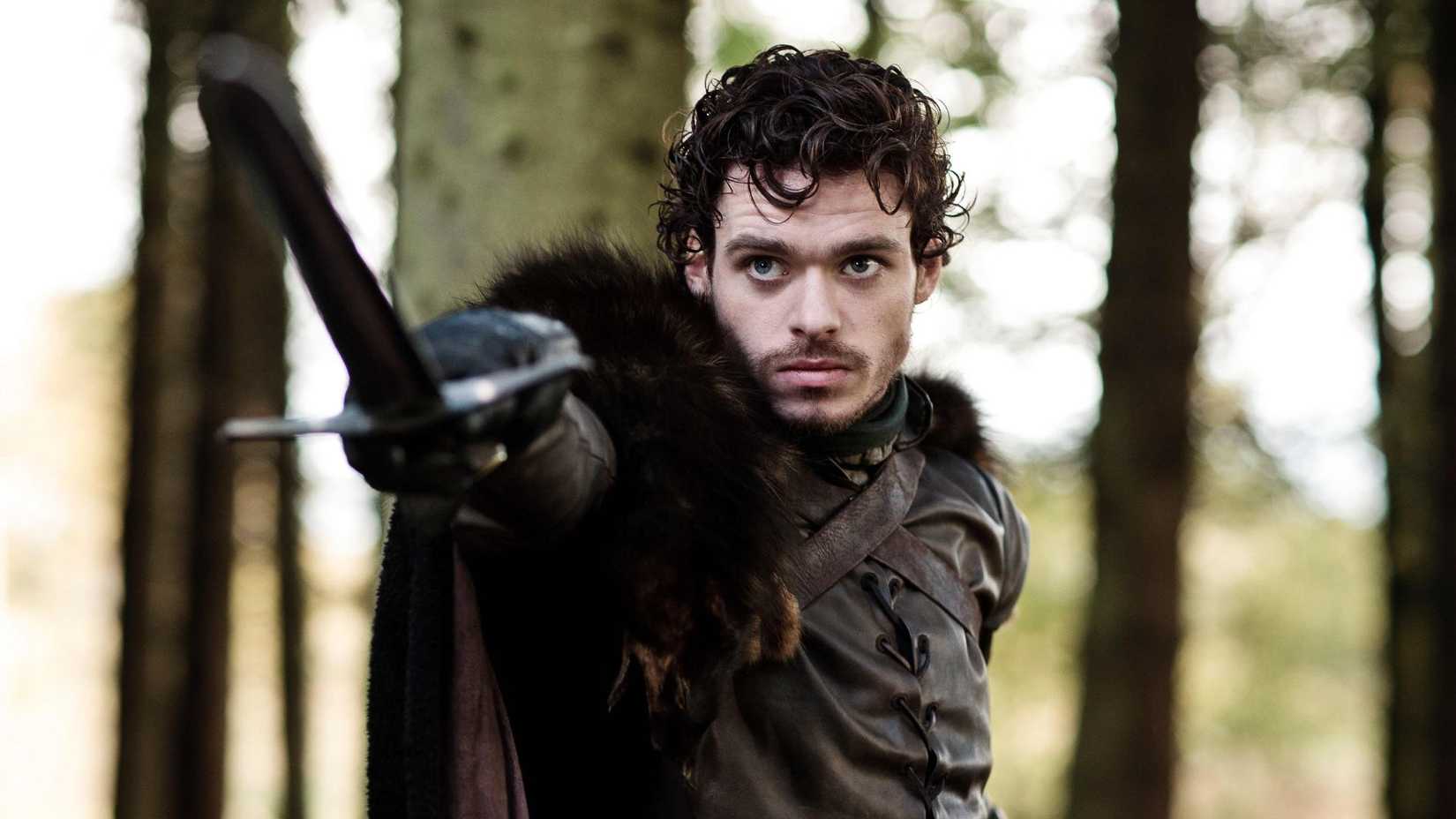
"Love's not always wise, I've learned. It can lead us to great folly, but we follow our hearts ... wherever they take us." - A Storm of Swords
Robb delivers this line during a conversation with Catelyn in A Storm of Swords, after his decision to marry Jeyne Westerling despite already being promised to one of Walder Frey's daughters. The sentiment perfectly captures Robb's hopeless romanticism and the conflict between his responsibilities as a king and his impulses as a young man. He understands that love can lead people into disastrous decisions, yet openly admits that he believes the heart should be followed regardless of the consequences.
Unfortunately, Robb is living proof of his own warning. Marrying Jeyne breaks the Stark-Frey alliance and humiliates Walder Frey, forcing Robb to seek reconciliation with the notoriously vindictive lord. That decision ultimately brings Robb, Catelyn, and the Stark army to the Twins, setting the stage for the Red Wedding.
Lyanna Stark
The She-Wolf
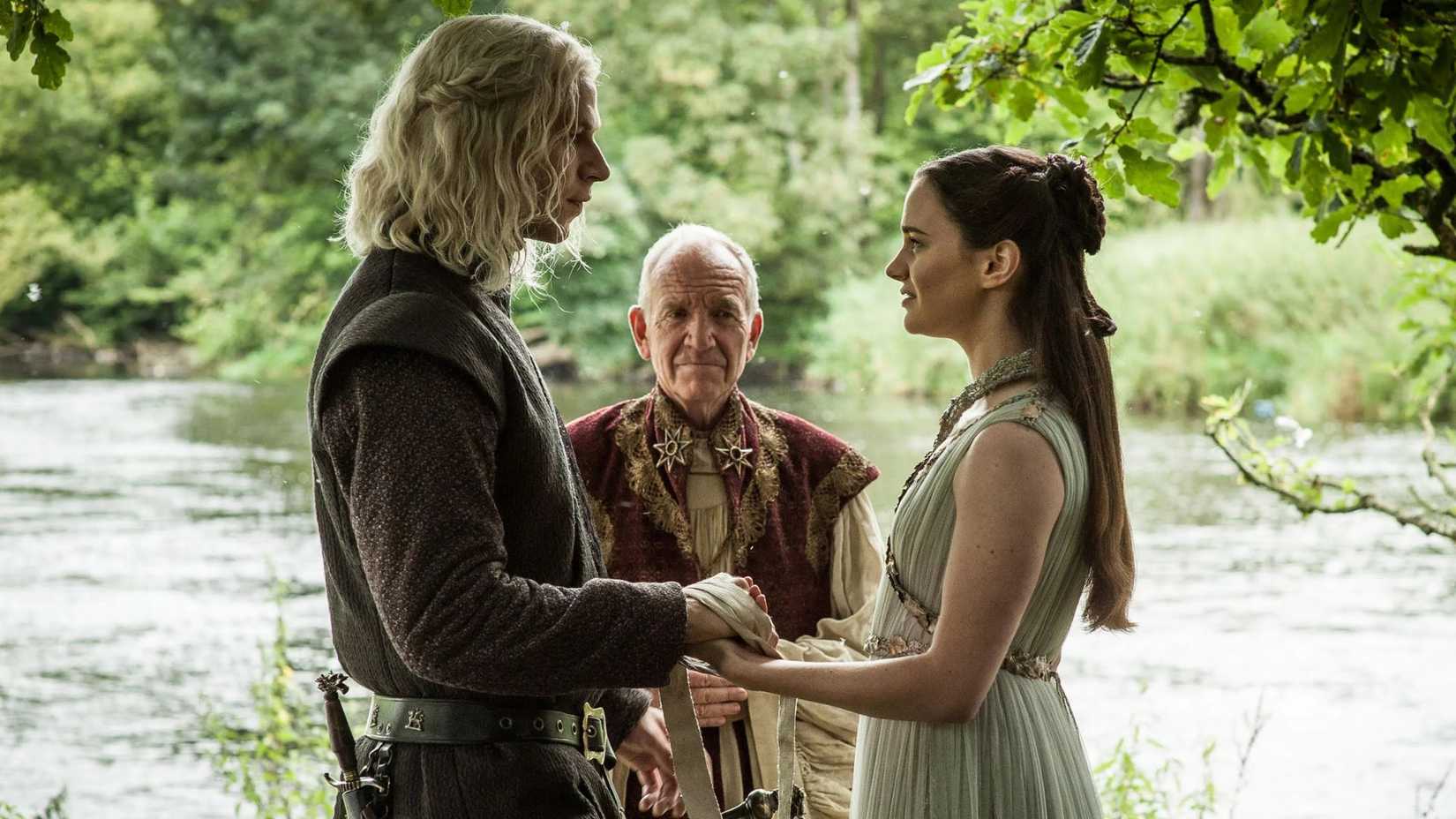
"Promise me, Ned" - A Game of Thrones
While her dialogue is relatively sparse in the novels, Lyanna arguably plays one of the most important roles in the story, summed up in three short words during flashback sequences in Ned's memory. "Promise me, Ned" becomes a haunting refrain throughout A Game of Thrones, referring to the mysterious promise Lyanna extracted from her brother as she lay dying at the Tower of Joy.
Although the published books have yet to explicitly reveal what Ned promised, the mystery is intrinsically tied to Lyanna's death, Ned's greatest secret, and the unanswered question of Jon Snow's parentage. The line consequently hangs over the entire series, with Ned carrying that promise until his own death. Three simple words connect Robert's Rebellion to one of A Song of Ice and Fire's biggest lingering mysteries.
Rickon Stark
Prince of Winterfell
"Are we going home? I want my horse. And I want applecakes and butter and honey, and Shaggy. Are we going where Shaggydog is?" - A Clash of Kings
Rickon is just a young boy of three in the beginning of the novels, and as such his dialogue is quite limited. However, this line in A Clash of Kings is absolutely heartbreaking given the context. Winterfell has fallen, Ned is dead, and Rickon's family has been torn apart, yet he remains too young to fully comprehend the enormity of what has happened.
Instead, his concerns are painfully innocent: going home, riding his horse, eating applecakes with butter and honey, and finding Shaggydog. Fortunately, his beloved direwolf is still alive, and Rickon is soon reunited with him. The quote nevertheless underscores the tragedy of the youngest Stark, whose childhood has effectively disappeared before he is even old enough to understand what he has lost.
Bran Stark
Prince of Winterfell, aka Bran the Broken

"The stone is strong ... The roots of the trees grow deep, and under the ground the Kings of Winter sit their thrones. So long as those remained, Winterfell remained. It was not dead, just broken. Like me ... I'm not dead either." - A Clash of Kings
Arguably one of the best lines in the entire series, Bran's reflection comes after the sack of Winterfell, when the castle appears ruined beyond saving. Rather than seeing only destruction, Bran focuses on what remains beneath the surface: the stone, the roots, and the ancient Stark kings in the crypts below.
His realization that Winterfell is "not dead, just broken" becomes an obvious parallel to Bran himself. After losing the use of his legs, he is repeatedly treated as diminished, yet his story proves that being broken is not the same as being powerless. The quote perfectly captures Bran the Broken as a character, defined not by what he has lost, but by his ability to endure and discover strength even when facing extreme odds.
Benjen Stark
First Ranger of the Night's Watch

"The Night's Watch is a sworn brotherhood. We have no families. None of us will ever father sons. Our wife is duty. Our mistress is honor." - A Game of Thrones
Coming early in A Game of Thrones, Benjen Stark's explanation of the Night's Watch succinctly establishes exactly what taking the oath demands. Jon initially views service at the Wall through a romanticized lens, but Benjen makes clear that becoming a sworn brother means surrendering virtually everything beyond that brotherhood. Family, marriage, children, and personal ambitions are replaced by an absolute commitment to duty.
Describing duty as a wife and honor as a mistress is particularly fitting in a society where marriage and family determine so much of a person's future. The quote also establishes the stakes of Jon's decision long before he takes his vows, while foreshadowing the central conflict that will repeatedly define his story: choosing between his obligations to the Night's Watch and his enduring loyalty to his family.
Brandon Stark (Ned's Brother)
The Wild Wolf

"A bloody sword is a beautiful thing." - A Dance With Dragons
Brandon Stark never appears alive in the main narrative, but this quote provides a remarkably effective glimpse at the man remembered as the Wild Wolf. The line is recalled by Barbrey Dustin in A Dance with Dragons as she tells Theon about her youthful relationship with Brandon, including how he taught her to ride and spoke enthusiastically about swords. It perfectly matches the legacy established for Ned's older brother elsewhere in the novels: passionate, martial, impulsive, and considerably more hot-blooded than Ned.
Brandon ultimately dies because of those same qualities, riding to King's Landing and demanding Rhaegar Targaryen answer for Lyanna's disappearance. In just a few words, the quote captures the recklessness and aggression that earned Brandon his fitting "Wild Wolf" reputation.
Sansa Stark
Princess/Lady of Winterfell, aka Alayne Stone or Lady Lannister
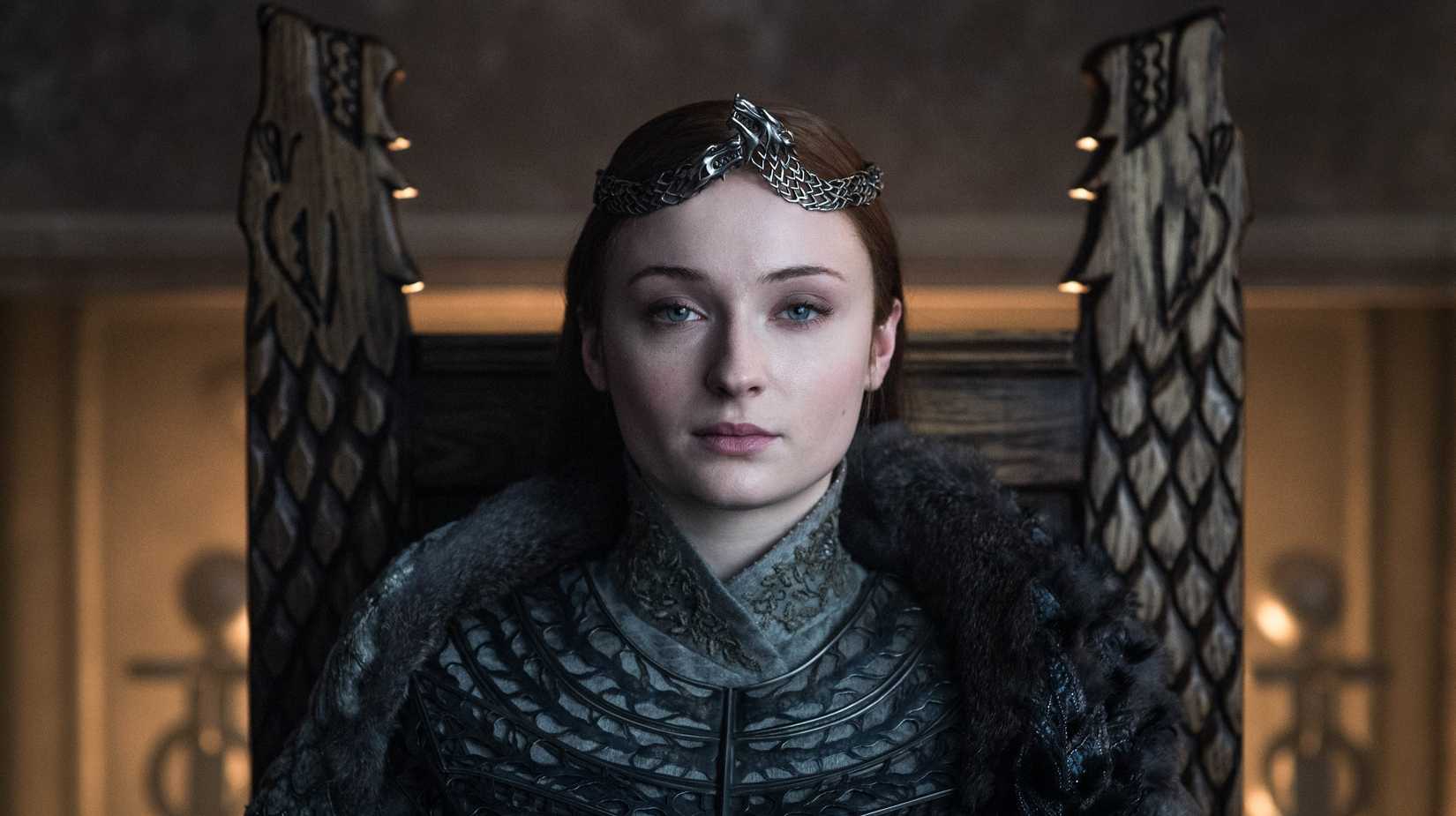
"My skin has turned to porcelain, to ivory, to steel." - A Storm of Swords
Sansa's observation that her skin has turned "to porcelain, to ivory, to steel" perfectly summarizes the transformation she undergoes throughout the first three novels. By A Storm of Swords, the sheltered girl who once dreamed of handsome princes and gallant knights has endured Joffrey's cruelty, her father's execution, a forced marriage to Tyrion, and years spent as a political hostage in King's Landing.
Each experience has forced her to become increasingly guarded while maintaining the outward courtesy expected of her. The progression from fragile porcelain to hardened steel reflects that evolution beautifully: Sansa may still appear delicate, but she is no longer the naïve girl who arrived in the capital. Her greatest strength becomes her ability to conceal what she truly thinks and feels, surviving through restraint rather than open defiance.
Arya Stark
Princess of Winterfell, Acolyte of the Faceless Men

"How many, how many, how many, how many, how many, how many?" - A Clash of Kings
In a moment that will give readers chills every time they read it, Arya turns the Tickler's own words back on him as she kills the man who helped terrorize captives at Harrenhal. Earlier in A Clash of Kings, the Tickler repeatedly tortures prisoners for information, demanding answers about gold, silver, food, and the Brotherhood Without Banners while hammering them with the same relentless questions.
By A Storm of Swords, Arya has internalized that cruelty so completely that, when she gets her chance at revenge, she recites his interrogation almost word for word while stabbing him. The repeated "How many?" becomes an instrument of vengeance, showing how deeply the violence around Arya has shaped her and how far she has moved from the relatively innocent child she once was.
KioskNews shows a cleaned-up reading view extracted from the publisher’s page — the original always lives on their site, not ours.