Mirror life and why we should avoid creating it
SINGAPORE – The iconic Helix Bridge in Marina Bay, an eye-catching tourist attraction and Singapore’s longest pedestrian bridge, was inspired by the double helix of DNA.
Less well known is that it is left-handed by design (the two twisted strands spiral in an anti-clockwise direction), unlike the familiar form of DNA found in living organisms, which twists to the right.
Most of the essential molecules of life, including the building blocks of DNA and RNA, most amino acids, sugars, and even some lipids, exhibit “handedness”. This property – first demonstrated by the father of modern immunology Louis Pasteur in 1848 – is known as chirality.
An object is chiral if it cannot be superimposed on its mirror image, much like our left and right hands.
Life on Earth overwhelmingly favours one configuration over the other – a phenomenon termed homochirality. Proteins are built almost entirely from “left-handed” amino acids, while most of life’s key sugars are “right-handed”. Why life settled on this specific dominant configuration remains a great scientific puzzle.
But the consequences are far-reaching: The enzymes that bind and break down molecules, the receptors on our cells, and even key facets of our immune system are highly shape-specific. They often cannot recognise or act on mirror-image molecules. We humans cannot metabolise “left-handed” glucose, although curiously, we can taste it just fine.
The case against creating mirror life
Scientists have worked on mirror-image biological molecules for decades, creating many useful products and drugs.
They show promise in creating drugs or biomaterials that do not break down, and because the immune system does not recognise them, they do not prompt immune reactions and could work in the body for much longer.
However, in December 2024, a group of prominent scientists published a Policy Forum article in the journal Science warning about the risks of creating “mirror life” – mirror-image organisms capable of reproduction and expansion – accompanied by a 299-page technical report examining the evidence and possible consequences.
The group included many who work at the frontiers of synthetic biology and mirror-image biological molecules, as well as experts in immunology, ecology and biosecurity. Several had previously regarded creating mirror-image organisms as a long-term scientific goal, but their own analysis persuaded them of the danger.
The scientists estimated then that the capability to create “mirror life” – a mirror-image bacterium being the most plausible first such construct – was “at least a decade away” and would require major technical advancements as well as large-scale investment.
For policymakers and the scientific community, this lead time is valuable: It creates an opportunity to develop proportionate safeguards alongside scientific progress, rather than trying to impose them retrospectively.
It also offers an opportunity to better understand and pre-empt the risk, rather than kick the can down the road while dealing with more exigent challenges.
The scientists’ case, built largely on existing experimental evidence and established principles of biology, laid out why a sufficiently robust mirror-image bacterium, once created, might survive and even thrive in our world if it was accidentally (or deliberately) released from the laboratory.
Although it would start with a metabolic disadvantage – there being fewer nutrients that it could use – the constraints that keep natural bacteria in check, such as viruses that could infect and predators that could prey on them, might have limited effect, because the reverse chirality could result in the bacterium not being recognised and targeted.
More concerning is what might happen should the bacterium invade living organisms. The likely inability of life’s immune systems – in plants, animals and humans alike – to recognise and react effectively against such a bacterium would mean that it could have a broad host range, plausibly resulting in severe or lethal infections across many species.
Most of the antibiotics we use to treat bacterial infections today are also chiral, and they are expected to have limited or no effect on a mirror-image bacterium. Even if we were to synthesise mirror-image antibiotics – a far less difficult challenge compared with creating mirror life – the lack of an adequate immune response would dramatically reduce the efficacy of these drugs.
The science has not stood still
Progress has continued on several fronts since the Science article. Chemical synthesis of large mirror enzymes and proteins has become more efficient, while parallel advances in synthetic biology have demonstrated increasingly sophisticated production and assembly of the components of the cellular machinery that make proteins.
Earlier in 2026, researchers at the University of Minnesota reported assembling a synthetic cell – nicknamed SpudCell – from non-living chemical components that could copy its own genome, grow and divide for a few generations.
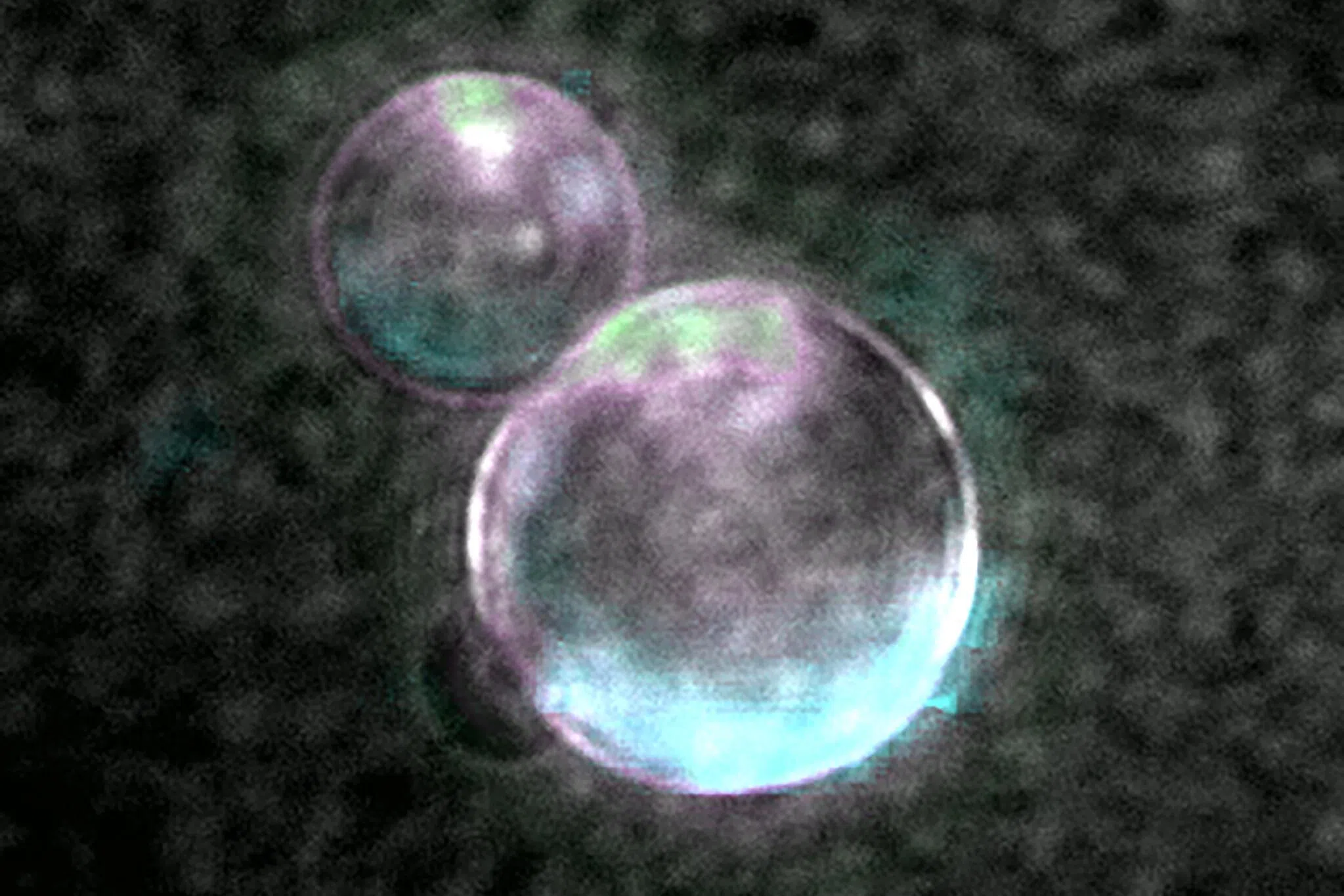
Scientists at the University of Minnesota have created SpudCell, the first synthetic cell to complete a full life cycle – from birth to division into next-generation cells – after being made from lifeless chemicals.
PHOTO: ADAMALA LAB
SpudCell is neither mirror life nor even alive as we understand the term, but these advances collectively demonstrate that scientists are rapidly learning to integrate individual molecular components into increasingly life-like systems.
Artificial intelligence could add a new wrinkle.
Dario Amodei, chief executive of AI company Anthropic, argued in his January essay on the risks of AI that a sufficiently powerful AI model – more capable than any today – could considerably shorten the time to creating a mirror-image bacterium.
None of the above means that mirror life is imminent, but the window to act may not be as comfortably long as originally believed.
Should there be guard rails on creating mirror life?
Many of the risks raised in the Science article are scientific extrapolations, not settled science. Some – such as whether mirror-image bacteria will outcompete other bacteria and expand unchecked in the environment, causing widespread ecological disruption, or cause deadly infections in a wide variety of living organisms including humans – cannot be confirmed without their actual creation.
But the potential consequences are extreme, while there are hardly any real benefits to the creation of mirror life itself beyond the unique scientific achievement of having done so.
International, national and private institutions have begun to respond.
In March, the UN Secretary-General’s Scientific Advisory Board issued a Brief warning that the “risks associated with self-replicating mirror life are extraordinarily high” and recommended a global forum to proactively develop governance frameworks.
UNESCO’s International Bioethics Committee has gone further, joining many scientists in calling for a precautionary global moratorium. In July, the United States classified the creation of mirror organisms as dangerous gain-of-function research for which federal funding is prohibited.
Multiple scientific forums and dialogues have been held worldwide, most recently in Singapore on Sept 28 and 29, which we at the National University of Singapore co-hosted, to disseminate knowledge and develop governance recommendations.
However, there is no globally binding prohibition, and privately funded work remains outside many funding-based restrictions.
Importantly, any moratorium on creating mirror life should not be bluntly targeted at mirror biology research in general. The aim should be to prevent the creation of self-replicating mirror organisms while still allowing beneficial research on mirror-image molecules to continue.
Because our enzymes cannot easily degrade them and our immune systems largely ignore them, mirror-image molecules have considerable biomedical potential.
Etelcalcetide was the first drug built almost entirely from “right-handed” amino acids and is currently used in dialysis patients with overactive parathyroid glands. More than 20 approved medicines now contain at least one “right-handed” amino acid. Mirror-image DNA and RNA have been developed as degradation-resistant diagnostic probes.
Decades ago, even “left-handed” glucose was patented for use as a zero-calorie sweetener but never made it to market because of high production costs.
This, however, creates an issue where there is no consensus among scientists – how far back along the path to a mirror-image bacterium should a red line be drawn, given that the enabling technologies are also the ones delivering the benefits of mirror molecules and synthetic biology in general?
Perhaps the harder question is not simply where to draw one red line, but how closely we should watch different stages along the path towards it.
Research on useful mirror-image biological molecules should continue. But as research begins to combine capabilities that could bring us materially closer to a self-replicating mirror organism, the level of scrutiny should increase accordingly. The precise boundaries will need to evolve as the science develops.
What should Singapore do?
Although Singapore has not researched mirror-life creation, synthetic biology and biotechnology are national research priorities and areas of strength that contribute to our emerging bioeconomy.
Singapore can contribute towards building international consensus by convening further dialogues among global scientists, funders and policymakers. But we are also able to act independently at home: Our research funders could announce that they will not support work aimed at creating mirror life – a commitment with limited downside that sets a clear norm.
Given the Republic’s established biomedical research ecosystem and reputation for strong governance, such a signal could carry influence beyond our shores and encourage others to follow suit.
Singapore could also establish a process mandating the screening of synthetic nucleic acid orders (short sequences of DNA and RNA manufactured artificially which are used for research or other commercial purposes).
Such a measure would guard against a wider range of biological risks rather than mirror life alone, by making it harder for individuals or organisations to acquire genetic material that could be used to create or modify dangerous pathogens.
It would also demonstrate how scientific progress and responsible governance should go hand in hand.
Finally, AI may eventually ease the technological path towards mirror life creation.
Appropriate biorisk assessments and safeguards should therefore accompany AI development and use in the life sciences, particularly where they could lower technical barriers to dangerous biological capabilities.
Singapore has already taken a step in this direction in proposing a UN framework convention on AI safeguards, where we identified the potential misuse of AI to develop biological weapons as a major emerging risk.
Act while we still can
Mirror life can be viewed as an unusual opportunity for joint governance and decision in an increasingly fragmented world. We do not yet possess the technical capability to develop it, and there is little practical benefit identified with its creation.
We still have some years to establish guard rails and even red lines before scientific progress closes the window of opportunity.
With appropriate vigilance, trusted international partnerships and safeguards that evolve with the science, we should be able to pursue the considerable benefits of mirror biology while ensuring that progress does not inadvertently take us across a threshold from which there may be no easy return.
Hsu Li Yang is director of the Asia Centre for Health Security at the Saw Swee Hock School of Public Health at the National University of Singapore.
Eddie Tan Han Pin is co-lead of the Centre of Regulatory Excellence at Duke-NUS Medical School at NUS.
They were among the experts gathered at NUS on Sept 28 for the Singapore Conference on Mirror Life. The event was part of an ongoing global effort to set international safeguards and ban mirror-image synthetic organisms that pose severe biosecurity risks.
KioskNews shows a cleaned-up reading view extracted from the publisher’s page — the original always lives on their site, not ours.