Island fisheries to anchor India’s Blue Economy push, focus on tuna, seaweed
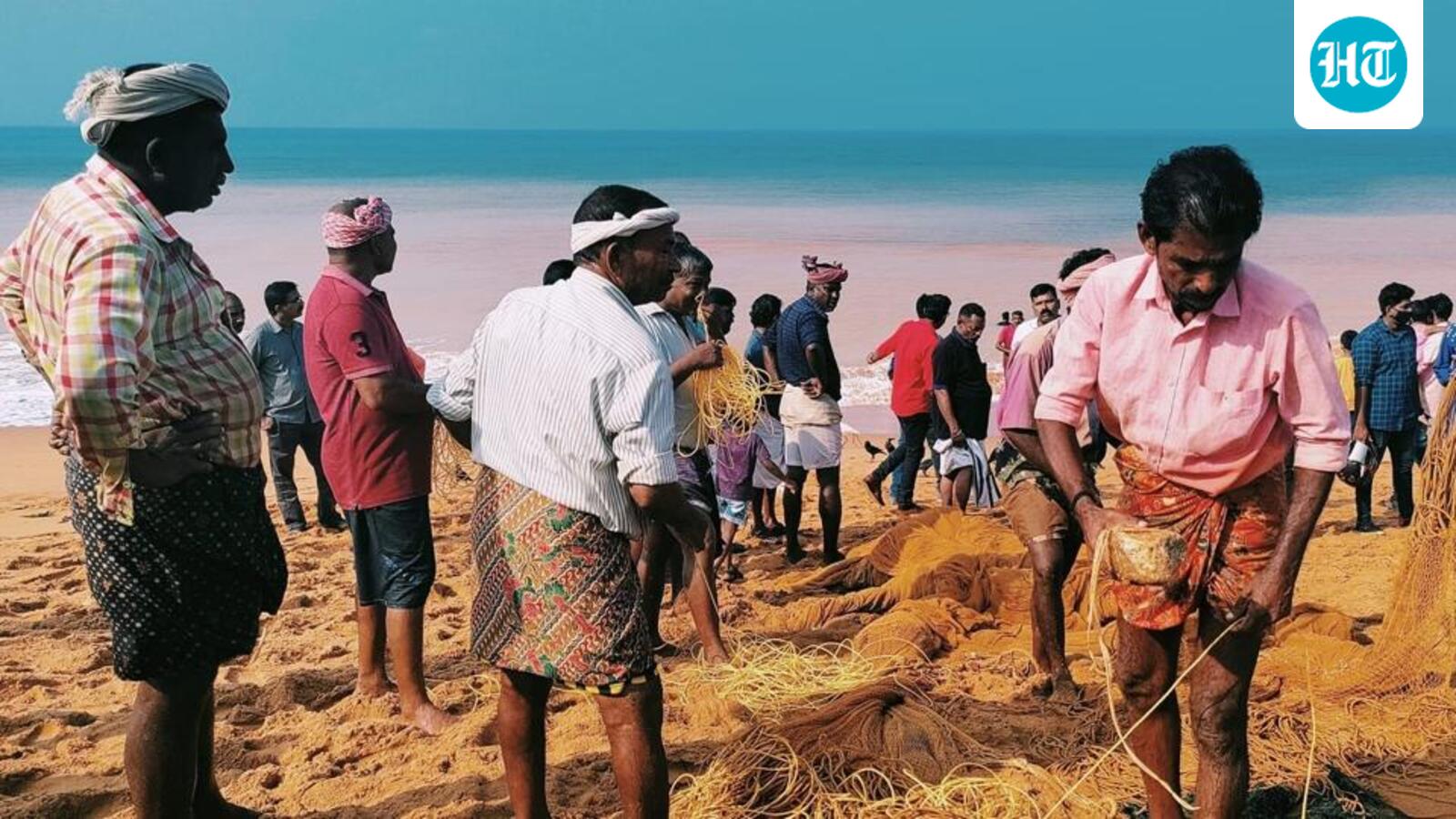
The Centre is stepping up efforts to develop Lakshadweep and the Andaman and Nicobar Islands as major hubs of high-value marine fisheries, with a focus on tuna, seaweed cultivation and ornamental fish, as part of its broader Blue Economy strategy.
The two island territories, which together account for nearly 40% of India’s Exclusive Economic Zone (EEZ), are being positioned to tap underutilised marine resources through modern fishing fleets, improved cold-chain infrastructure, processing facilities and stronger export linkages.
Under the Pradhan Mantri Matsya Sampada Yojana (PMMSY), the government envisaged investments of ₹218 crore for the Andaman and Nicobar Islands and ₹175 crore for Lakshadweep, taking the combined allocation to ₹393 crore.
“Island fisheries offer considerable scope for expanding high-value marine production, but the emphasis is on scientific exploitation of resources rather than indiscriminate fishing. We want local communities to benefit from the entire value chain, from harvesting to processing and exports,” a senior fisheries ministry official said, requesting anonymity.
The initiative follows the Union Budget 2025-26 announcement of an enabling framework for sustainable utilisation of fisheries resources in the EEZ and the high seas, with particular emphasis on the two island territories.
India has a coastline of approximately 11,099km and an EEZ of nearly 2.4 million sq km, with an estimated marine fisheries potential of 5.86 million tonnes.
The fisheries sector supports the livelihoods of nearly five million fishers and contributes to food security, employment and export earnings. Seafood exports were valued at around ₹73,890 crore in 2025-26.
Tuna emerged as the centrepiece of the island fisheries roadmap. The waters around both territories hold significant stocks of yellowfin, skipjack and bigeye tuna, offering opportunities for expanding export-oriented fishing.
Lakshadweep has drawn up a five-year plan to double tuna production to 50,000 tonnes. The strategy includes introducing deep-sea and mother vessels while strengthening its traditional pole-and-line fishing practices.
In the Andaman and Nicobar Islands, a dedicated tuna cluster under PMMSY is expected to accelerate fleet modernisation, expand cold-storage capacity and improve post-harvest handling. A strengthened presence of the Marine Products Export Development Authority (MPEDA) is also expected to facilitate direct exports and improve market access.
“Reducing post-harvest losses and ensuring quality preservation are as important as increasing the catch. Without reliable cold chains, processing and logistics, island fishers cannot fully realise the value of their produce,” another official said.
The government is also looking beyond capture fisheries.
Lakshadweep has been identified as a dedicated seaweed cluster, with plans for cultivation, seed banks, hatcheries and training facilities. Seaweed has applications in food, pharmaceuticals, cosmetics and other bio-industries.
Ornamental fisheries offer another potential growth area, particularly in Lakshadweep, which has more than 300 reef-associated ornamental species.
The proposed approach involves regulated collection, medium-scale rearing units and conservation-based marketing.
Infrastructure development, including fish landing centres, ice plants, boat-building facilities, fish aggregating devices, onboard preservation systems and value-addition units, is expected to support the expansion.
Officials said the larger objective was to create island-based fisheries value chains instead of allowing the territories to remain primarily suppliers of raw marine produce.
However, the expansion will require careful ecological management, particularly given the vulnerability of coral reefs and lagoon ecosystems. The government’s challenge will be to reconcile higher production and export ambitions with marine conservation and the livelihoods of island communities.
KioskNews shows a cleaned-up reading view extracted from the publisher’s page — the original always lives on their site, not ours.