Bennett eyes Netanyahu's political legacy as Eisenkot's coalition clock ticks - analysis
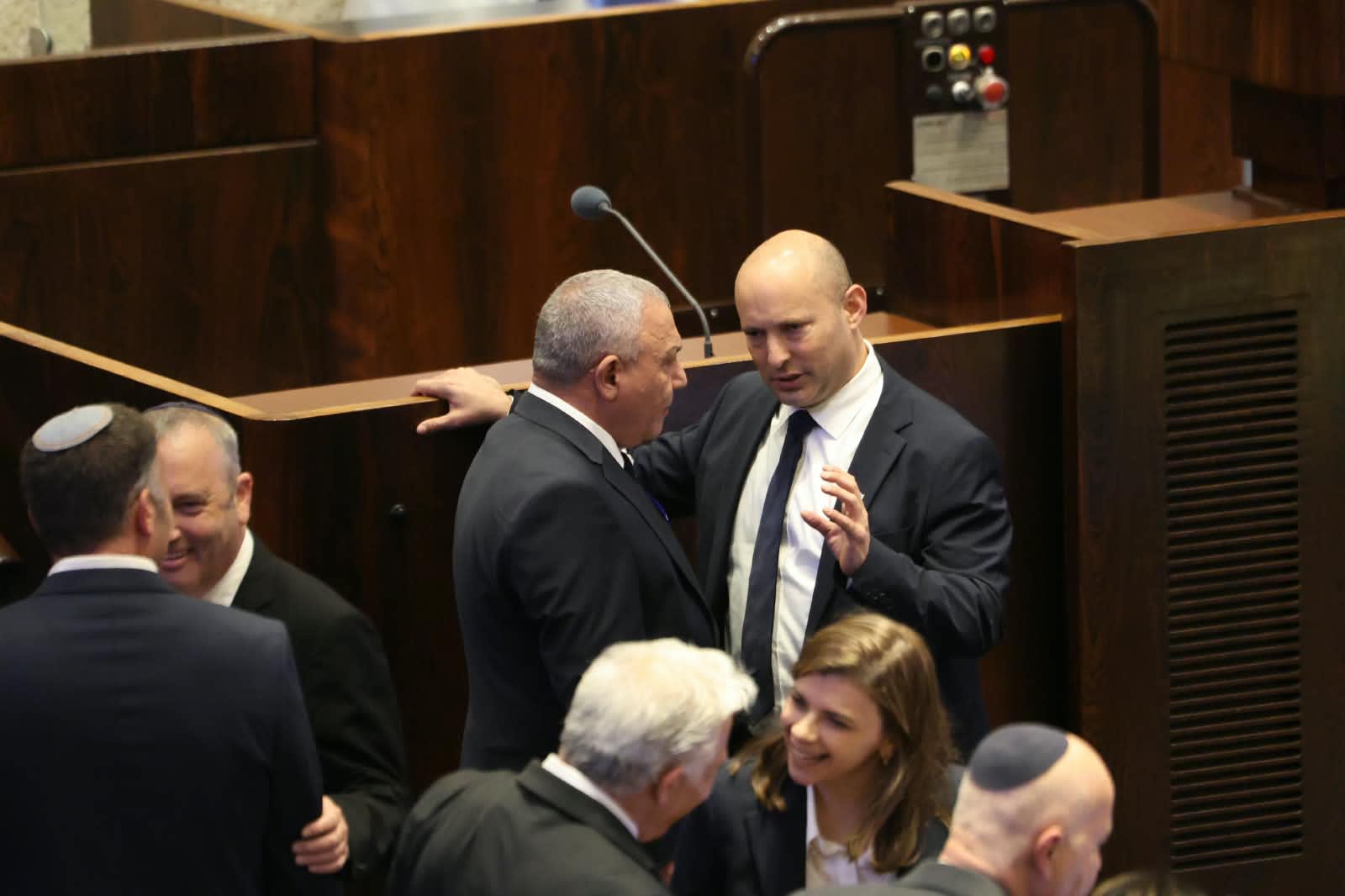
Questions are mounting within the bloc led by Yashar chairman Gadi Eisenkot over whether Naftali Bennett's push for a unity government is also intended to position him as Prime Minister Benjamin Netanyahu's eventual successor, as Eisenkot and Avigdor Liberman pursue competing paths toward forming a coalition ahead of the December 6 deadline.
If Bennett is seeking to establish himself as Netanyahu's future successor as leader of Israel's right-wing, the move makes political sense, even if sources within the Eisenkot-led bloc believe its chances of succeeding are slim.
In the next election, Bennett could present himself as someone who tried to establish a unity government and did not rule out cooperation with Likud from the outset. Even if the talks fail, he could argue that he sought to form a broad government but that his prospective partners were unwilling to compromise. Meanwhile, Eisenkot is preparing for the possibility that coalition negotiations will fail.
This possibility has raised suspicions among figures in the Eisenkot-led bloc, who believe Bennett is promoting the idea of a unity government while Eisenkot and Liberman bear most of the political cost of negotiations with the haredi (ultra-Orthodox) parties.
While the two are exploring compromises over military conscription that could provoke opposition among their voters, Bennett continues to emphasize his commitment to those who serve in the military.
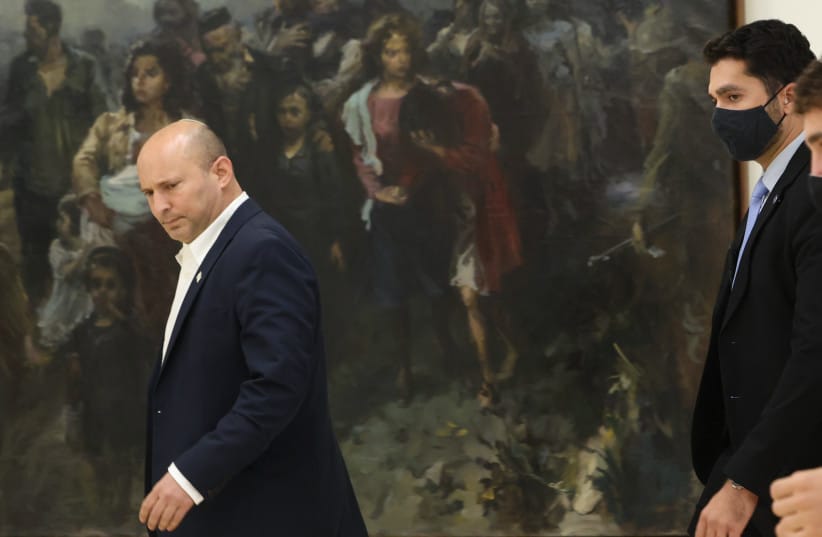
Bennett's unity government ambitions raise questions
Figures within the bloc are questioning whether this reflects only a difference of principle or whether it is also a political maneuver designed to allow Bennett to enter another election without paying the public price associated with concessions to the haredi parties.
The framework Bennett is seeking to advance also remains unclear.
On the one hand, he presents a unity government as an option that deserves serious consideration and does not entirely rule out cooperation with Netanyahu.
On the other hand, former MK Vladimir Beliak of the B'Yachad party claimed in an interview with Kan Moreshet that Bennett is seeking to establish a government with Likud, but without Netanyahu.
Asked whether talks were taking place with figures in the party, Beliak replied, "We are talking to everyone."
His remarks leave open the question of whether Bennett is seeking a government in which Likud would participate without its leader, or whether he still sees the possibility of a broader arrangement that would include Netanyahu.
Eisenkot pushes for decision as coalition deadline approaches
These differences concern not only the identity of the next prime minister but also how the leaders of the Eisenkot-led bloc intend to form a coalition.
While Bennett continues to press for exploring the possibility of a unity government, Eisenkot wants to exhaust all available options but has made clear that he will not allow negotiations to continue indefinitely.
From Eisenkot's perspective, if talks to establish a broad government do not produce an agreement, the Knesset should approve a national emergency government, with the possibility of expanding it either before or after it is sworn in.
In doing so, he is setting a timetable for his partners that could force them to choose between the competing frameworks before the mandate expires on December 6.
Liberman, meanwhile, continues to pursue the option of reaching an agreement with the haredi parties.
Talks with the ultra-Orthodox parties have shown progress in the preliminary legal work, but no concrete framework or agreed formula for a military conscription law has emerged. Liberman has previously signaled a willingness to compromise over haredi conscription.
The work involves reviewing comments made by High Court of Justice judges and rulings issued on the matter to determine which arrangements could be advanced, which provisions would need to be amended, and what legal constraints must be taken into account before political commitments are finalized.
One of the main obstacles is the need to reach a formula that simultaneously meets the demands of the haredi leadership, the needs of the IDF, and the restrictions imposed by the Supreme Court.
According to published reports, Miri Frenkel-Shor, legal adviser to the Knesset Foreign Affairs and Defense Committee, has expressed doubts about the possibility of formulating an arrangement that would withstand judicial scrutiny.
Liberman has clarified that no framework has been formulated and that the work underway is a legal review rather than negotiations over the final wording of a law. He has also denied reports that the legal adviser opposes his proposed draft framework.
Legal obstacles complicate talks with haredi parties
There is concern that even if the parties manage to reach a political agreement, they could struggle to implement it if the arrangement fails to meet legal requirements.
Haredi figures emphasize that only the court itself can change or overturn certain rulings, should it find grounds to do so.
From their perspective, agreements that do not provide certainty regarding the status of yeshiva students and the issue of enforcement would not be sufficient to justify joining a government.
Under these circumstances, each of the Eisenkot-led bloc's leaders is pursuing a different course as the time remaining to establish a government grows shorter.
Bennett wants to exhaust the possibility of forming a unity government, Liberman is examining the limits of compromise with the haredi parties, and Eisenkot is making clear that, ultimately, he intends to bring the question of forming a government before the Knesset for a decision.
The question is whether these separate efforts will converge into a common agreement or whether the differences between them will remain unresolved when the time comes to make a decision.
KioskNews shows a cleaned-up reading view extracted from the publisher’s page — the original always lives on their site, not ours.