Inside the Kenyan manufacturer betting on Africa’s industrial future
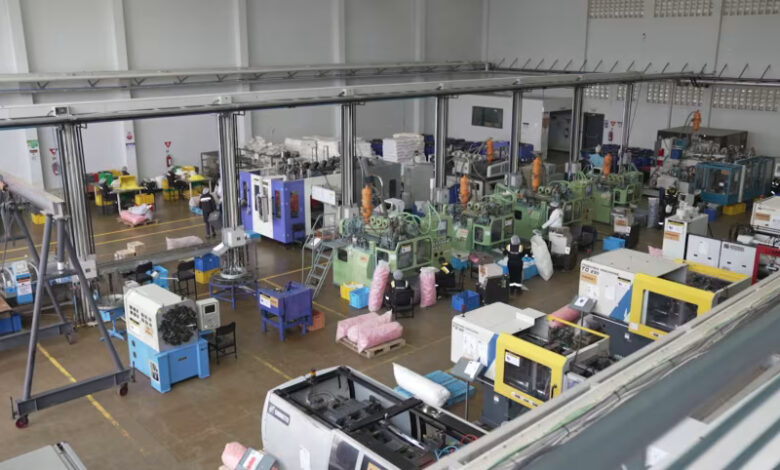
In a central Nairobi factory, a steady stream of household, hair and skincare products rolls off the production line.
HACO Industries makes around 90 products designed for African consumers. Its brands reach more than 3 million families across the continent, while raw materials are sourced from more than 500 farmers in Africa.
For Mary-Ann Musangi, whose family launched HACO more than 50 years ago, the opportunity lies in making products on the continent for people whose needs the business recognizes.
“How do we reach African consumers with products that they want and need, manufactured by a company that understands them — understands African skin, African hair and African needs?” she said.
HACO currently exports to eight African countries. Kenya is its largest market, but it also has a presence in Uganda, Rwanda, the Democratic Republic of Congo and Zambia. “Distances can be a challenge and African logistics is one of the key challenges in terms of penetrating across the continent,” Musangi said.
The company’s plastics plant, which produces the packaging for its products, has the capacity to produce 5 million components a month, according to its manufacturing director, Peter Ndichu. A separate plant has the capacity to process and pack 1,365 metric tons of products monthly.
HACO is trying to strengthen its supply chain by buying more ingredients within Africa. The company works with small and medium-sized suppliers of natural oils, offering technical support to help them meet its quality standards.
Shea butter is now sourced from Uganda or Ghana. Ndichu said HACO previously imported it from the United States for 5,000 Kenyan shillings ($38.50) per kilogram, compared with 1,000 shillings ($7.70) per kilogram from Uganda.
HACO is now looking to automate more of its operations. “In terms of packing, we are currently achieving 3,000 pieces in an hour,” said Ndichu. Automated machinery could quadruple that to roughly 12,000 items an hour, he said, adding that HACO plans to build a new factory to accommodate the upgrades.
Hubs and partnerships
To support its goal of exporting to 30 African countries by 2030, HACO plans to establish five regional hubs across Africa. Ghana is set to become its West African manufacturing base, from which products can be exported to neighboring markets.
Musangi said collaborating with local companies will be essential for expansion.
“Africa is so fragmented in many ways: the countries, the boundaries, our taxation laws, our policies, our culture, our language, our money, currency. We’ve got to see, how do we reduce these points of fragmentation?” she explained. “The only way I see we can do it is through these partnerships, working with local people.”
In Ghana, HACO is partnering with Ayewa Labs, a product development and manufacturing firm specializing in making goods from African ingredients. Founder Nanayaa Bates said the African Continental Free Trade Area — which came into effect in 2019 and is the world’s largest free-trade area by number of countries — is helping the company attract clients from other African countries.
HACO supplies raw materials for Ayewa, which then manufactures products for other companies beyond Ghana. Bates said the partnership had increased Ayewa’s manufacturing output tenfold.
Manufacturing is seen as an important route to economic growth and job creation across Africa, yet in many countries it accounted for less than 15% of gross domestic product in 2023.
Musangi argues that African countries should retain more of the value generated by their raw materials. “It is unacceptable that we continue to simply extract raw materials from Africa and send them out to the West for them to manufacture and send us the finished product to consume at much higher prices,” she said.
“We have the technical skills,” Musangi added. “Our youth are highly skilled and highly educated. We need to make sure that we develop and continue developing the manufacturing sector so that we can add value to these raw materials.”
KioskNews shows a cleaned-up reading view extracted from the publisher’s page — the original always lives on their site, not ours.