Spirit of Hong Kong Awards finalist bridges the gap in accessible dental care
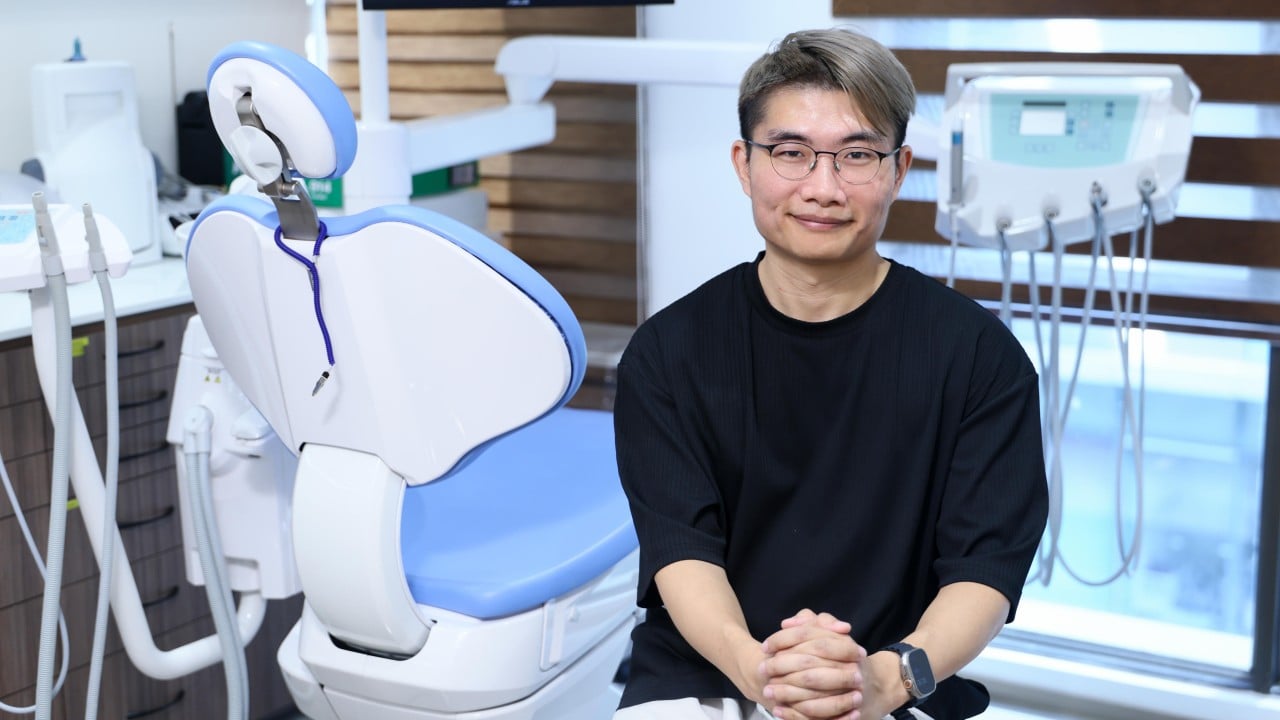
Hong Kong social worker Mark Cheung Kai-yuen is working to make dental care more accessible for cancer survivors, people with disabilities and children with special needs who often struggle to find suitable clinics.
Through Smile Again, the social enterprise he co-founded with dentist Dr Ho Kwun-yin, Cheung has adapted both the facility and the way care is delivered, with wheelchair-friendly facilities, longer consultations and tailored communication approaches.
Cheung is a finalist for the Spirit of Entrepreneurship Award in this year’s Spirit of Hong Kong Awards, co-organised by Sino Group and the South China Morning Post.
The dental service originally began with cancer survivors. Ho had encountered patients who received radiotherapy or major surgery for head-and-neck cancers, with some requiring complex reconstruction in hospital.
After returning to the community, they still needed routine dental care, but finding a clinic able to accommodate their medical histories and ongoing needs was daunting.
There is also no dedicated dental subsidy specifically for cancer patients in Hong Kong, according to Cheung.
While some elderly people and people with disabilities can qualify for existing assistance, cancer survivors may have to pay for continuing dental care themselves.
The pair first tested their approach through a funded project using rented dental clinics.
As people from other groups began approaching them, however, the limitations of borrowed premises became clear.
The success of that project led them to establish their own barrier-free clinic, supported through a second project under the Social Innovation and Entrepreneurship Development Fund.
Patients now include elderly people, wheelchair users, people with intellectual disabilities and children with special needs.
Cheung distinguishes between physical accommodations and what he calls “software” accessibility. Structurally, the clinic has step-free access, a larger treatment room that can accommodate electric wheelchairs and an X-ray machine that can be lowered for seated patients. Operationally, the practice tailors its care to each individual’s unique needs, unless a condition requires a specialist referral.
Some cancer survivors, for example, may experience restricted jaw movement, muscle deterioration or swallowing difficulties after treatment, meaning even a routine cleaning requires extra time and adapted procedures.
For an anxious child, staff might suggest a parent have their teeth cleaned first as a demonstration, while other patients may use an initial visit simply to familiarise themselves with the clinic and discuss their needs.
Cheung and Ho split responsibilities accordingly: Ho leads the clinical practice, while Cheung oversees non-clinical operations, including fundraising, partnerships, government relations and patient communication.
Keeping the model financially viable remains a challenge. The clinic has been operating for about a year, but treatments for the underprivileged still need funding support.
Cheung said healthcare services require substantial upfront investment, while restrictions on advertising dental services make reaching potential patients harder.
The business also avoids recommending a more expensive treatment simply because it produces more revenue.
Cheung cited dental implants as an example, noting that dentures or bridges may be more suitable for patients who would struggle to maintain implants properly.
“The priority is always the patient’s best interests. We recommend the treatment that is most suitable for them, not the procedure that brings in the most revenue,” he said.
In addition to the Social Innovation and Entrepreneurship Development Fund, Cheung also thanked Jing Yuan Charity Foundation, Koo’s Giving Charitable Foundation and Social Impact Partners for supporting Smile Again’s work.
Launched in 2013, the Spirit of Hong Kong Awards recognise society’s unsung heroes and organisations whose work might escape public attention.
KioskNews shows a cleaned-up reading view extracted from the publisher’s page — the original always lives on their site, not ours.