Whatever happened to 8K TVs?
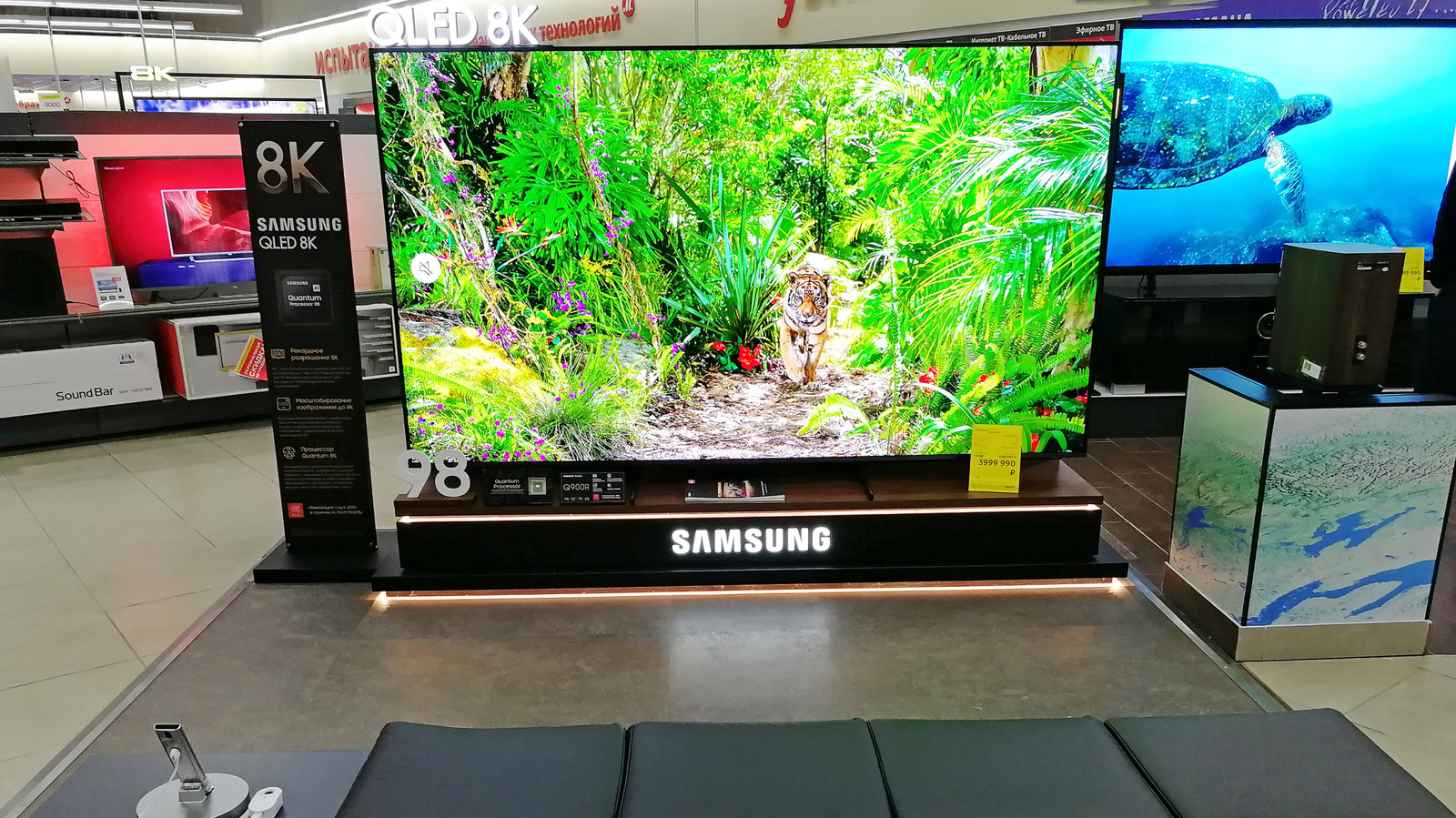
More pixels weren’t enough to convince viewers or the TV industry that 4K needed to be replaced.
Darkwisper S/Shutterstock
If you're up for a good laugh, go back and read some articles about 8K TVs from between 2016 and 2022 (give or take). At the time, you've have thought it was a done deal that TV tech was shifting to 8K, and consumers needed to just "get over it." Yet here we are in late 2026, and there are about as many 8K TVs in homes as there are Atari Jaguars and Nintendo Virtual Boy consoles.
That supposedly inevitable future never became a reality. The celebrations ended quickly, with LG backing out of the 8K market this year when LG Display stopped making 8K LCD and OLED panels (distinct from LG Electronics, which sold the TV sets). Sony discontinued its remaining 8K TVs in 2025, while TCL had already cited low demand to explain why it was backing out. Samsung is the lone holdout, with an 8K QN990H in its 2026 lineup.
The sales figures speak volumes. In September 2024, research firm Omdia reported nearly a billion 4K TVs in use worldwide, compared with cumulative sales of just 1.6 million 8K sets since 2015. While those are two separate measures, it still illustrates an enormous gap in adoption. Omdia also noted that 8K sales peaked in 2022.
The content never caught up with the screens

Simpson33/Getty Images
An 8K TV is capable of displaying 7,680 x 4,320 pixels. In theory, you'd think everyone would be interested in getting four times as many pixels as 4K, but this number is meaningless when there are virtually no movies, TV shows or streaming libraries in 8K. Streaming and physical media offerings never developed a viable 8K ecosystem comparable to 4K's, making it difficult to justify spending between $3,000 and a mind-numbing $40,000 for a new 8K TV.
To be fair, it's inaccurate to say there are no 8K broadcasts anywhere. Japan's NHK operates BS8K, a dedicated channel featuring programs around arts, cultural topics and nature. There are a few others, like China Media Group's CCTV-8K and Spain's RTVE, but all three combined will barely move the needle.
With little to no 8K content, the only remaining option is upscaling to the higher resolution. This will certainly improve the overall presentation, but it's not a good advertisement for 8K's capabilities without true 8K content.
There's also a practical angle to consider: four times the pixels of 4K means more image data to process, store and transmit. While compression and other settings determine the overall bandwidth required, many people's home internet connections couldn't handle 8K streams even if they existed. And 8K gaming requires extreme hardware that almost nobody has (or can afford).
Without an established supply of content that takes advantage of the improved visuals, consumers never had a reason to purchase these TVs. The promised upgrade never developed the necessary momentum.
Is there any point in getting an 8K TV?
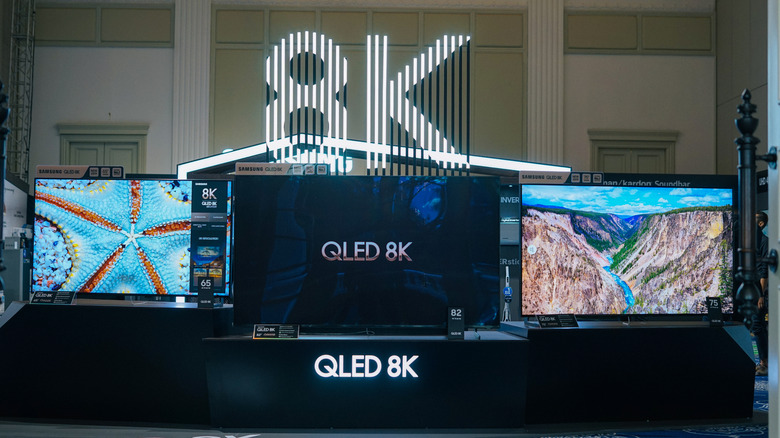
Lukmanazis/Shutterstock
There might be an odd reason to try an 8K TV, though it depends on the specific use because 8K is not going to future-proof anyone's living room in its current state. If you somehow have native 8K material and a screen large enough to make a visual distinction, it's a viable improvement over 4K. But the screen size, viewing distance and the content make all the difference.
A 2025 University of Cambridge study explains this limitation: it's all about how much detail the human eye can make out, with the study determining that the benefits depend on field of view. For example, a 44-inch 4K or 8K set viewed from 2.5 meters away fails to deliver anything better than a a QHD screen of similar size.
Granted, that's a specific viewing arrangement, but it's evidence that there is only so far certain technologies can advance before they no longer offer additional value to consumers in typical conditions. A lot of this thus comes down to diminishing returns: moving from SD to 1080p was a much larger jump than 4K to 8K is. Contrast, color performance, HDR and brightness can help, but we're talking about incremental improvements that cost a lot more than a solid 4K set. Plus, you can always improve your 4K TV's picture quality.
For the vast majority of shoppers, a 4K TV is the best option. An enthusiast with a massive living room and enough space to position a 65-inch+ 8K set at a good distance may get some enjoyment out of it. As far as supply and demand is concerned, however, even the most enthusiastic tech consumers aren't interested.
KioskNews shows a cleaned-up reading view extracted from the publisher’s page — the original always lives on their site, not ours.