Huang Qifan, China’s political tumbler, falls after a decade of close corruption calls
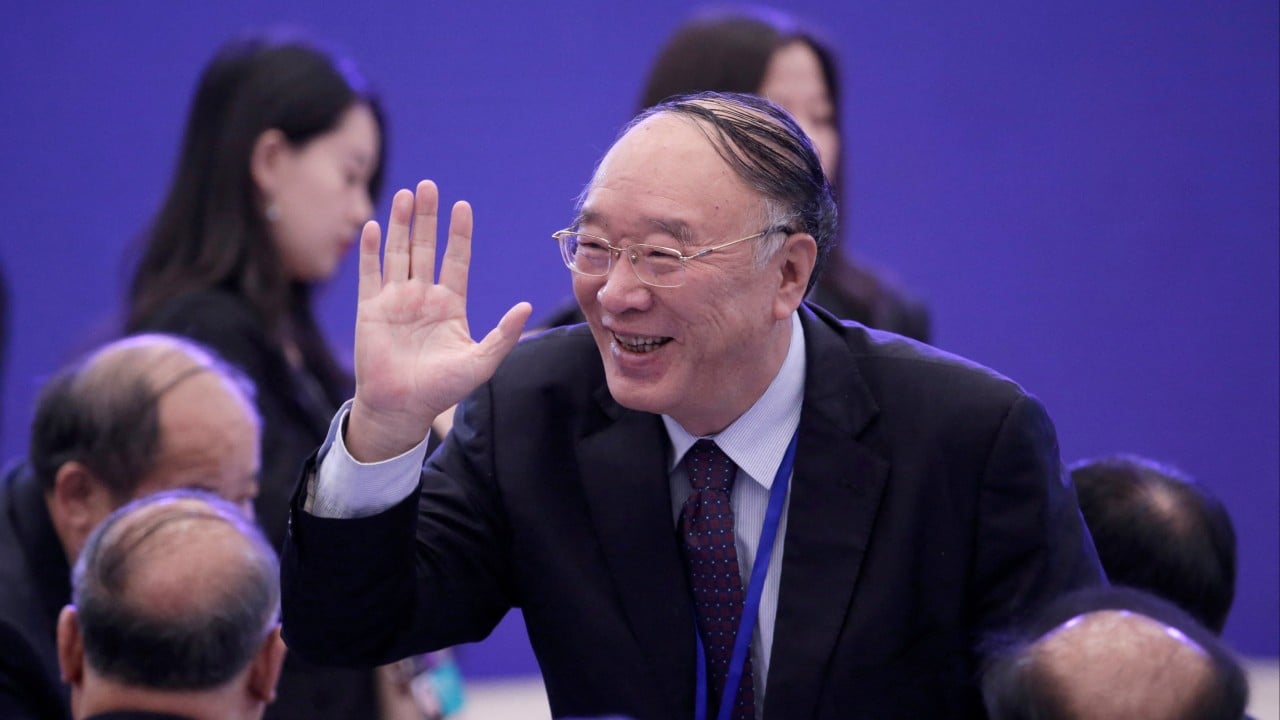
Huang, 74, was also very visible after he left public service in 2018. Rather than retreat to retired obscurity, Huang kept up a busy schedule of interviews and conferences across the country, firing hot takes on China’s economic issues.
So when news of the corruption investigation into Huang finally came on Tuesday, it was a surprise to many – not only because it involved one of China’s most celebrated economic technocrats, but also because it came so long after the political tremors around him appeared to have stopped.
“Subjecting someone like Huang, who had emerged from many previous rounds, to a formal corruption investigation, before the fifth plenum sends a very serious message to the whole party: corrupt officials should not harbour any illusions of escaping detection,” said a Beijing-based political scientist, who declined to be named due to sensitivity of the matter.
“There is no political ‘tumbler’ and no safe landing for corrupt officials in the anti-corruption fight.”
The fifth plenum is a party meeting scheduled for October 26-29 in Beijing at which the organisation’s inner circle will discuss and adopt a landmark document to “deepening party self-governance”.
While many anti-corruption investigations into retired senior officials go unnoticed and unannounced, Huang’s unusually heavy speaking schedule made his downfall difficult to hide from the public.
The South China Morning Post understands that Huang was originally scheduled to deliver a keynote speech in Beijing on October 25 and another in Hangzhou the next day.
Before Tuesday’s announcement, word got out that he would miss the Hangzhou event. An employee at AIA Group – the organiser of the October 25 speech in Beijing – said they had not been able to reach Huang or his secretary since Monday.
Huang’s reputation as a tumbler goes back to his relationship with Bo, the charismatic and swashbuckling Politburo member who ran Chongqing from 2007 to 2012.
As Bo rolled out his ideologically charged “singing red songs and smashing the dark forces” campaign, Huang was the administrative and economic brain behind the policies that became known as the “Chongqing model”.
The model combines state-led capitalism, aggressive public-welfare provision, and foreign direct investment with a populist revival of revolutionary Maoist culture and a heavy-handed public security crackdown.
Positioned as an alternative developmental path to China’s coastal, market-driven consensus, the model gained national and international attention as a potential blueprint for addressing rising wealth inequality, regional imbalances and social stratification.
The two men projected an image of an unshakeable governing duo. During the national parliamentary “two sessions” in Beijing in March 2010, Huang famously described his working relationship with Bo as “like a duck to water”. He was also a magnet for reporters at the annual meetings, readily answering questions about the economy and Chongqing.
That alliance faced a critical test in February 2012, when Bo’s estranged police chief, Wang Lijun, fled to the US consulate in Chengdu, triggering one of China’s biggest political scandals in decades.
Following the diplomatic stand-off, Bo was removed from the party’s leadership. He was later sentenced to life in prison on charges of bribery, embezzlement and abuse of power.
The aftershocks hit many of Bo’s subordinates in Chongqing, as the municipality’s new leadership headed by caretaker party chief Zhang Dejiang, repeatedly pledged to “eradicate” Bo’s “toxic influence”. Despite the chaos, Huang remained in position.
In November 2012, Sun took over from Zhang, becoming Huang’s new partner and direct supervisor.
Like Bo before his fall, Sun was also seen as a political rising star. He relied on Huang to maintain the city’s administrative machinery and drive double-digit economic growth. Huang, it seemed, had weathered the Bo saga unaffected, and was among six regional officials to be part of President Xi Jinping’s delegation to the United States in 2015.
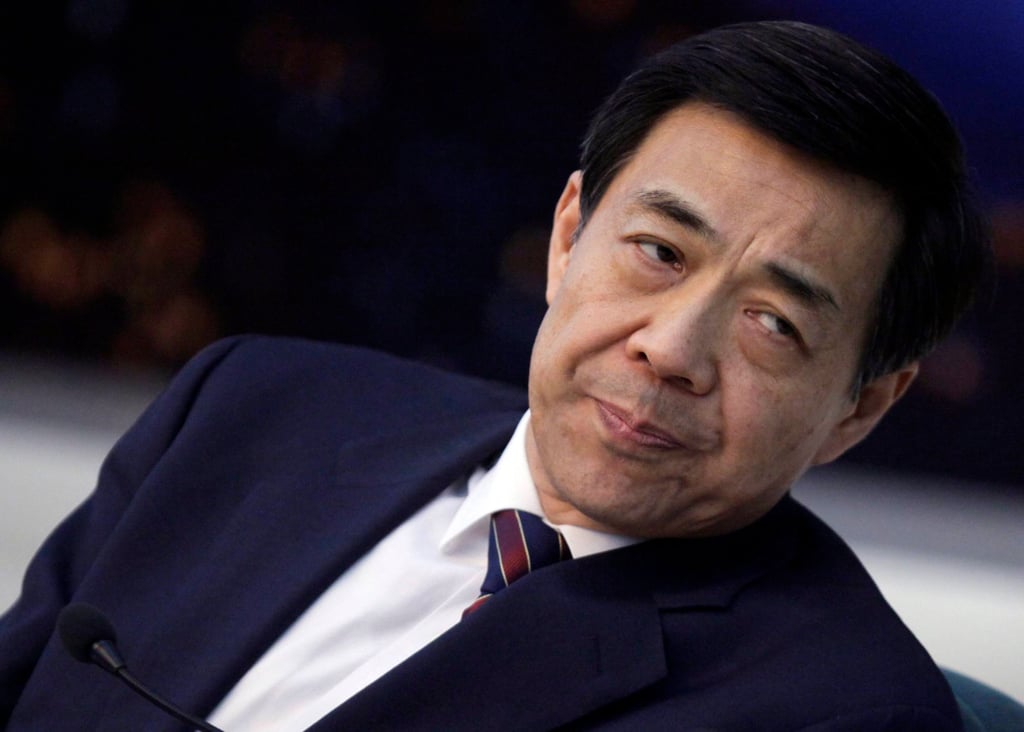
The political ground shook beneath Chongqing again in 2017, just months after Huang stepped down as the city’s mayor. Sun was rounded up in anti-corruption investigation during a trip to Beijing for a top-level meeting, and ultimately sentenced to life imprisonment on corruption charges.
The southwestern metropolis again pledged to clean up the negative influence of a disgraced party boss and again Huang appeared to sail through the controversy. Huang stayed on in his semi-retired role in the national legislature as vice-chairman of the National People’s Congress Financial and Economic Affairs Committee, finally stepping down in March 2018.
Even after his retirement, Huang, respected as a capable economic manager, remained an influential intellectual heavyweight. Affiliated with prestigious platforms including the China Centre for International Economic Exchanges, the China Finance 40 Forum and Fudan University, he had a towering media profile, offering perspectives on a wide range of economic issues.
In 2022, Huang warned that China’s property market had reached a turning point, questioning whether the country could sustain its decades-long construction boom.
As recently as May this year, he described China’s record US$1.2 trillion trade surplus in 2025 as “shocking”, urging Beijing to rebalance trade through a combination of gradual yuan appreciation, tariff cuts and improved benefits for workers.
He is known among various lecture organisers as exceptionally proactive and eager to take the podium, and is said to have told organisers that he is willing to talk on any issue.
He is also believed to be in good health for his age, with a fondness for steak and cigars.
His confidence was built on decades of economic policy experience.
Born in Zhuji in Zhejiang province in 1952, Huang rose through Shanghai’s industrial bureaucracy.
Entering the municipal party and government apparatus in 1983, he was deeply involved in the early development and opening of the Pudong New Area.
In October 2001, he was transferred to Chongqing as a vice-mayor, overseeing the city’s industrial policy, state-owned assets, taxation and financial sectors before becoming mayor in January 2010 – a post he held for nearly seven years.
Under his stewardship, Chongqing logged consecutive years of double-digit GDP growth, routinely outpacing the rest of the country.
Huang promoted the Chongqing-Xinjiang-Europe freight railway, and attracted Hewlett-Packard and Foxconn to build an electronics manufacturing hub in the city.
He also pioneered the municipal investment vehicle modelled on Singapore’s state fund Temasek and kept runaway property speculation in check through strict land-supply management and an expansive public rental housing programme.
01:19
Disgraced Communist Party star jailed for life
Huang’s downfall follows a smaller earthquake in Chongqing. Since 2022, the anti-corruption drive has sped up, targeting more and more senior officials across the country.
Chongqing was hit hard, with seven other high-ranking provincial officials coming under investigation since then. The most senior of the seven was then-mayor Hu Henghua, who came under the microscope in March, triggering another shake-up across the administration.
The investigation into Huang comes less than two weeks before the party’s fifth plenum, which brings together the hundreds of full and alternate members of the Central Committee.
The Central Committee’s ranks have been thinned by the anti-corruption campaign, with 34 of its 205 full members under investigation or stripped of their status as deputies to the National People’s Congress.
02:57
China’s anti-corruption fight in numbers: 13 years of data analysed
The Beijing-based political scientist said Chongqing had been the epicentre of China’s most disruptive political tremors over the past two decades and the investigation of Huang nearly a decade after retirement showed Beijing’s resolve to clean up Chongqing’s factional legacy, allowing no perceived seniority to impede its continued organisational housecleaning.
Not all are that surprised by Huang’s fall.
His family’s commercial dealings cast a persistent shadow over his administration. In Chongqing, the extensive business footprint of his son was “an open secret” among political and business circles, according to sources familiar with the situation.
“Many in Chongqing’s government and financial circles know his son very well, as Huang Qifan is widely regarded as the ‘godfather’ of Chongqing’s state-driven financial vehicles, which can mobilise a lot of resources,” said a source who worked with Huang.
The source said the younger Huang quickly immersed himself in China’s capital market deals.
KioskNews shows a cleaned-up reading view extracted from the publisher’s page — the original always lives on their site, not ours.