[Vantage Point] Follow VP Sara’s money, not her alibis
Vice President Sara Duterte’s denial of franchise ownership leaves the central questions unanswered: why Gencorp paid her more than P2.14 million, what financial interest she retained, and how that interest fits with the company’s government contracts. Her explanations must withstand scrutiny against the records.
Leaving a politician’s name off a shareholder list does not make corporate checks cut in their favor any less suspect.
In Vice President Sara Duterte’s impeachment trial, the defense panel’s own explanation for payments coming out of Gencorp Industries Inc. (Gencorp) creates a contradiction no amount of legal hair-splitting can smooth over: if she owned no shares, held no office, and had no hand in the company, what financial right entitled her to pocket more than P2.14 million of its cash?
Duterte’s public response makes that question harder to dismiss. In October, she denied owning a Jollibee franchise and accused Rappler of disinformation. But her statement also acknowledged a previous investment in a company within a legitimate business organization. Her denial concerned direct franchise ownership; it did not establish that she had extinguished every financial interest connected to the business.

There is a valid corporate principle here. Shareholders do not personally own a corporation’s individual properties or contracts; the corporation has a separate legal personality.
Duterte could therefore distinguish an investment in a company from personal ownership of its franchises. But that distinction cannot answer the separate question of whether she retained a financial interest relevant to constitutional restrictions on the Vice President.
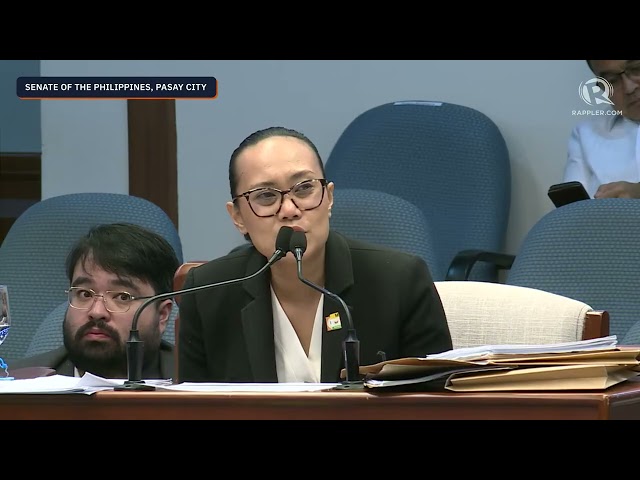
At the Wednesday, November 11 hearing, Gencorp counsel Suzette Balucanag-Punay testified that Duterte was neither a shareholder nor a corporate officer during 2022–2025. She nevertheless acknowledged disbursements totaling P2,142,369.14: P337,500 in 2022, P555,750 in 2023, P612,419.14 in 2024 and P636,700 in 2025. Duterte’s Statements of Assets Liabilities and Net Worth (SALNs) also identified Gencorp, or the related company names appearing in earlier declarations, as business interests. The payment explanation and sworn disclosures require reconciliation with the corporate records.
Attacking Rappler does not perform that reconciliation. Rappler defended its reporting by citing Duterte’s SALNs and the prosecution expert’s testimony.
Every disputed assertion remains open to scrutiny, including the expert’s assumptions. But criticism of the messenger cannot explain the financial entitlement described by the defense’s own witness. Duterte’s response needs investment records, not merely objections to how a headline characterizes ownership.
The defense’s magic phrase for this arrangement is “loose investment,” which supplies no recognized accounting classification.
Money placed in a business may represent equity, a loan, an advance or another contractual entitlement. The arrangement can be informal, but the company must still explain how it recorded the obligation and calculated the payments. Calling the investment loose does not loosen the obligation to account for it.
According to Balucanag-Punay, Duterte’s investment originated in Davao Bounty Times Food Corporation, whose intended franchise did not materialize, and was carried into the operation eventually housed under Gencorp.
Credibility problem
Yet the witness reportedly could not produce verifiable records establishing the original investment amount or explain the payment calculations. That leaves the central defense—return of capital—without the reconciliation necessary to substantiate it.
The P46,875 paid-up subscription discussed during the hearing is a starting point, not necessarily Duterte’s lifetime contribution. Later advances or investments could exist.
The proper test is to establish the opening balance, add subsequent funding, deduct earlier repayments and identify the remaining obligation after each check. If Gencorp was returning principal, its books should show what principal remained. Without that evidence, neither repayment nor disguised income should be declared conclusively established.
The corporate filings raise another credibility problem. Senator-judge Joel Villanueva noted that Gencorp listed two rank-and-file employees in 2023 and 2024 and none in 2025, despite operating several restaurants.
Balucanag-Punay could not explain the entries. Those figures do not establish that the outlets operated without workers; employment arrangements and reporting errors must be checked. They do, however, make unquestioning reliance on the filings difficult.
The related Metro City Chow Foods records present a more direct issue. Balucanag-Punay reportedly confirmed Duterte’s 20% shareholding, while maintaining that she did not attend meetings or run the business.
Separate testimony identified her continuing listing as a director and compensation committee member from 2022 to 2025. Nonattendance may address actual management activity; it does not, by itself, establish resignation from a corporate position. Where are the resignation, acceptance and replacement records?
Government business raises the stakes further. PhilGEPS testimony identified 49 Gencorp awards totaling P35.88 million between July 2022 and June 2026. Approximately P34.22 million—more than 95%—came from Davao City through 15 awards. Those are contract values, not proven collections, profits or Duterte’s personal receipts. Nevertheless, they establish a substantial public-business relationship requiring examination alongside her financial entitlement. (READ: Who is Tristan Domingo, the Davao official behind contracts awarded to Duterte’s company?)

Mayor Sebastian Duterte denied seeking special treatment for the company on his sister’s behalf and said he had not known of her connection. Eleven city awards reportedly used negotiated small-value procurement, a method that is not inherently unlawful. (READ: After Rappler report, more Gencorp contracts with Davao City Hall confirmed)
The records must establish compliance, including eligibility disclosures and applicable thresholds. Neither kinship nor repeated awards alone proves corruption, but neither excuses incomplete examination of the transactions.
Article VII, Section 13 of the Constitution prohibits the Vice President from participating directly or indirectly in business and from being financially interested in government contracts during tenure. Establishing a violation requires facts, dates and a legal determination.
A claim of no intervention in bidding does not resolve the separate financial-interest issue. Nor does directing attention to one restaurant branch settle the scope of an entitlement paid by the corporation contracting with government.
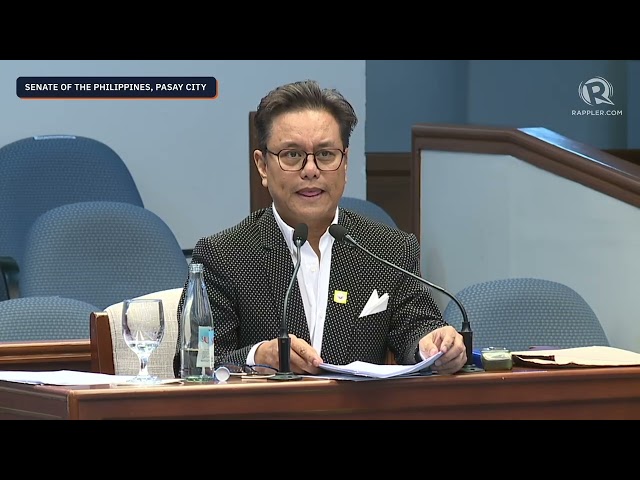
The prosecution must also resist overreach. Its expert’s attribution of more than P212 million in alleged Gencorp income rests on a disputed ownership assumption; corporate deposits are not automatically personal income. An inflated allegation would give the defense an easy target while obscuring the acknowledged payments and unresolved disclosures already requiring answers. Precision strengthens accountability rather than softening it.
Duterte need not personally own a restaurant counter for her financial relationship with its operator to warrant scrutiny. She and Gencorp should produce the investment history, transfer agreements, ledgers and payment records that explain that relationship. A denial of franchise ownership answers one question. The money, the sworn declarations and the continuing corporate positions demand answers to several more. – Rappler.com
KioskNews shows a cleaned-up reading view extracted from the publisher’s page — the original always lives on their site, not ours.