US backing for Israel has long been bipartisan. Will a Democrat-held Congress change that?
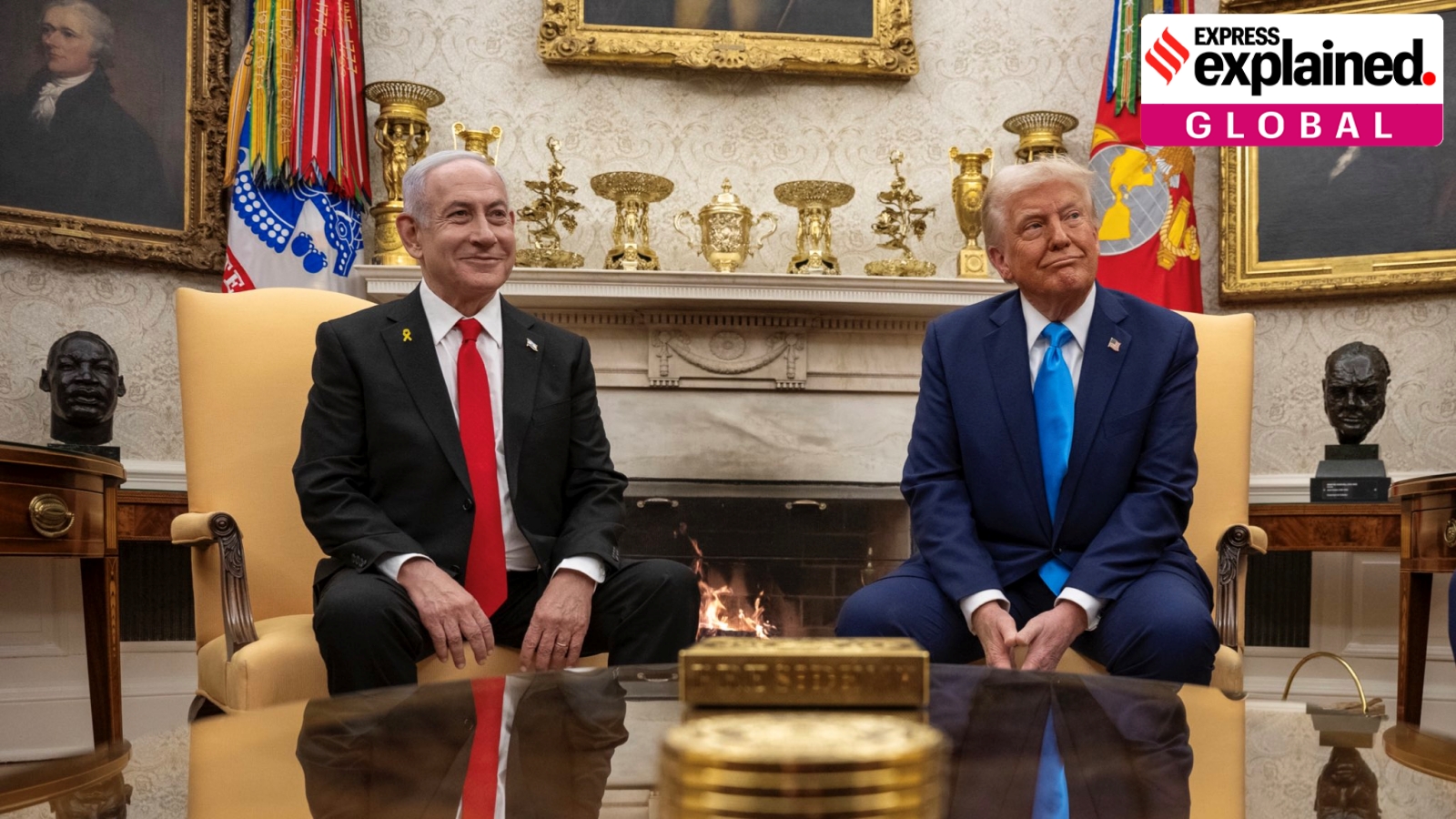
The morning after the Republican wipeout in the US midterm elections, Vice President J D Vance posted a lengthy postmortem on social media site X. The following was his prescription for Republicans to win back voters: End the Iran war, bring down the cost of living, focus on America — and “change our relationship to Israel”.
The Democratic wave — marked by a key Senate victory for a staunch Israel critic (Abdul El-Sayed) and Vance’s partial attribution of defeat to Israel — have brought the US-Israel relationship, and voters’ growing scepticism of it, into sharp focus.
Over the decades, Israel has largely been the one issue on which both Democrats and Republicans have largely been on the same page.
Multiple polls this year, however, have shown that public opinion is changing in the US, with people and politicians across the political spectrum questioning the uncritical backing for the country.
Indeed, just before the midterm polls opened, President Donald Trump said the US would cut off around $4 billion in annual aid to Israel, though it was not clear if this was an attempt to sway disillusioned voters.
Will the new political realities reshape the special ties between the US and Israel? What will be the attitude of the Democrats towards Israel? Will they shun their traditional position and assume a critical stance? We explain:
Formative years
The Democrats embraced the newly formed state of Israel in 1948 despite President Harry S Truman facing opposition from within his own administration. The US Department of State as well as the Department of Defence argued that recognising Israel would alienate oil-rich Arab monarchies, jeopardise the stance against the Soviet Union in the emerging Cold War and instigate prolonged regional instability.
Story continues below this ad
Truman recognised Israel just a few minutes after David Ben-Gurion declared independence. His decision was said to have been driven by a combination of personal moral convictions regarding Holocaust survivors, historical sympathy for Jewish statehood, and domestic pressure from American Jewish leaders and Democratic political strategists.
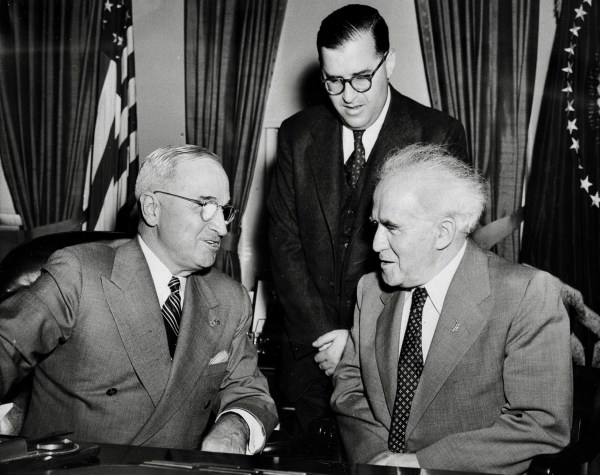 US President Harry S Truman (left) with Israeli Prime Minister David Ben-Gurion during the latter’s visit to the US in 1951. (Wikimedia Commons)
Democrats have traditionally served as a haven for American Zionism as well as pro-Israel advocacy for several decades. In contemporary international relations, Democrats’ policies towards Israel are defined by a “two-tiered realism”.
At the institutional level, the mainstream Democratic leadership maintains a commitment to Israel’s fundamental security, defence assistance and right to self-defence.
At the ideological level, however, a widening partisan and generational rift has emerged. Foreign policy experts such as Amnon Cavari and Shibley Telhami have noted that progressive Democrats increasingly view the Israeli-Palestinian conflict through the lens of civil rights, human rights universalism, and anti-occupational norms. Consequently, a section of the current Democratic leadership (the progressives) rejects unconditional support for Israel.
Republican realignment
Story continues below this ad
In the late 1970s, Republicans began to forge a strong alliance with White Evangelical Christians, who supported Israel due to their belief in dispensationalist theology, which professes that the modern gathering of Jewish people in the Land of Israel and the re-establishment of the Israeli state in 1948 are literal fulfilments of Biblical prophecy — and necessary precursors to the Second Coming of Christ.
By the 1990s, the Republican leadership adopted an approach that closely aligned with Israel’s right-leaning Likud party. Hence, they prioritised unconditional diplomatic protection at the UN in opposition to a negotiated two-state solution that requires Israeli territorial concessions and strong support for Israeli sovereignty claims over Jerusalem and the West Bank.
Democratic divergence
While Democrats at the core remain pro-Israel, the party’s broader base has questioned the favours extended to the Jewish state at the cost of US taxpayers.
US assistance to Israel is managed through structured statutory frameworks, primarily Foreign Military Financing. Since the 2016 Memorandum of Understanding negotiated under the Obama administration, the US has provided Israel with around $3.8 billion annually.
Story continues below this ad
However, contrary to the belief that US military aid to Israel has always been unconditional, several presidents have repeatedly frozen, delayed, suspended, or leveraged aid to compel Israeli strategic compliance (see box below).
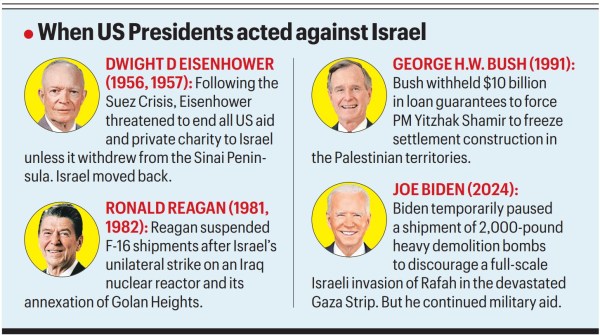 When US Presidents acted against Israel.
What the future holds
As the Democrats have secured a majority in both the Senate and the House of Representatives, and at a time when there seems to be a deadlock in Israeli electoral politics, bilateral ties are likely to be subjected to rigorous Congressional scrutiny.
With the Democrats in the majority in key committees, the Congress is likely to introduce stricter compliance mechanisms under existing legislation, including the Leahy Laws that prohibit the US military assistance to foreign security force units credibly implicated in gross violations of human rights. It can also invoke Section 620I of the Foreign Assistance Act, which restricts aid to countries that prohibit or restrict the transport or delivery of US humanitarian assistance.
Story continues below this ad
 A member of Israeli security forces aims his weapon at Palestinians as he tries to disperse Israeli settlers during an attack by settlers that prevented Palestinians and activists from continuing the olive harvest in the West Bank village of Qusra, Tuesday, Nov. 10, 2026. (AP Photo/Leo Correa)
Moreover, settler violence in the occupied West Bank and the expansion of outposts have resulted in friction between Democrats and Israeli leadership. The settler-related violence, which was once treated as a secondary diplomatic issue, is now seen by Democrats as a threat to US national security interests and the viability of a two-state solution.
But it would be premature to count on the new US Congress (it takes charge in January) forcing a sweeping shift in policy stance for two reasons.
First is Trump’s veto power, which would take a two-thirds majority in both Houses to overcome — something the Democrats don’t have despite their sweeping gains in the midterms.
Second, it is establishment Democrats — who have not exactly been strident in their criticism of Israel’s actions in Gaza — who appear poised to take up the top Congressional leadership positions: Hakeem Jeffries as Speaker of the House of Representatives and Chuck Schumer as Senate majority leader. Jeffries, to be clear, recently called for a “dramatic change” in the US policy on Israel, though it remains to be seen whether he follows through on the rhetoric.
Story continues below this ad
 Palestinians walk through a tent camp housing displaced people amid buildings destroyed by Israeli strikes in Gaza City, Sunday, Nov. 8, 2026. (AP Photo/Jehad Alshrafi)
But what is worth remembering is that Israel’s war on Gaza began in 2023, when Joe Biden was president. And Biden, an establishment Democrat, repeatedly backed Israel with arms shipments and aid despite the widespread humanitarian disaster that was unfolding in Gaza (see box above).
Israel, meanwhile, does anticipate some systemic pressure to condition military assistance on human rights compliance and territorial restraint. It also expects more open criticism of settlements.
Additionally, US foreign policy is likely to prioritise broader regional security arrangements — including Saudi-Israeli normalisation — related directly to progress on Palestinian sovereignty.
But it is unlikely to abandon its historical commitment to Israel’s core security and existence, even if the strategic baseline has shifted.
KioskNews shows a cleaned-up reading view extracted from the publisher’s page — the original always lives on their site, not ours.