Conflict without end: grief, fear and resilience in Kashmir – in pictures
Srinagar, 14 January 2008
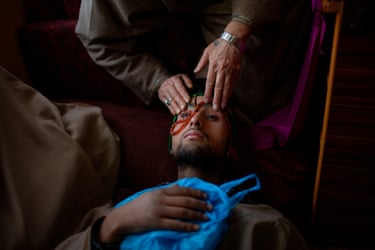
Photographer Robert Nickelsberg visited Kashmir repeatedly for more than 20 years, witnessing how a political uprising evolved into one of the world’s longest unresolved conflicts – and how its consequences have settled into the fabric of everyday life. In this image, a Kashmiri man suffering from temporary loss of eyesight is treated with prayers and curative koranic verses. Kashmir, the Valley is available to purchase from Kehrer Verlag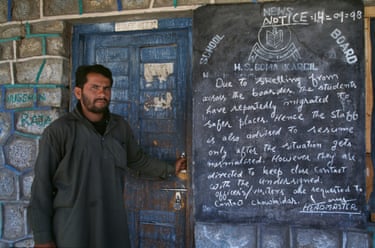
Ladakh, January 1998
An Indian schoolteacher stands near a sign at a closed public high school. The armed uprising in favour of Kashmiri independence from India began in 1989. ‘For me, as a photojournalist, the Kashmiris’ plight was the essence of the story,’ says Nickelsberg. ‘This work is my personal commitment, over two decades, to recording the deadly tactics deployed by both Pakistan and India. Twenty years later, tragically, the picture is unchanged’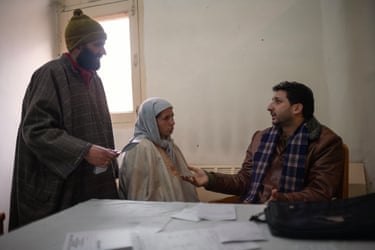
Srinagar, 10 January 2008
The uprising was triggered by a rigged state election, and with material and political support from neighbouring Pakistan. After 18 years of conflict and violence the population’s mental health has been severely affected. Figures of Kashmiri dead vary from 10,000 to 45,000. In this image a widow, Farida Sunderwani, whose husband was killed in crossfire between Kashmiri militants and Indian army soldiers in 1992, is treated by psychiatrist Dr Arshad Hussain (right), at the outpatient department of the state-run Sri Maharaja Hari Singh Hospital in Srinagar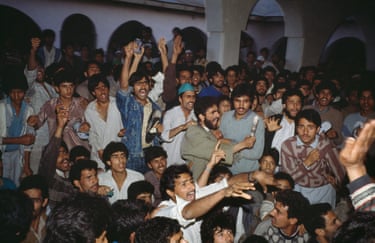
Anantnag, 8 October 1989
Moderate and militant Kashmiri separatists take part in a heated discussion at a mosque in Anantnag. Following the allegedly rigged Jammu and Kashmir state legislative elections in 1987, a call for independence and armed resistance began by the Jammu and Kashmir Liberation Front’s armed wing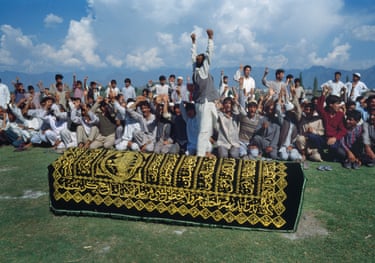
Srinagar, 20 September 1990
Mourners raise clenched fists at the funeral for a Kashmiri woman killed in crossfire between Kashmiri militant separatists and Indian security forces at Eid Gah, a space reserved for Muslim prayers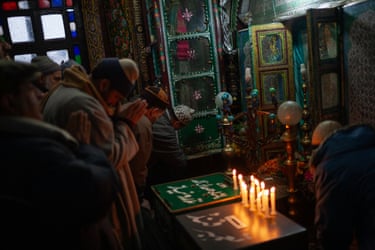
Srinagar, 16 January 2008
Robert Nickelsberg: ‘On most trips I made to Indian-administered Kashmir, I made an effort to visit the Shah-i-Hamdan shrine in Srinagar’s old city. Inside, I could quietly observe Kashmiris as they appeared to momentarily drop their fears and experience a period of calm, a sense of peace, either in deep thought or prayer, to recharge themselves, replenish their spiritual sides and find strength for their daily encounters with the conflict outside the walls of this historic site with an intricately decorated interior’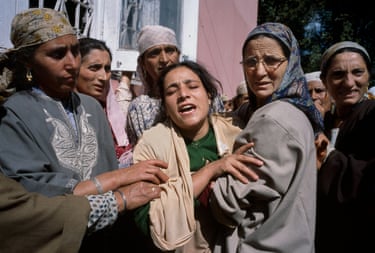
Sogam, 12 September 2000
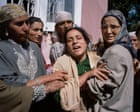
Women grieve over the body of Kashmir law minister Abdul Ghani Lone in Sogam. Lone was assassinated by a gunman during a campaign rally as a candidate in an upcoming state election. Lone, a moderate, had been in favour of dialogue with the Indian government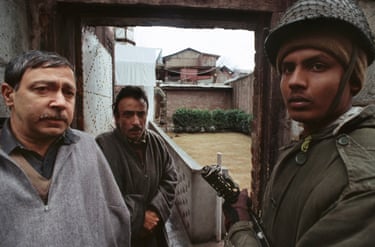
Srinagar, 27 January 1992
Nickelsberg: ‘The expressions on the two Kashmiris’ faces and the Border Security Force soldier are indicative of the tension that existed between Kashmiri property holders and the Indian security force. The BSF soldier was patrolling houses on a weapons search. What I knew from other house searches was that private citizens, although they may not be active in the conflict, could have their house used by Kashmiri militants to hide weapons and ammunition. If searches found either, they could face serious interrogation, torture and possible disappearance’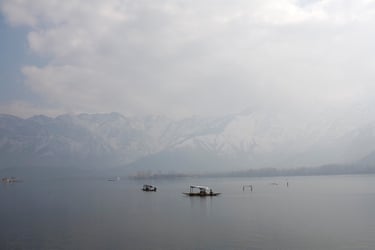
Srinagar, 23 April 2008
Indian tourists sightsee from a traditional Kashmiri boat, known as a shikara, on Dal Lake, Srinagar. Nickelsberg’s photographs stay close to the people living within overlapping political realities. Muslim families, Hindu Pandits, soldiers, local politicians, children and pilgrims inhabit the same visual field. The photographs resist easy hierarchies of victimhood or heroism; what holds the work together is a sustained attention to lived experience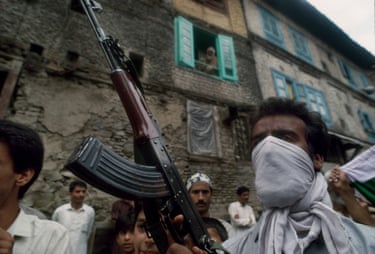
Srinagar, 18 August 1995
A pro-Pakistan Kashmiri militant, brandishing a Kalashnikov rifle, marches in a street demonstration against Indian authorities and security forces, on Pakistan’s Independence Day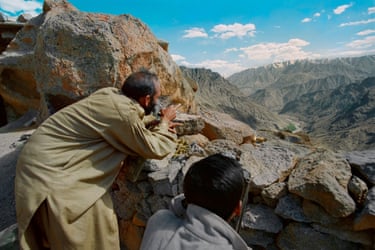
Gilgit-Baltistan, Pakistan, 27 June 1999
Two Pakistani army soldiers, one pointing and the other looking through a pair of binoculars, stand behind a rock wall at Mumtaz base camp, near the Line of Control border during the Kargil conflict. They were looking down a valley to where they’d made a direct artillery hit on a passing Indian Army convoy, five to six kilometres away. The conflict, which eventually lasted slightly over 11 weeks, began after Pakistani forces occupied Indian army positions that had been abandoned during the preceding winter months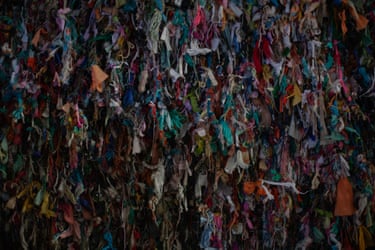
Srinagar, 19 January 2008
Kashmiris visiting the Makhdoom Sahib shrine tie a ‘desh’, or a piece of cloth, to wish for a positive outcome during a time of stress, trauma, sickness or sorrow. Shrines in Kashmir provide a space for spiritual solace, comfort or prayerKioskNews shows a cleaned-up reading view extracted from the publisher’s page — the original always lives on their site, not ours.