Nathan Fillion’s 14-Episode Stargate Replacement Officially Saved An Entire Sci-Fi Subgenre

Cathal Gunning has been writing about movies, television, culture, and politics online and in print since 2017. He worked as a Senior Editor in Adbusters Media Foundation from 2018-2019 and wrote for WhatCulture in early 2020. He has been a Senior Features Writer for ScreenRant since 2020.
While Nathan Fillion’s Stargate replacement might not have lasted long, the space-set sci-fi series still managed to salvage an entire subgenre with its short run. There are some TV shows that prove successful enough to launch entire genres, and others that are big enough flops to kill off entire genres for years. For example, The Simpsons effectively made adult animated sitcoms economically viable thanks to the show’s massive global success.
Without The Simpsons, the controversy magnet South Park, the long-running Fox sitcoms Family Guy, American Dad, and Bob’s Burgers, and everything from Rick and Morty to Big Mouth to King of the Hill might never have happened. Similarly, 1990’s infamous Cop Rock, a bizarre attempt to blend grounded cop dramas like NYPD Blue with full-blown musical theater, was a big enough disaster to almost entirely kill musical TV shows until Glee proved a hit almost two decades later in 2009.
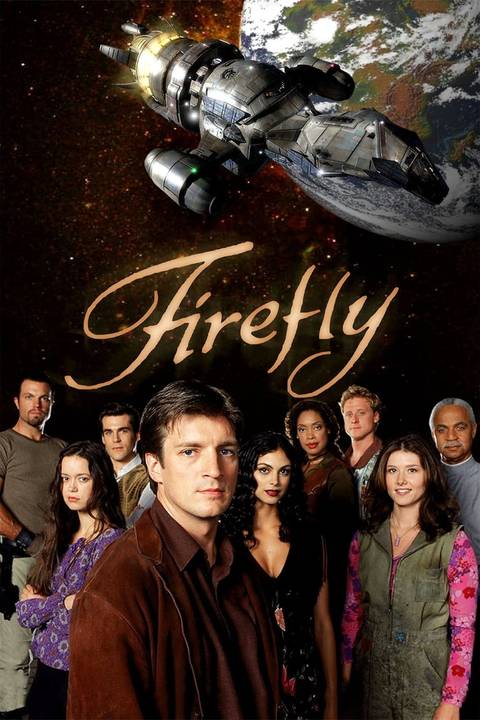
Between these two extremes, there is a more thankless role that shows can play. Series like the short-lived Stargate replacement Firefly, which aired for one 14-episode season in 2002, can be popular enough to keep their subgenre alive without actually lasting all that long themselves. A blend of futuristic Western tropes and space opera storytelling, Firefly was set in 2517 and focused on the spaceship Serenity’s ragtag crew including Nathan Fillion’s Captain Mal, Gina Torres’ tough second-in-command Zoe, the ship’s pilot, Wash, and Summer Glau’s child prodigy stowaway, River.
Firefly Deserved To Replace Stargate SG-1 As The Biggest Space TV Show Of Its Day

While stars like The Rookie’s Fillion and Resident Alien’s leading man Tudyk went on to star in major shows that lasted for years, Firefly burned both as brightly and briefly as its namesake. The show’s mix of Western plotting and a futuristic sci-fi setting wowed fans of the cult series, but critics were unsure and, more pertinently for a network TV show, mainstream audiences weren’t instantly hooked.
Canceled after a mere 14 episodes, Firefly enjoyed such great sales on DVD that the show still managed to spawn the theatrical movie spinoff, Serenity, in 2005. While Serenity wasn’t a box office hit, the movie did earn great reviews, and the space western as a genre was saved as a genre thanks to Firefly’s sacrifices. In the years that followed, SyFy’s five-season hit Killjoys effectively took Firefly’s "mismatched antiheroes" setup and turned the spaceship crew into amoral bounty hunters.
On the big screen, the Guardians of the Galaxy movies borrowed more than a little from the show’s setup, as did 2013’s dark dystopian satire Snowpiercer. Back on TV, in 2016, HBO’s Westworld took Jurassic Park author Michael Crichton’s spare story of a Wild West theme park whose robots go awry and crafted a Mystery Box masterpiece from that simple setup, blending a traditional Western setting with some truly wild and futuristic sci-fi story elements.
Without Firefly, Space Westerns Wouldn’t Have Survived As A TV Subgenre

By rights, Firefly should have been a major hit. The show arrived at a time when, after the mainstream success of Star Trek: The Next Generation, space-set ensemble stories were everywhere on traditional network TV. From Farscape and Babylon 5’s reboot to the entire sprawling Stargate franchise and the Battlestar Galactica reboot, it seemed like the timing was right for Firefly.
Infamously, this couldn’t have been further from the truth and now, over two decades later, Firefly is still seen as one of TV’s great “What might have been” stories. However, one must also consider the disastrous reception of big-budget sci-fi Western movies like 2011’s Cowboys & Aliens and 1998’s Wild Wild West in this context.
In light of these failures, it seems fair to suggest that the existence of space Westerns after 2002 owes something to the show’s cult fandom. For all of its brevity, Firefly had a tangible influence on the sci-fi genre in the years following its cancellation. Thus, although the show itself didn’t get to live long, Firefly did save the space western as a sci-fi subgenre.
- Release Date
- 2002 - 2002-00-00
- Network
- FOX
- Showrunner
- Joss Whedon
- Directors
- Allan Kroeker, David Solomon, James A. Contner, Marita Grabiak, Michael Grossman, Tim Minear, Vern Gillum
- Writers
- Cheryl Cain, Drew Z. Greenberg, Jane Espenson
KioskNews shows a cleaned-up reading view extracted from the publisher’s page — the original always lives on their site, not ours.