9 Best Space Shows Of The Past 30 Years, Ranked

Tom is a Senior Staff Writer at Screen Rant, with expertise covering everything from hilarious sitcoms to jaw-dropping sci-fi epics.
Initially he was an Updates writer, though before long he found his way to the TV and movies team. He now spends his days keeping Screen Rant readers informed about the TV shows of yesteryear, whether it's recommending hidden gems that may have been missed by genre fans or deep diving into ways your favorite shows have (or haven't) stood the test of time.
Tom is based in the UK and when he's not writing about TV shows, he's watching them. He's also an avid horror fiction writer, gamer, and has a Dungeons and Dragons habit that he tries (and fails) to keep in check.
Every era of TV sci-fi has its classic space shows, but the period from 1996 to 2026 has delivered some of the absolute best. From the ambitious space operas of the late 1990s and the experimental CGI spectacle of the 2000s to the polished prestige television of the 2010s and 2020s, the last three decades have been extraordinary for interstellar science fiction on the small screen.
Narrowing down the best space shows of the last 30 years is no easy task. The genre has flourished, finding room for everything from scrappy spaceship crews to civilizations stretching across entire galaxies. However, a handful stand above the competition through their ability to make distant worlds feel alive. Whether exploring advanced interstellar travel or humanity’s first steps beyond Earth, these shows are essential viewing for anyone fascinated by the risks and rewards of life among the stars.
For All Mankind (2019-Present)
An Alternate Space Race Pushes Humanity Toward An Ambitious Future Beyond Earth

Space exploration rarely feels as hard-earned as it does in For All Mankind. Apple’s alternate-history drama, which premiered in 2019, begins with the Soviet Union beating the United States to the Moon. That humiliation keeps the space race alive, gradually leading to a present-day that’s far more advanced than our own. While the focus is limited to Earth’s solar system rather than interstellar voyages, this narrower reach is precisely what makes For All Mankind such a distinctive space show.
Lunar outposts and Martian expeditions become enormous undertakings, with engineering failures capable of destroying decades of work. Interpersonal drama drives the plot as much as interplanetary expansion, and For All Mankind is definitely at its best when personal conflicts and the pressures of technological progress collide. Few space shows communicate the difficulty of building a future among the stars this convincingly.
Farscape (1999-2003)
A Stranded Human Astronaut Joins Escaped Prisoners Aboard A Living Spaceship

The universe should feel strange, and Farscape is a space sci-fi show that never lets its audience forget it. Premiering on the Sci-Fi Channel in 1999, Farscape sends astronaut John Crichton (Ben Browder) through a wormhole and into the company of escaped prisoners aboard Moya, a living spacecraft. The Jim Henson Company’s creature work gives the corner of space Crichton and his new crew inhabit a distinct visual identity, populated by beings that are much farther from human beings than the usual alien races seen in franchises like Star Trek.
That willingness to embrace the bizarre remains its greatest strength, though it’s far from the only reason Farscape is so beloved. A healthy tonal balance is also a key part of its appeal, as it can deliver grotesque comedy, psychological horror, and even tragic romance, often all within the same episode. Beneath the elaborate prosthetics and outrageous situations is a compelling story about displaced people learning to trust one another while trying to survive the harshness of space.
Dark Matter (2015-2017)
Six Strangers Awaken Aboard A Spaceship Without Memories And Discover Their Dangerous Shared Past

In Dark Matter, six strangers awaken from stasis aboard the starship Raza with no memories, adopting numbers according to their waking order. Having to figure out who they once were gives the plot an immediate hook beyond the usual space-based sci-fi premise, especially when it becomes clear that learning their past is far from a blessing. Running on Syfy from 2015 to 2017, Dark Matter’s ensemble roster of amnesiacs turns interstellar travel into an engaging mystery.
Dark Matter deserves recognition for making the missing memories of the Raza’s crew a moral problem rather than simply a source of twists. As they uncover their missing pasts, they must decide whether learning their former identities means accepting them, even as corporations and old enemies demand accountability. Meanwhile, the surrounding universe supplies competing powers and enough dangerous jobs to keep the Raza moving.
Futurama (1999-2026)
A Delivery Crew Travels Through A Ridiculous Future Filled With Alien Worlds And Sci-Fi Misadventures

An interstellar delivery company is an inspired premise for a space show. Almost any destination can become the next assignment, especially when the series is a whacky animated adventure. Since its 1999 debut, Futurama has used that freedom to send Fry (Billy West), Leela (Katey Sagal), Bender (John DiMaggio), and the rest of the Planet Express crew on spectacularly irresponsible adventures that lambast almost every corner of science-fiction. Across 14 seasons, the show has built a surprisingly coherent universe where cosmic discoveries coexist with the petty frustrations of working for a living.
While it’s incredibly funny, the jokes are only part of what makes Futurama so great, especially when it comes to its sci-fi setup. Classic concepts like time travel, parallel universes, and the eventual death of the cosmos become opportunities for both comedy and deceptively deep character work. Its consistency has admittedly varied across almost three decades of TV, but the best Futurama episodes cement it as one of the most imaginative space series to ever grace the small screen.
Foundation (2021-Present)
A Mathematician’s Prediction Of Galactic Collapse Inspires A Desperate Attempt To Preserve Civilization
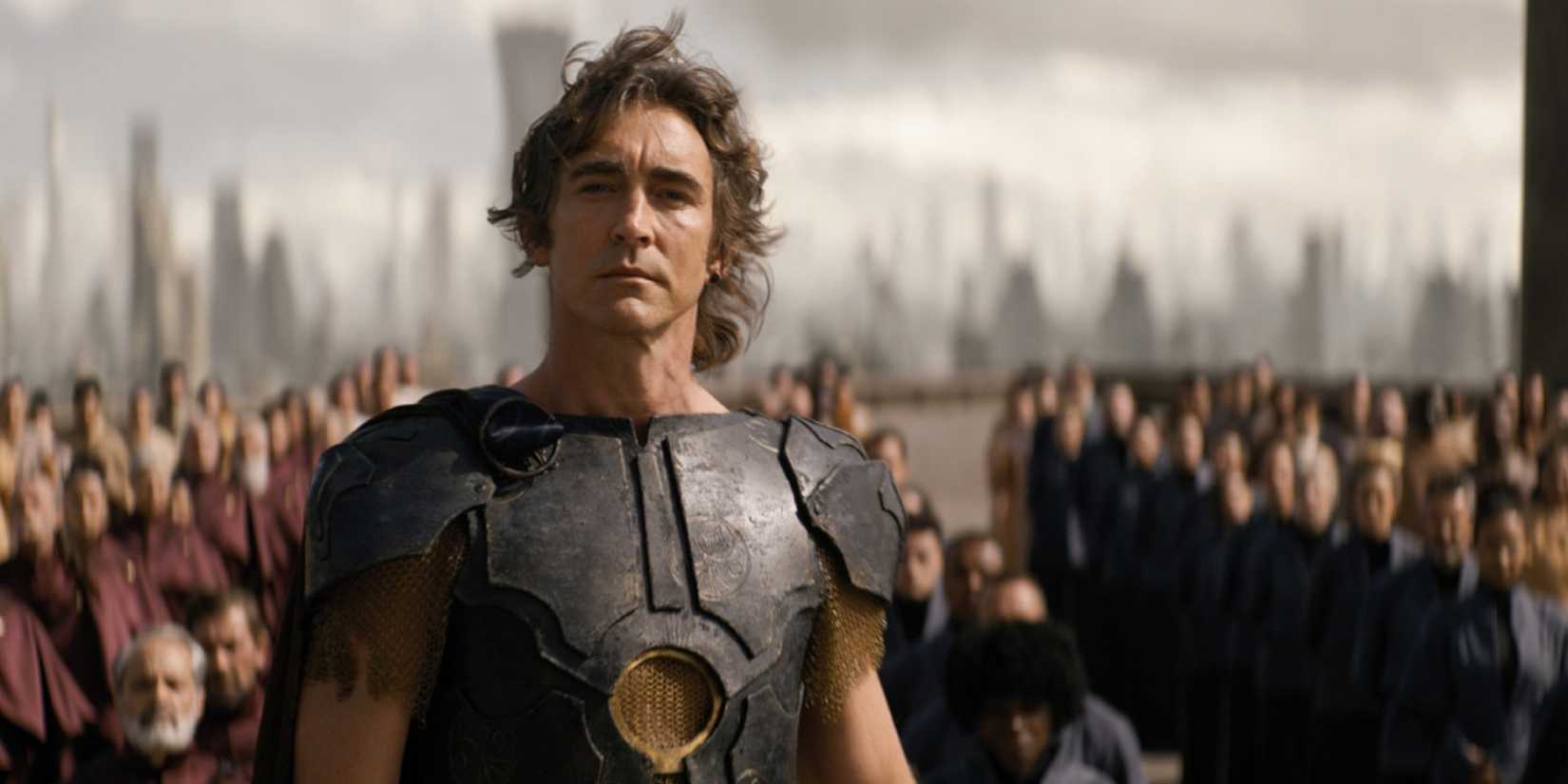
If there’s one word that sums up why Foundation deserves attention from fans of space-based sci-fi, it’s scale. Apple’s adaptation of Isaac Asimov’s novels premiered in 2021, introducing a Galactic Empire whose apparent permanence conceals an approaching catastrophe. Hari Seldon (Jared Harris) manages to predict the upcoming collapse using psychohistory, an advanced fictional form of mathematics that factors in psychology and history, and sets in motion a plan to try and shorten the upcoming dark age. Meanwhile, reigning emperor Brother Day (Lee Pace) embodies the arrogance and insecurity of a ruling dynasty sustained through cloning.
Foundation effortlessly moves between these competing visions of the future, making the fate of civilization feel inseparable from the characters being focused on. Few sci-fi TV shows make a galactic society look as expensive, ancient, or vast. Monumental architecture and distinctive planetary environments communicate power before a single word is spoken, while long journeys and generational changes reinforce the enormity of Seldon’s work. Foundation earns its place as one of the best science fiction series of the century so far because of its ambition and how well it manages to translate its grand ideas into a satisfying, accessible narrative.
Andor (2022-2025)
An Emerging Rebel Becomes Part Of The Struggle To Overthrow A Galaxy-Spanning Dictatorship

Andor not only gives the Star Wars galaxy an extraordinary sense of social and political depth, but also its first TV series in the franchise that genuinely stands as one of 21st century sci-fi’s greats. The two-season Disney+ show revisits Rogue One’s Cassian Andor (Diego Luna) long before the movie, back when he had little interest in becoming a revolutionary until his encounters with Imperial violence gradually make neutrality impossible. Although much of its action unfolds planetside, it’s oppression on an interstellar scale that shapes every part of Andor’s story.
Space travel in Andor is a vital lifeline that connects exploited communities to the secret financial networks, military installations, and wealthy political circles they need to resist the Empire. Its space sequences are thrilling because the surrounding drama establishes exactly what capture or failure would mean. Most importantly, Andor makes each location feel culturally specific. This is a galaxy populated by workers, prisoners, bureaucrats, and families whose lives continue beyond the immediate plot. That density gives its rebellion weight, turning familiar Star Wars imagery into the setting for an exceptional space-based political thriller.
Firefly (2002)
A Struggling Transport Ship’s Crew Takes Dangerous Jobs On The Fringes Of An Authoritarian Society
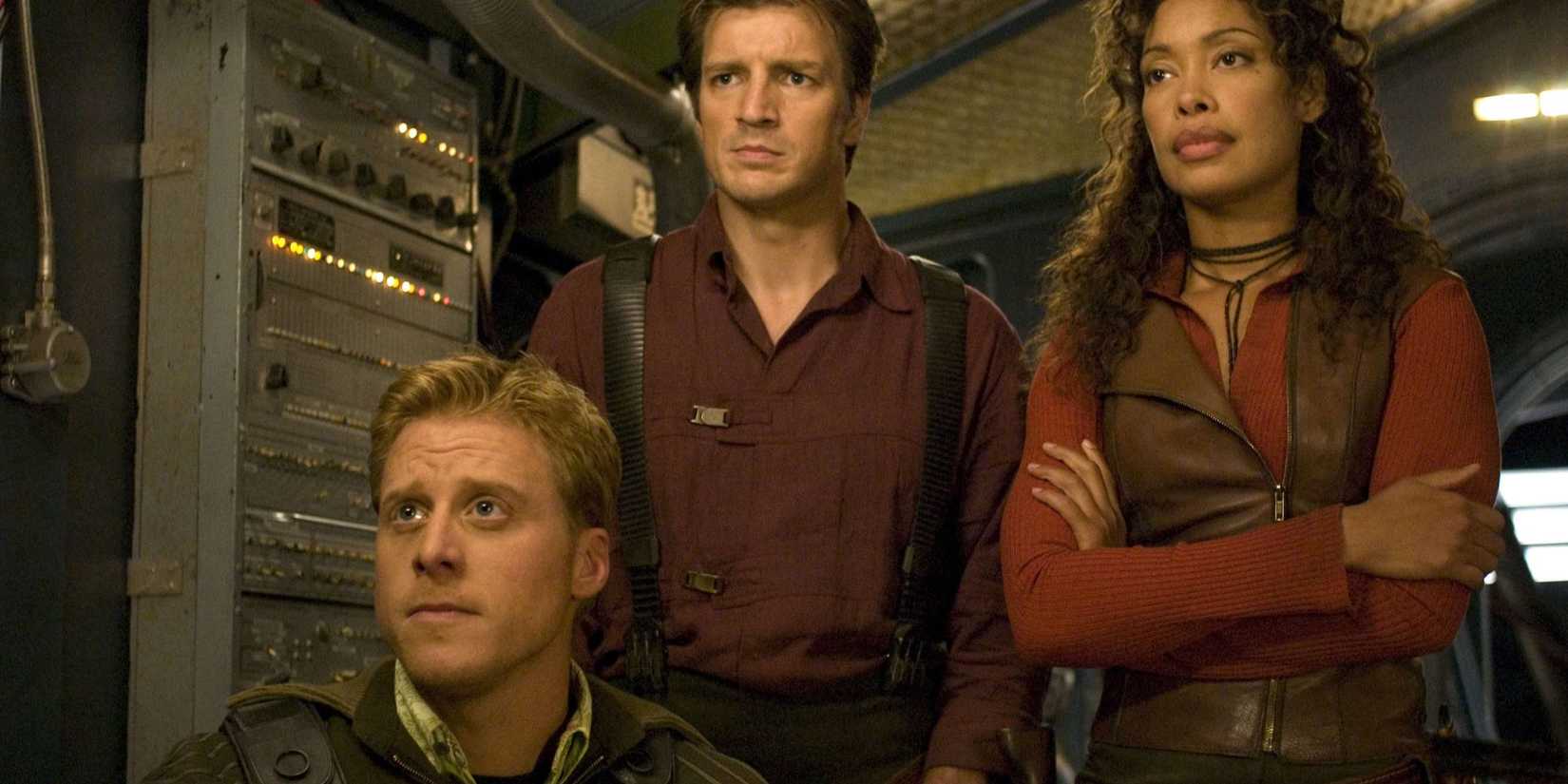
Many sci-fi space shows introduce viewers to crews that have travelled the void together for years, but none make their camaraderie feel as natural or authentic as Firefly. Nathan Fillion stars as Malcolm Reynolds, the captain of the battered transport ship Serenity, and his ragtag mercenary crew follow him on jobs that almost always become considerably more dangerous than advertised. Infamously only lasting for a single season in 2002, Firefly’s exceptional cast, including Gina Torres, Alan Tudyk, and Summer Glau, has made it the definitive cult-classic space opera.
Firefly has a distinctive space-Western aesthetic and setting which is masterfully used to explore a galactic power imbalance. Wealth and authority are concentrated in the central worlds, while outlying settlements survive with few resources and little protection. Life aboard the Serenity may offer freedom for Mal and the crew, but that freedom requires fuel, repairs, and compromises. The missions that stem from trying to live outside the established galactic order sends the Serenity crew on adventures that move effortlessly between comedy, crime, and creeping horror without the show losing its sci-fi atmosphere.
Battlestar Galactica (2004-2009)
Humanity’s Survivors Flee A Devastating Machine Uprising While Searching For A New Home
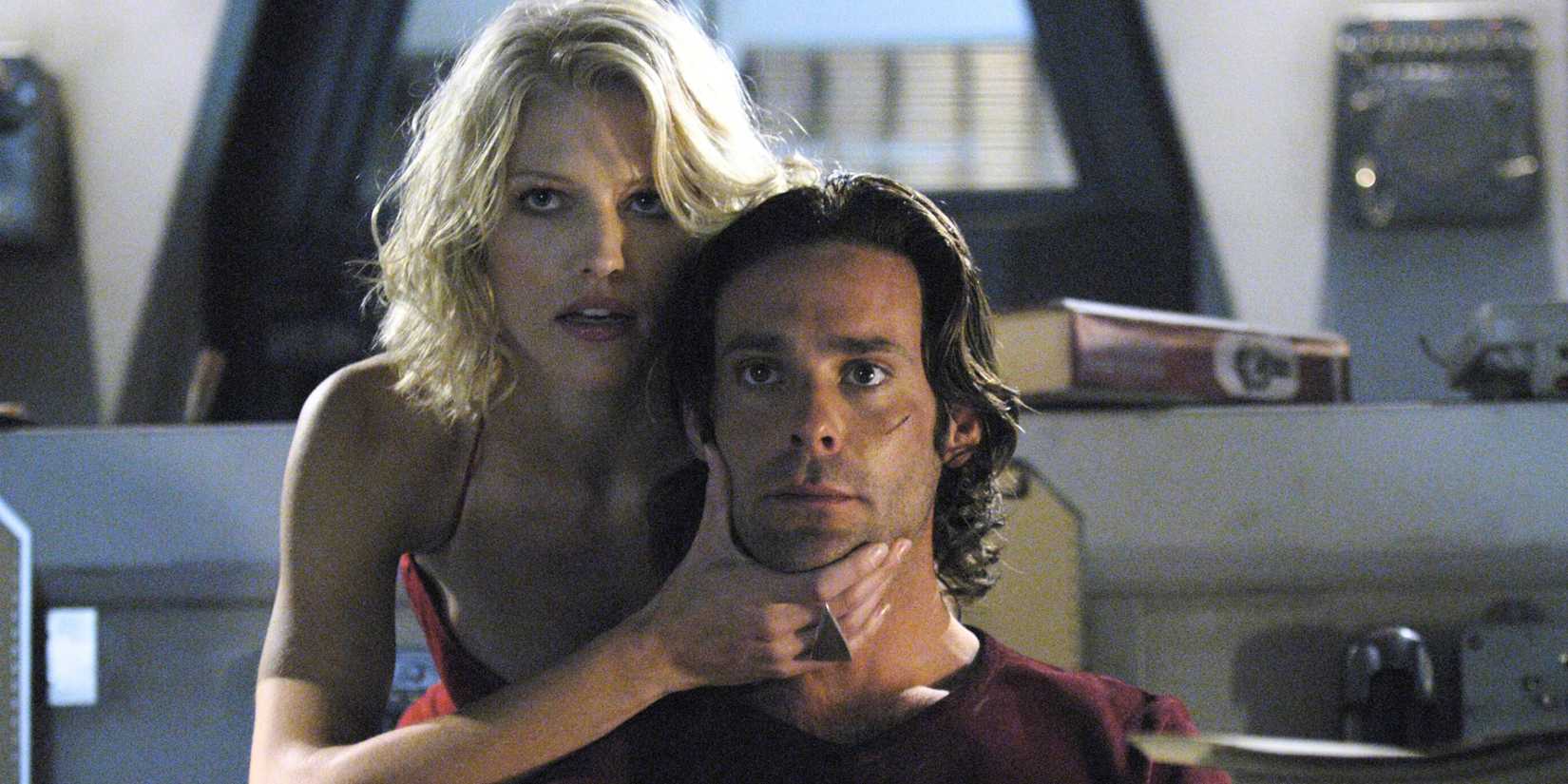
Survival is never a guarantee in Battlestar Galactica, the groundbreaking 2000s reimagining of the classic 1970s sci-fi show. The series focuses on the last remnants of humanity who have to take to the stars after the Cylons devastate their civilization. Their search for Earth gives the survivors a destination, but food shortages, internal divisions, and enemies capable of passing as humans make simply reaching tomorrow an evermore difficult objective.
The space combat in Battlestar Galactica is more-or-less unrivaled, combining frantic fighter engagements with the battered physicality of enormous warships. However, its defining achievement is giving those battles equal significance to events playing out within the ships themselves. Elections, religious convictions, and labor disputes carry consequences just as heavy as any direct conflict with humanity’s sci-fi pursuers. The result is a constant tension in which nobody and nowhere feels safe, which makes for some truly addictive space-based sci-fi.
The Expanse (2015-2022)
A Spaceship Crew Becomes Entangled In Political Conflict And An Alien Discovery That Could Transform Humanity
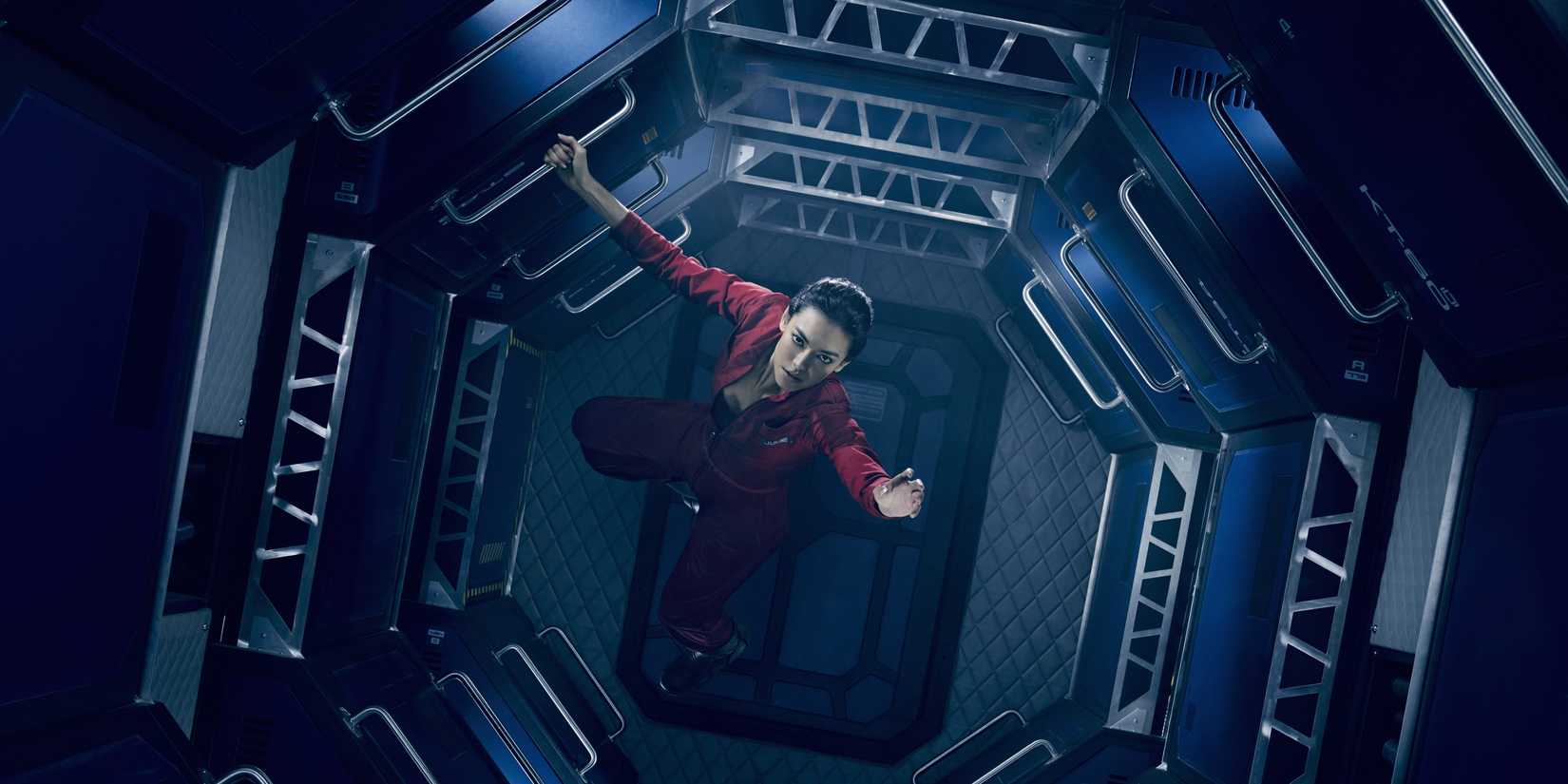
Adapted from James S.A. Corey’s novels, it’s uncanny just how well The Expanse makes its galaxy feel like a place people actually inhabit. The civilizations of Earth, Mars, and the Belt have distinct cultures and grievances, with access to water and breathable air carrying as much political weight as military strength. Caught in the middle of this authentic interstellar tension are James Holden (Steven Strait) and the crew of the Rocinante, whose ship becomes central to an expanding conspiracy.
Alongside its worldbuilding, The Expanse is also unrivaled when it comes to balancing spectacle-filled storytelling with grounded scientific principles. Acceleration can injure people, gravity shapes bodies, and a damaged spacecraft remains a dangerous collection of pressurized compartments. Details like these make the action exceptional, and the realism doesn’t waver even as the scope expands to include ideas like lost alien civilizations and the tech they left behind. Across six seasons, The Expanse combines political intrigue, frightening discoveries, and outstanding character depth into the most convincing space show sci-fi TV has produced in the past 30 years.
KioskNews shows a cleaned-up reading view extracted from the publisher’s page — the original always lives on their site, not ours.