Feds say lead levels in drinking water have not increased after Army detonation
The EPA said it analyzed 38 water samples after Wednesday's blast.
The U.S. Environmental Protection Agency found no increase in levels of lead in drinking water days after a controlled explosion of nearly five tons of lead azide at an Iowa Army ammunition plant, according to a report released Saturday.
The EPA said that it analyzed 38 samples taken post-detonation at public water supplies near the Middletown, Iowa, plant, which included "samples of finished treated drinking water and untreated water at the intake."
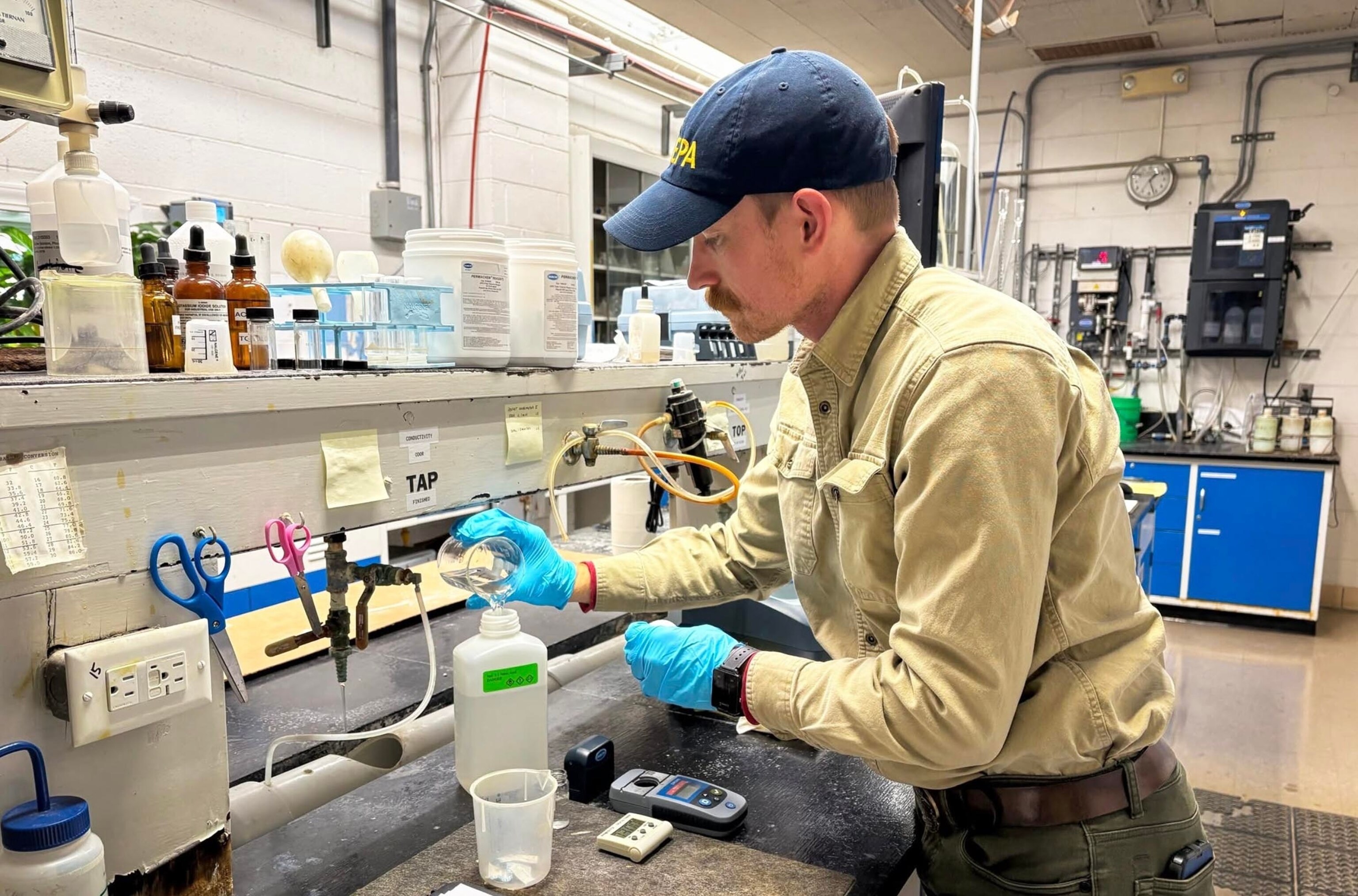
A water sample is tested after the Army’s controlled detonation of lead azide at its Iowa Army Ammunition Plant in Middletown, Iowa, on Nov. 25, 2026.
Environmental Protection Agency
The agency said Thursday that air tests in the 30 hours after the explosion found "zero" levels of airborne lead.
Tests on soil samples are still ongoing, according to the EPA.
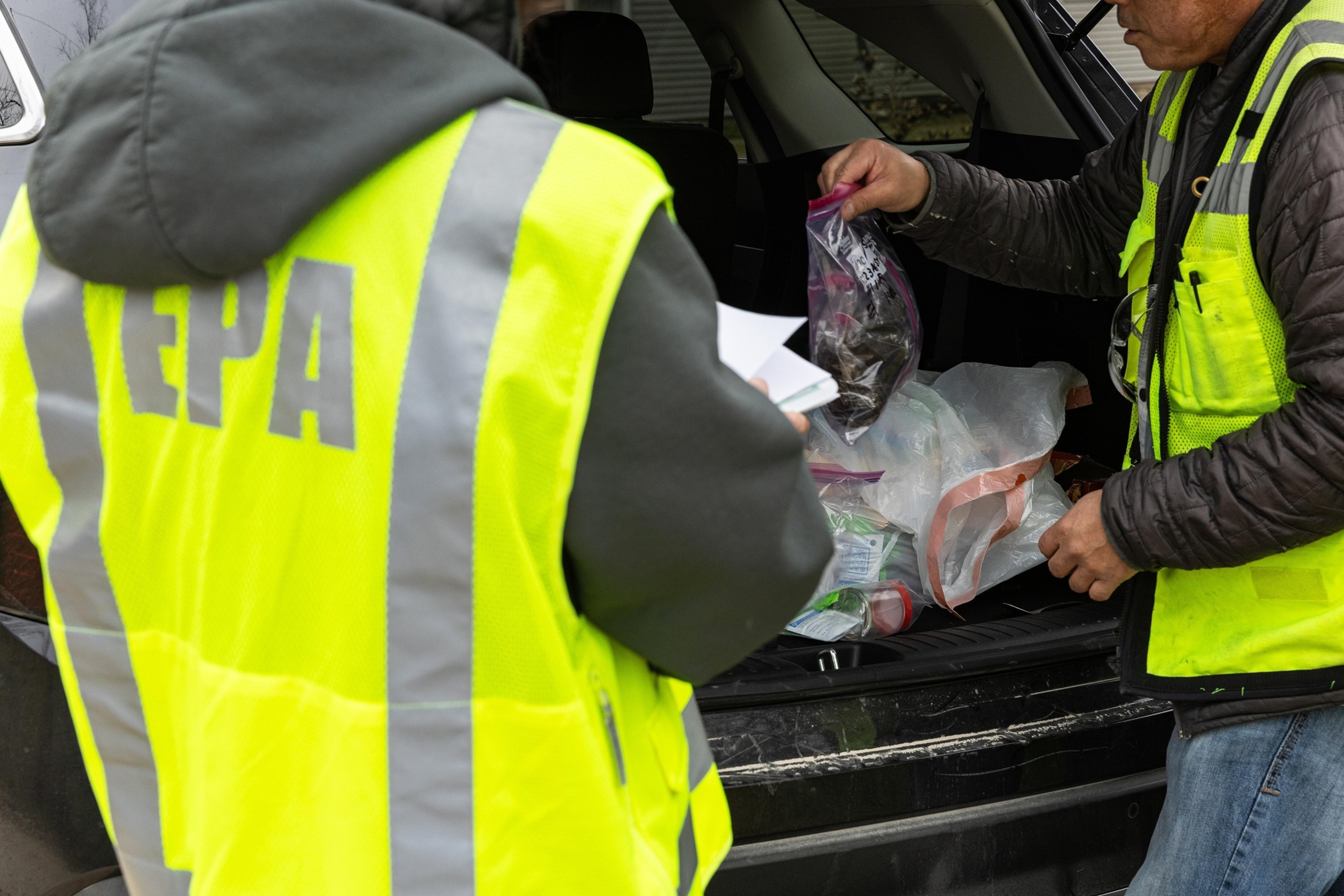
Environmental Protection Agency On-Scene Coordinator Sharon Kennedy, left, catalogs soil samples collected by her hired contractors in Augusta, Iowa, Nov. 25, 2026. Augusta lies along the perimeter of the Iowa Army Ammunition Plant, where earlier that day the U.S. Army detonated a stockpile of lead azide.
Austin Johnson/AP Photo
The Army detonated on Wednesday 68 barrels containing lead azide that it said had been stored in the Iowa Army Ammunition Plant for years.
The Army said it discovered in March that the explosive bomb-making material had become unstable.
Due to the risks of an accidental, uncontrolled detonation in packing and moving the stockpile, the Army said it determined that the safest way to dispose of the degraded lead azide was to destroy it in place.
Robert Cekada, the director of the Bureau of Alcohol, Tobacco, Firearms and Explosives, said in a video statement Wednesday that the blast drove the explosion into the ground "and followed a blast channel that was designed to go down the right path to minimize any sort of dispersion of lead into the atmosphere."
The controversial plan raised concerns from the public, environmental organizations and medical groups over the potential impacts of the blast's anticipated lead dust plume.
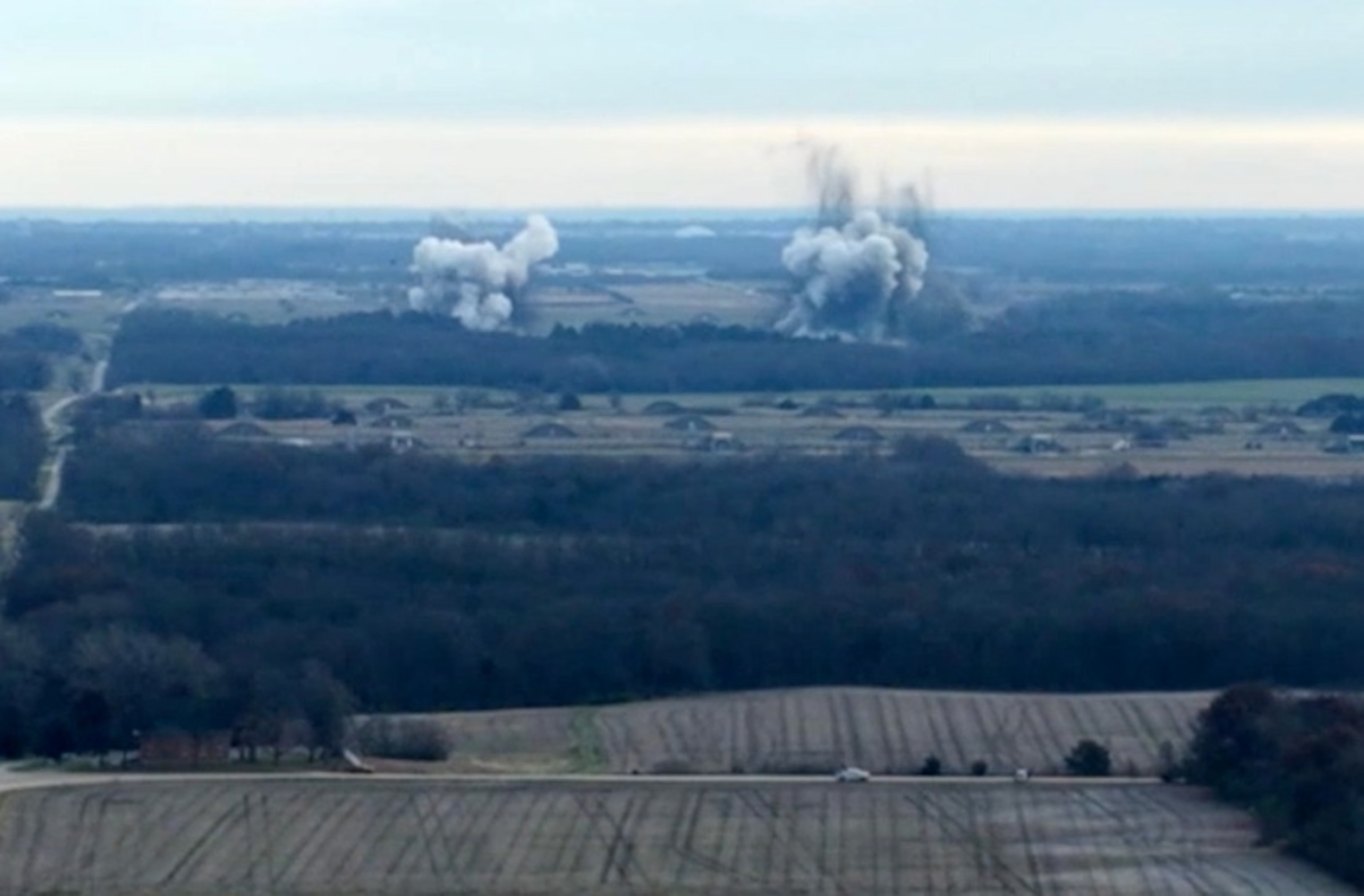
This screen grab from a video shows the blast in Middletown, Iowa, on Nov. 25, 2026.
James Wilson/WeatherVaultMedia
Federal officials had issued a recommended evacuation for nearby residents out of abundance of caution ahead of the blast.
KioskNews shows a cleaned-up reading view extracted from the publisher’s page — the original always lives on their site, not ours.