Russian attacks on Ukraine leave 600,000 without power as Zelenskyy says Moscow ‘disrespecting’ US – Europe live

“Russia has never before shown such ostentatious disrespect toward the United States,” Ukraine’s Volodymyr Zelenskyy said, after a night of relentless attacks on Ukraine’s infrastructure, despite Donald Trump’s claims of an energy ceasefire.
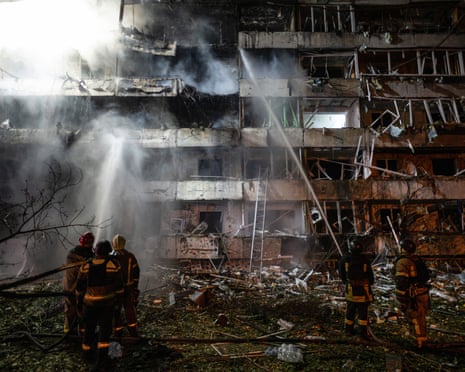
“A targeted Russian ballistic missile strike specifically against energy infrastructure – the very infrastructure covered by the ceasefire announced by the American President. The strike was entirely deliberate and demonstrative in its scale,” he said.
At least 600,000 people were left without power this morning, with temperatures falling below 10 degrees Celsius in Kyiv.
Meanwhile, a senior aide to Volodymyr Zelenskyy said Ukraine has been left struggling after Starlink satellite connection speeds were apparently restricted, complicating military operations on the ground.
Serhii Beskrestnov, widely known by his call sign, Flash, said:
“Our defence forces received no warning about this restriction, and it led to the disruption of a number of missions. Clearly, this action cannot be a coincidence and is linked to the current political situation.”
Ukraine’s Zelenskyy is expected in London today for talks with the UK’s prime minister, Andy Burnham, so we will probably hear more from him.
Elsewhere, Nato’s secretary general Mark Rutte will visit Estonia this morning, and Germany’s embattled chancellor Friedrich Merz is scheduled to address the Bundestag with a statement on the EU and Ukraine this afternoon.
And Pope Leo had a “peaceful night” at Rome’s Gemelli hospital after yesterday’s surgery which confirmed lung adenocarcinoma, the most common form of lung cancer.
Lots to cover.
I will bring you all the updates throughout the day.
It’s Wednesday, 14 October 2026, it’s Jakub Krupa here, and this is Europe Live.
Good morning.
Key events
Ukrainian soldier to go on trial over sabotage of Nord Stream gas pipelines
'Big man, are you playing politics with your products again?' Poland's Sikorski taunts Musk
Italy's Meloni criticises US-Russia diesel deal as 'very risky choice'
Morning opening: Russia showing 'ostentatious disrespect' towards US with attacks on Ukraine's energy infrastructure, Zelenskyy says
in Berlin
A Ukrainian soldier is to go on trial in Hamburg accused of taking part in one of the most brazen acts of sabotage in postwar European history – the 2022 attack on the Nord Stream gas pipelines between Russia and Germany.
Serhii Kuznetsov, a special forces officer from the Ukrainian military, is accused by prosecutors of being an accomplice to war crimes by attacking civilian infrastructure, causing an explosion, damaging property and disrupting public services.
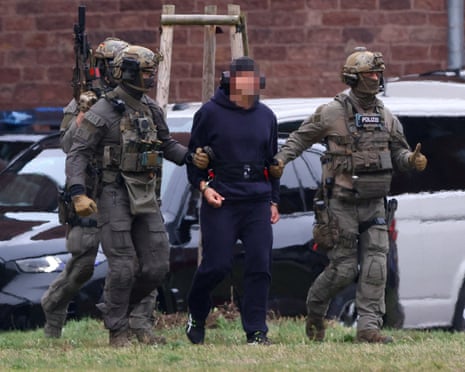
Kuznetsov, who will be identified in the trial opening on Wednesday just as Serhii K due to German privacy laws, was referenced by his full name in an extradition order. He is alleged to have prepared and carried out the detonation of at least four incendiary devices of up to 27kg in weight at a depth of about 80 metres under the Baltic Sea, close to the Danish island of Bornholm.
He is believed to have had six accomplices, including four deep-sea divers, an explosives expert and a ship’s captain, who are alleged to have used a rented yacht and timer-controlled explosives. Both he and his country deny any involvement in the attacks.
The explosions took place on 26 September 2022, badly damaging the pipelines which had been constructed to carry Russian natural gas between Vyborg in western Russia and Lubmin, near Greifswald in northern Germany.
The blasts caused the Nord Stream 1 pipelines – Russia’s main gas supply route to Germany before Moscow cut the supplies in August 2022 – to burst. They also damaged Nord Stream 2, which was ready to carry gas but was never put into operation after Germany suspended its authorisation process just before Russia’s full-scale invasion of Ukraine.

The attacks happened as European countries were seeking to transition away from Russian energy supplies in reaction to the Kremlin’s aggression.
They exposed the dependence of Europe – and, in particular, Germany – on Russian gas as well as highlighting the murkiness of underground operations during wartime.
Security observers initially blamed Moscow for the attack. Russia has denied involvement, in turn blaming the US, which has denied it just as forcefully.
However, in July German state prosecutors accused Ukrainian “state authorities” of ordering the attack, arguing: “The aim was to permanently halt gas supplies via the pipelines and prevent Russia from using the revenue from natural gas trade to finance its war effort.”
The Ukrainian president, Volodymyr Zelenskyy, has denied his country was involved.
Sixteen trial dates have been scheduled at Hamburg’s Hanseatic higher regional court up to and including 17 December, with further hearings likely in January and February.
Poland’s foreign minister Radosław Sikorski has taken to X to confront the platform’s billionaire owner Elon Musk over reported restrictions to Starlink in Ukraine.
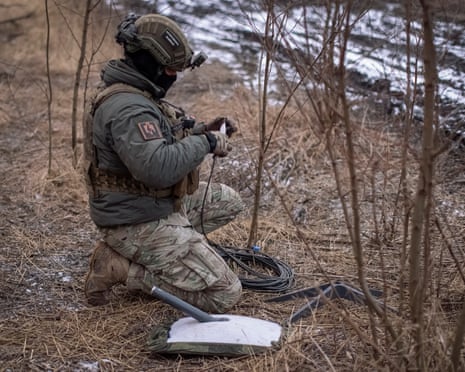
Poland helps Ukraine to foot the bill for Starlink, which provides crucial internet connectivity to Kyiv and its military, and says it pays some $50m a year.
Sikorski said:
“Hey, @elonmusk, big man, are you playing politics with your products again? As your European customers, we are watching you.”
The pair repeatedly clashed in the past, with annoyed Musk telling Sikorski last year to be “quiet.”
Meanwhile, Italian prime minister Giorgia Meloni said the US deal with Russia over diesel supply is “a very risky choice,” with “clear” risks.
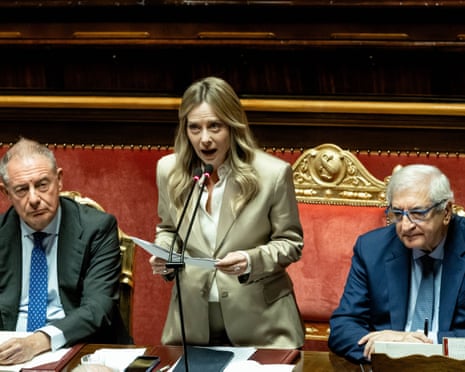
“The outcome of this decision is uncertain, while the risks are clear,” Meloni told the Italian parliament.
“It provides Moscow with legitimacy as its bombs continue to fall on Ukrainian cities, generates new revenue to finance the war, and implicitly weakens the effectiveness of sanctions,” she added.
The Italian PM also returned to the idea that the EU27 should appoint “an authoritative figure” to lead talks with Russia and Ukraine.
The overnight attacks killed at least three people in Kyiv, authorities said.
Mayor Vitaly Klitschko reported overnight that “a massive ballistic missile strike” against the capital hit its energy facilities, causing power outages across the city.
Wednesday’s Russian attacks also targeted state railway facilities in five regions across Ukraine, said prime minister Sergii Koretskyi.
“Russia has never before shown such ostentatious disrespect toward the United States,” Ukraine’s Volodymyr Zelenskyy said, after a night of relentless attacks on Ukraine’s infrastructure, despite Donald Trump’s claims of an energy ceasefire.
“A targeted Russian ballistic missile strike specifically against energy infrastructure – the very infrastructure covered by the ceasefire announced by the American President. The strike was entirely deliberate and demonstrative in its scale,” he said.
At least 600,000 people were left without power this morning, with temperatures falling below 10 degrees Celsius in Kyiv.
Meanwhile, a senior aide to Volodymyr Zelenskyy said Ukraine has been left struggling after Starlink satellite connection speeds were apparently restricted, complicating military operations on the ground.
Serhii Beskrestnov, widely known by his call sign, Flash, said:
“Our defence forces received no warning about this restriction, and it led to the disruption of a number of missions. Clearly, this action cannot be a coincidence and is linked to the current political situation.”
Ukraine’s Zelenskyy is expected in London today for talks with the UK’s prime minister, Andy Burnham, so we will probably hear more from him.
Elsewhere, Nato’s secretary general Mark Rutte will visit Estonia this morning, and Germany’s embattled chancellor Friedrich Merz is scheduled to address the Bundestag with a statement on the EU and Ukraine this afternoon.
And Pope Leo had a “peaceful night” at Rome’s Gemelli hospital after yesterday’s surgery which confirmed lung adenocarcinoma, the most common form of lung cancer.
Lots to cover.
I will bring you all the updates throughout the day.
It’s Wednesday, 14 October 2026, it’s Jakub Krupa here, and this is Europe Live.
KioskNews shows a cleaned-up reading view extracted from the publisher’s page — the original always lives on their site, not ours.