The 10 Greatest Opening Lines in Sci-Fi Books, Ranked

Diego Pineda has been a devout storyteller his whole life. He has self-published a fantasy novel and a book of short stories, and is actively working on publishing his second novel.
A lifelong fan of watching movies and talking about them endlessly, he writes reviews and analyses on his Instagram page dedicated to cinema, and occasionally on his blog. His favorite filmmakers are Andrei Tarkovsky and Charlie Chaplin. He loves modern Mexican cinema and thinks it's tragically underappreciated.
Other interests of Diego's include reading, gaming, roller coasters, writing reviews on his Letterboxd account (username: DPP_reviews), and going down rabbit holes of whatever topic he's interested in at any given point.
Sign in to your Collider account
First impressions always matter, and science fiction books are no exception. When it comes to virtually any book, an opening line that instantly hooks the reader and makes them crave knowing what comes next is absolutely vital. But as far as sci-fi in particular goes, a great opening line is especially important. These are books that most often create an entirely unfamiliar environment, and the gap between the reader's world and that imagined realm must be bridged early on. The best possible way to do that is a great opening line.
But while an unmeasurable number of sci-fi books throughout history have delivered some great opening lines, there are ten in particular whose first sentence is among the most memorable and iconic in the history of speculative fiction. If these books got the chance to ever become as pop-culturally significant as they did, it was largely because they didn't wait long to capture the reader's attention. The only opening that can qualify for this list is the first grammatically complete sentence of a book's story.
10 'The Martian' (2011)

"I'm pretty much f—d." There aren't very many sci-fi books that open with swear words, and there certainly aren't any that use a swear word quite as brilliantly as Andy Weir's The Martian does. It's short, simple, and to-the-point, but oh so effective in instantly defining the book's tone, setting the stakes high, and establishing Watney's voice. Sometimes, less is more, and this perfect opening line is irrefutable proof of that.
All in all, The Martian is one of the best books of the last 20 years, so it's only fitting that its opening is so instantly captivating. Where many hard sci-fi books tend to open things up with an emotionally detached lore or exposition dump, Weir does something completely different. It's a downright genius subversion of expectations which shows how profanity can be cleverly used in a story's favor instead of just feeling gratuitous.
9 'Seveneves' (2015)

"The Moon blew up without warning and for no apparent reason." Neal Stephenson's Seveneves is a quintessential modern hard sci-fi masterpiece, and hard sci-fi is all about explaining a story through the lens of plausible laws of science. As such, a hard sci-fi book that opens with an event as cataclysmic as the Moon exploding and casually waves away the scientific cause of that event is nothing if not brilliantly subversive.
It's a deeply unsettling opening line which makes it immediately clear that this nearly 1,000-page epic will be far more focused on the human logistics of survival than anything else, and it definitely works. With a jaw-dropping sense of scale and commendable commitment to the laws of physics, Seveneves enshrines itself as one of the most thematically complex and narratively ambitious hard sci-fi novels the world has seen in years.
8 'The Hitchhiker's Guide to the Galaxy' (1979)

"Far out in the uncharted backwaters of the unfashionable end of the Western Spiral arm of the Galaxy lies a small unregarded yellow sun." It's an unusually elaborate and long opening line, but that's the whole point. It's not particularly funny in a vacuum, but that's also kind of essential to this opening being so brilliant. With it, Douglas Adams introduces the reader to what will soon become one of the most hilarious works of science fiction literature ever.
In a single sentence, Adams establishes the novel's vast cosmic scale, its central philosophical attitude toward Earth and humanity, and the subversive sense of humor that makes this one of the most fun sci-fi books of all time. It's not just about making humanity seem insignificant, but also about finding the absurd humor inherent to that premise. There is no opening line that better demonstrates why Adams was one of the most beloved satirists of his generation.
7 'A Deepness in the Sky' (1999)

"The manhunt extended across more than one hundred light years and eight centuries." What other genre, if not science fiction, could so convincingly and so compellingly establish such a massive sense of temporal scale right off the bat? Vernor Vinge was always great at opening novels with striking, high-concept sentences to get readers immediately hooked, but there is no example better than A Deepness in the Sky.
With less than 15 words, Vinge has let the reader know everything they need to know in order for the plot to kick off: Someone is being relentlessly chased, the universe so vast that said chase spans an enormous physical distance. Oh, and the person being chased is so important that they merit centuries' worth of looking. What follows is one of the most engrossing space opera books of the '90s, a Hugo Award winner whose blend of hard science and profound moral dilemmas hasn't aged a bit.
6 'The Fifth Season' (2015)
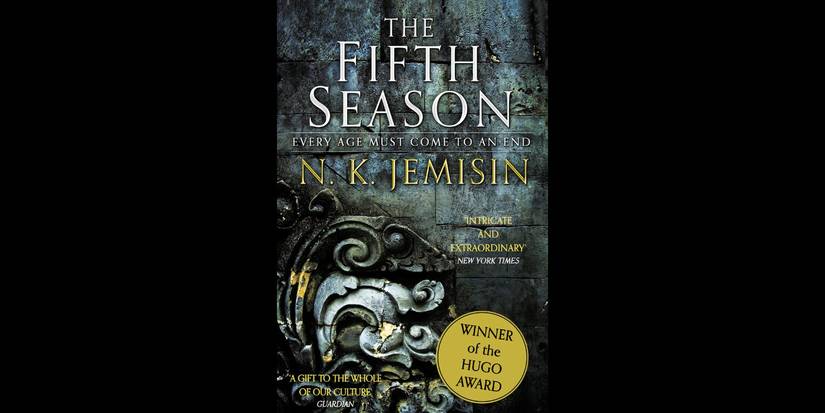
"Let's start with the end of the world, why don't we?" The entirety of N. K. Jemisin's The Broken Earth series is so incredible that it became the first book trilogy in history where every installment won the Hugo Award for Best Novel three years in a row. And as great as its sequels are, The Fifth Season really is something special, one of the best books published since 2010. With a first chapter written in second person, you can tell as soon as you open the book that you're in for quite the ride.
Indeed, all you need to read of The Fifth Season in order to know that what you're holding in your hands is a deeply special book is its opening line. The fact that the sentence sounds playful and conversational holds unexpected power, completely smashing the fourth wall and thus forcing the reader to contemplate the end of the world. Any other novel would treat such a doomsday event far more solemnly, but Jemisin mentions it so casually that it's impossible to not want to keep on reading onward.
Collider Exclusive · Sci-Fi Survival Quiz Which Sci-Fi World Would You Survive? The Matrix · Mad Max · Blade Runner · Dune · Star Wars
Five universes. Five completely different ways the future went wrong — or sideways, or up in flames. Only one of them is the world your instincts were built for. Eight questions will figure out which dystopia, galaxy, or desert wasteland you'd actually make it out of alive.
💊The Matrix
🔥Mad Max
🌧️Blade Runner
🏜️Dune
🚀Star Wars
01
You sense something is deeply wrong with the world around you. What do you do? The first instinct is often the truest one.
02
In a world of scarcity, what resource do you guard most fiercely? What we protect reveals what we believe survival actually requires.
03
What kind of threat keeps you up at night? Fear is useful data — if you're honest about what you're actually afraid of.
04
How do you deal with authority you don't trust? Every dystopia has a power structure. Your approach to it determines everything.
05
Which environment could you actually endure long-term? Survival isn't just tactical — it's physical, psychological, and very much about where you are.
06
Who do you want in your corner when things fall apart? The company you keep is the clearest signal of who you actually are.
07
Where do you draw the line — if you draw one at all? Every survivor eventually faces a moment that tests what they're actually made of.
08
What would actually make survival worth it? Staying alive is one thing. Having a reason to is another.
Your Fate Has Been Calculated You'd Survive In…
Your answers point to the world your instincts were built for. This is the universe your temperament, your survival instincts, and your particular brand of stubbornness were made for.
The Matrix
You took the red pill a long time ago — probably before anyone offered it to you. You're a systems thinker who can't help but notice the seams in things.
- You're drawn to understanding how the system works before figuring out how to break it.
- You'd find the Resistance, or it would find you — your instinct for spotting constructed realities is the machines' worst nightmare.
- You function best when you have access to information and the freedom to act on it.
- The Matrix built an airtight prison. You'd be the one probing the walls for the door.
Mad Max
The wasteland doesn't reward the clever or the well-connected — it rewards those who are hard to kill and harder to break. That's you.
- You don't need comfort, community, or a cause larger than the next horizon.
- You need a vehicle, a clear threat, and enough fuel to outrun it — and you're good at all three.
- You are unsentimental enough to survive that world, and decent enough — just barely — to be something more than another raider.
- In the wasteland, that distinction is everything.
Blade Runner
You'd survive here because you know how to exist in moral grey areas without losing yourself completely.
- You read people accurately, keep your circle small, and ask the questions others prefer not to answer.
- In a city where humanity is a legal designation rather than a feeling, you hold onto something that keeps you functional.
- You're not a hero. But you're not lost, either.
- In Blade Runner's world, that distinction is everything.
Dune
Arrakis is the most hostile environment in the known universe — and you are precisely the kind of person it rewards.
- Patience, discipline, and political awareness are your core strengths — and on Arrakis, they're survival tools.
- You understand that the long game matters more than any single victory.
- Others come to Dune and are consumed by it. You'd learn its logic and earn its respect.
- In time, you wouldn't just survive Arrakis — you'd begin to reshape it.
Star Wars
The galaxy far, far away is vast, loud, and in a constant state of violent political upheaval — and you wouldn't have it any other way.
- You find meaning in being part of something larger than yourself — a cause, a crew, a rebellion.
- You'd gravitate toward the Rebellion, or the fringes, or whatever pocket of the galaxy still believes the Empire's grip can be broken.
- You fight — not because you have to, but because standing aside isn't something you're capable of.
- In Star Wars, that willingness is what makes all the difference.
5 'Feed' (2002)

"We went to the moon to have fun, but the moon turned out to totally suck." Part YA dystopia, part cyberpunk satire, M. T. Anderson's Feed is regarded by many as one of the most genius works of science fiction of the 21st century so far, and for good reason. Published years before the Internet age took hold as the hegemonic force that it is today, this surprisingly prophetic masterpiece may open with a line that sounds deceptively simple, but it actually carries tremendous amounts of nuance and meaning.
For generations, reaching the Moon was one of humanity's ultimate aspirations. For decades, the sci-fi genre dreamt up stories of humanity triumphantly reaching the Earth's natural satellite. And so, by having its apathetic teenage protagonist speak of a journey to the Moon as more of a disappointing road trip, Anderson immediately establishes the voice, tone, and central themes of Feed. From its rhythmic delivery to its satirical mood, this opening line is as brilliant as Feed itself.
4 '1984' (1949)

"It was a bright cold day in April, and the clocks were striking thirteen." Calling George Orwell one of the most hugely influential speculative fiction authors of his generation would be an understatement. So, too, would be saying that 1984 was a foundational work of dystopian sci-fi. It was, in fact, one of the most influential books of the 20th century, and you can feel the first instances of its pop-cultural impact just from reading its opening line.
Readers not paying attention could even miss it, but Orwell saying that the clocks struck thirteen—a number that, as anyone who has ever had to tell the time will know, is not actually on any clocks—in such a casual tone of voice immediately makes it clear that something here is deeply wrong. This way, the dystopia of 1984 starts to reveal itself gradually rather than explosively, subtly but potently showing that in this version of Earth, even the foundations of reality can be altered.
3 'The Dark Tower: The Gunslinger' (1982)

"The man in black fled across the desert, and the gunslinger followed." Stephen King has always been exceptional at several key aspects of writing speculative fiction, and crafting memorable opening lines that instantly stick in one's memory is definitely among those skills. His The Dark Tower series is full of great openers, but none better than that of the original, the iconic The Gunslinger.
It's fitting that one of King's best fantasy books also has one of his best opening lines. It's the sentence's simplicity that makes it so effective, an almost mythical opener that immediately makes The Gunslinger feel like a legend, a fairy tale, and a Western all at once. It's evocative, mysterious, and a testament to the fact that, sometimes, the best possible way to open a sci-fi book is with a line that's simple, punchy, and not overly flashy.
2 'Fahrenheit 451' (1963)

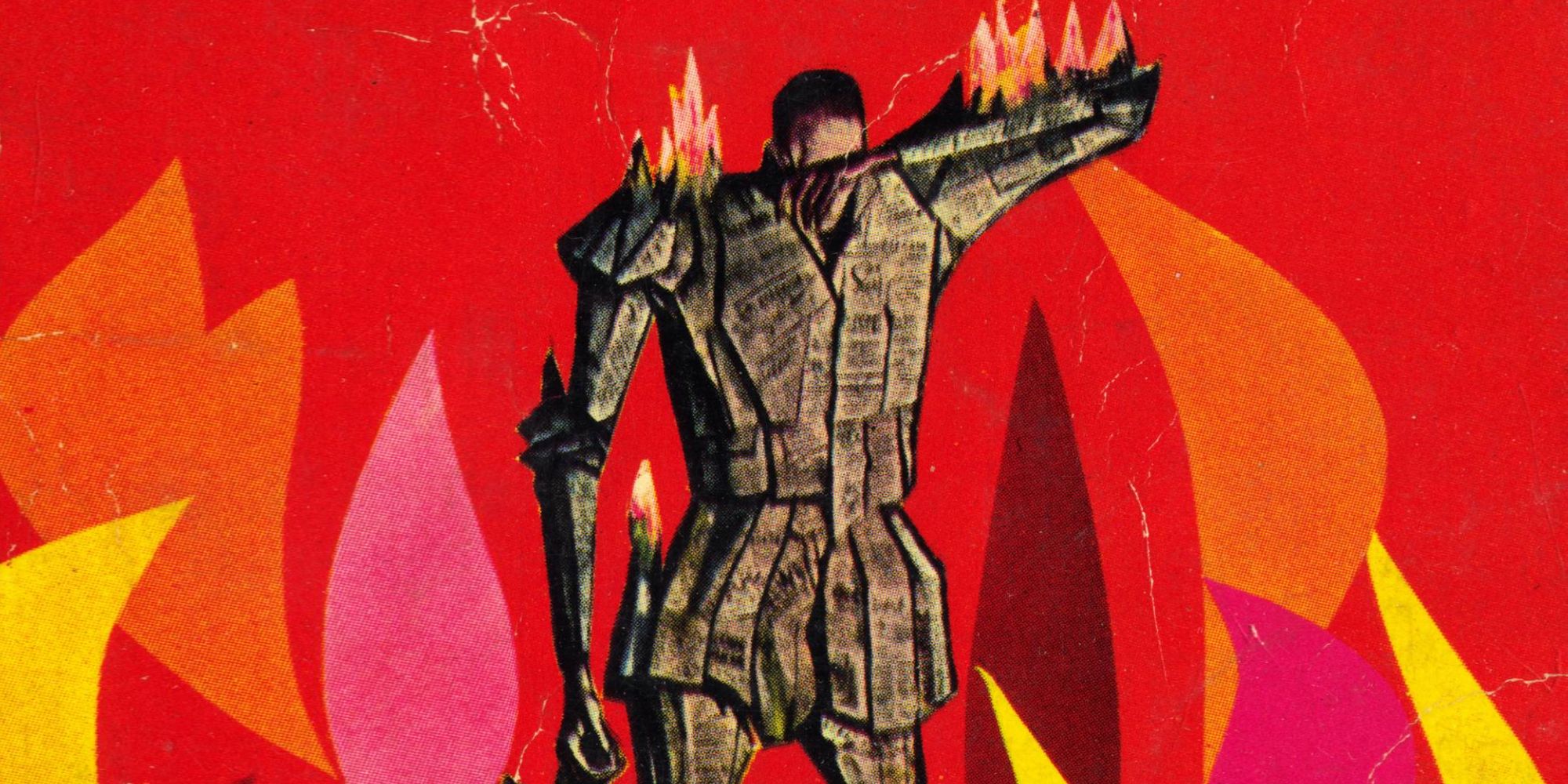
"It was a pleasure to burn." Six short words were all it took for Ray Bradbury to open Fahrenheit 451, now almost universally recognized as one of the greatest and most important dystopian sci-fi books of all time. Yet another testament to the magic of an opening line that's deceptively simple, this hard-hitting beginning is packed with meaning.
For a moment, it isn't quite clear what the line means, and that's where its brilliance lies. Was it a pleasure to be burnt? Or a pleasure to burn something? You quickly realize, of course, that what the narrator is talking about is burning books, but the key mystery that keeps you reading remains: Who could possibly find it pleasurable to burn, and why? Fahrenheit 451 is one of the most perfect sci-fi book masterpieces ever, and reading its opening line makes it perfectly clear why.
1 'Neuromancer' (1984)
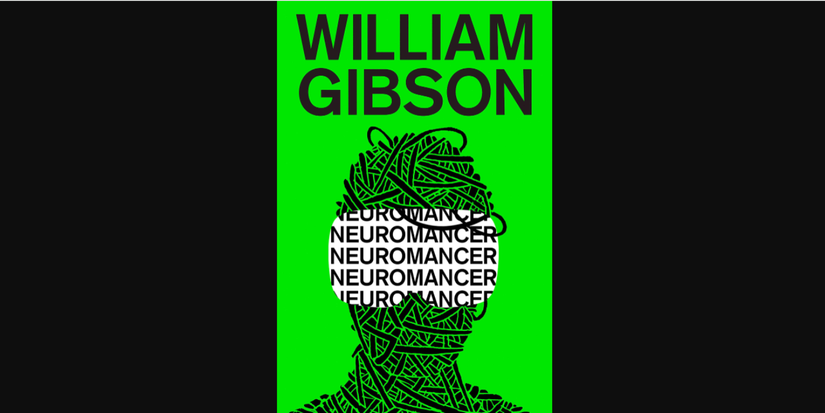
"The sky above the port was the color of television, tuned to a dead channel." There is arguably no opening line in the history of science fiction literature that is more iconic or more universally praised as brilliant than the one in William Gibson's seminal Neuromancer. It's entirely fitting that the novel that laid the foundations and blueprint for the cyberpunk subgenre has an opening which is itself a perfect encapsulation of everything that makes cyberpunk what it is.
It's such a genius opening line because Gibson does several things with it. On one level, it's a great snippet of worldbuilding that makes the static, neon aesthetics of the cyberpunk genre vivid. On another level, it's a loud message that makes it clear that in this world, technology has replaced the natural. And on a whole other level, as technology has evolved, so too have the nuances of the opening line, making it one of the most timeless in the history of sci-fi.
KioskNews shows a cleaned-up reading view extracted from the publisher’s page — the original always lives on their site, not ours.