Singapore reshapes government teams, steps up hiring as it builds nuclear energy capabilities
Agencies are recruiting nuclear specialists, while research capacity is growing and new training programmes are being developed.
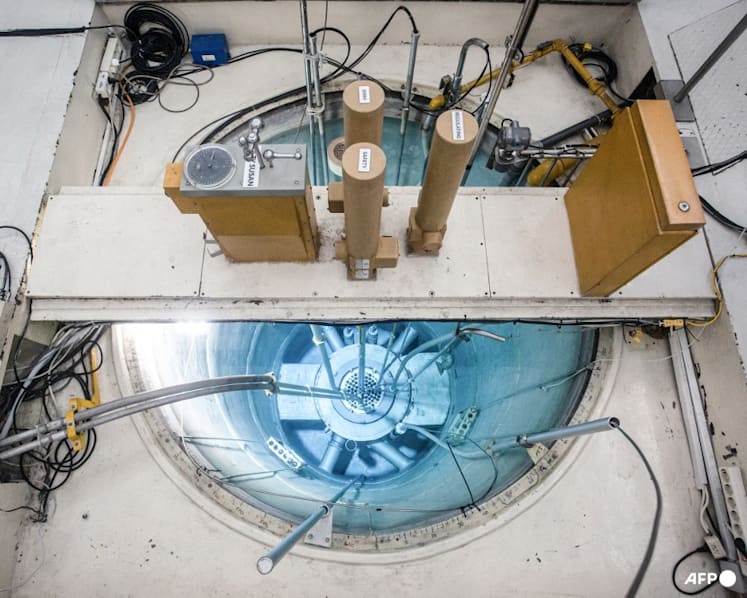
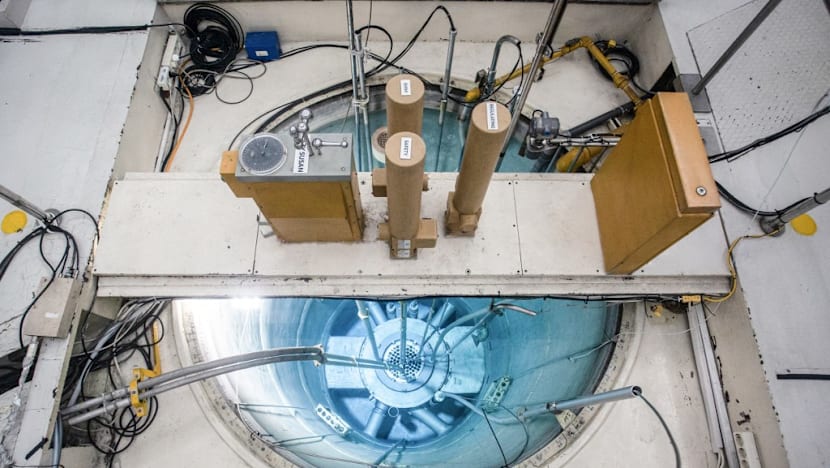
This photo taken on May 22, 2025 shows a general view of the nuclear reactor operation chamber at the Kartini Nuclear Reactor research facility of the National Research and Innovation Agency in Yogyakarta, Indonesia. (Photo: AFP/Devi Rahman)
New: You can now listen to articles.

This audio is generated by an AI tool.


28 Sep 2026 03:42PM
SINGAPORE: Singapore is stepping up efforts to prepare for a review of its nuclear capabilities by the International Atomic Energy Agency (IAEA) in 2027.
Government agencies are building expertise in areas ranging from reactor engineering to safety and regulation, although the country has not decided whether to build a nuclear power plant.
The upcoming IAEA review was announced in May and is known as the Integrated Nuclear Infrastructure Review (INIR) Phase 1 Mission.
It will assess whether Singapore has developed the capabilities needed to make an informed decision on deploying nuclear energy.
NEW GOVERNMENT TEAMS
As part of preparations for the 2027 review, a new Nuclear Development Department was carved out of the Energy Market Authority's (EMA) existing Nuclear Energy Office in June.
The department will study the practical requirements of running nuclear power plant projects, including project management and financing.
The Ministry of Trade and Industry (MTI) also set up a Nuclear Energy Division in April. It will shape nuclear energy policy and coordinate the government agencies involved.
EMA and the National Environment Agency (NEA) are also recruiting for more nuclear-related expertise.
Checks by CNA found at least 12 different nuclear-related job openings advertised over the past three months.
These include roles examining advanced reactor concepts and the security of nuclear materials and installations.
Mr Ian Grant, an independent expert on nuclear energy and regulation, said the hiring and new organisational structures were consistent with Singapore's current assessment of nuclear power, rather than an indication of a decision to proceed.
“There's no doubt that these additional personnel are being brought in to support the current work toward making an assessment of whether to proceed,” he told CNA.
Among the areas the IAEA will examine are Singapore's national position on nuclear energy and its legal and regulatory frameworks.
Mr Grant, who has advised the IAEA and governments including Singapore, the Philippines and Estonia on nuclear infrastructure, said Singapore could tap external consultants for some of the skills required.
“I know that Singapore has been hiring external experts, which is of course a wise choice because you'll benefit from experienced personnel. But it's also necessary to develop internal capability,” he said.
If the country eventually decides to proceed with nuclear power, local expertise could form the nucleus for further expansion, he added.
TRAINING NUCLEAR SPECIALISTS
Mr Low Xin Wei, CEO of the Singapore Nuclear Research and Safety Institute (SNRSI), said interest from government agencies and industry in building nuclear-related expertise is growing.
SNRSI, which is based at the National University of Singapore (NUS), conducts research into nuclear technology and safety.
Mr Low said a recent paid SNRSI course on nuclear issues drew around 80 participants from government, industry and the region.
Government participants included officers from MTI, the Ministry of Sustainability and the Environment, EMA and NEA. Some of the industry participants were senior executives.
Many of them had strong engineering backgrounds and were looking to deepen their understanding of nuclear-specific issues and considerations, he added.
SNRSI is also working with NUS to launch the country's first master's programme in nuclear engineering.
The one-year course is expected to begin in the 2027 academic year with a cohort of about 30 full-time and part-time students.
Mr Low said: "We have been in close consultation with government agencies and industry on what manpower and skills they need, and the sorts of programmes and the number of places they need. Many of our course offerings are highly bespoke in nature and cater directly to the specific needs of these agencies."
Over the past decade, SNRSI has recruited more than 30 PhD-level researchers through its scholarship and training pipelines. They cover fields including nuclear reactor science and engineering, radiation safety, nuclear materials and waste management.
Mr Low said the institute plans to grow its overall researcher pool from around 60 to more than 100 by 2030, while working with universities on a wider range of undergraduate, graduate and professional programmes in nuclear engineering and safety.
EXPERTISE WITH REGIONAL APPLICATIONS
Mr Low said some of the capabilities being developed would remain useful even if Singapore ultimately decides not to adopt nuclear power.
As Singapore's neighbours explore their own nuclear energy programmes, expertise in areas such as reactor safety, dispersion modelling, radiochemistry and radiobiology could help the country better understand the plants being developed in the region and their emergency preparedness, he said.
SNRSI is also expanding its international partnerships. Mr Low said it signed agreements with the Korean Atomic Energy Research Institute and Thailand Institute of Nuclear Technology at the IAEA General Conference in September.
He said these add to existing partnerships with organisations in France, the United States and China, and would allow SNRSI to draw on overseas expertise and access research reactors, facilities and simulators.
Even if Singapore eventually decides to proceed with nuclear power, Mr Grant said several more years of infrastructure development would be required before implementation of a nuclear power plant could begin.
This would include establishing the necessary laws and regulatory infrastructure, hiring more specialists and arranging financing.
Construction of a nuclear power plant would come only after that preparatory work, and would itself take additional time before electricity could be generated, he said.
“This is a long-term effort, and we're at the beginning phase.”
KioskNews shows a cleaned-up reading view extracted from the publisher’s page — the original always lives on their site, not ours.