Shows, tours and film as China marks 90 years since the end of the Long March
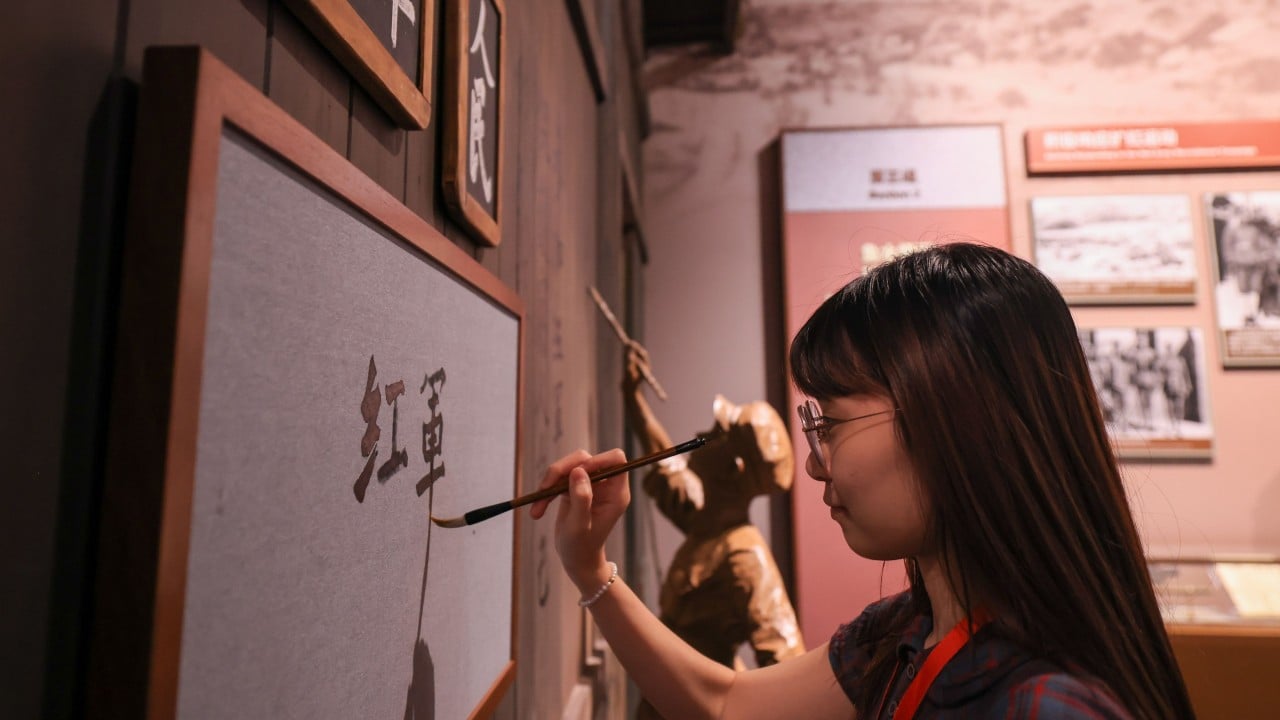
China’s ruling Communist Party is marking 90 years since the end of the Long March with exhibitions, tours, film and television productions as it tries to mobilise the nation to contribute to its vision for the future.
Ahead of the October 22 anniversary, commemorative activities are under way to promote the history of the Long March and revive its “spirit”.
The Long March was an epic retreat between 1934 and 1936 by the party’s Red Army to evade Kuomintang, or Nationalist, forces during the civil war.
Red Army troops left from Ruijin and Gucheng, in the central province of Jiangxi, covering a distance of around 10,000km (6,200 miles) before they arrived in Yanan, a remote part of Shaanxi province in the northwest where they set up a new headquarters.
The historic trek – embodying resilience and sacrifice – was a key part of the Communist revolution and its legacy is frequently drawn upon by Chinese leaders and state media to unite the party and the nation.
01:04
China’s last living veteran of the Long March celebrates 105th birthday
President Xi Jinping called for a “new Long March” when he marked the 80th anniversary of the military retreat in 2016.
“Today, the Long March of our generation is to achieve the two centenary goals and to realise the Chinese dream of the great rejuvenation of the Chinese people,” Xi said in the speech.
The first goal is seen as having already been achieved – to build a moderately prosperous society by the party’s centenary in 2021. The second is to transform China into a modern, prosperous, democratic, culturally advanced socialist nation when the People’s Republic turns 100 in 2049.
In line with Beijing’s emphasis on the Long March, local authorities and cultural bodies have launched a series of celebrations, particularly at key locations along the route.
Exhibitions have opened in museums and memorial halls across Beijing featuring historical photographs and relics such as the wooden walking sticks and torches used by the Red Army during the trek.
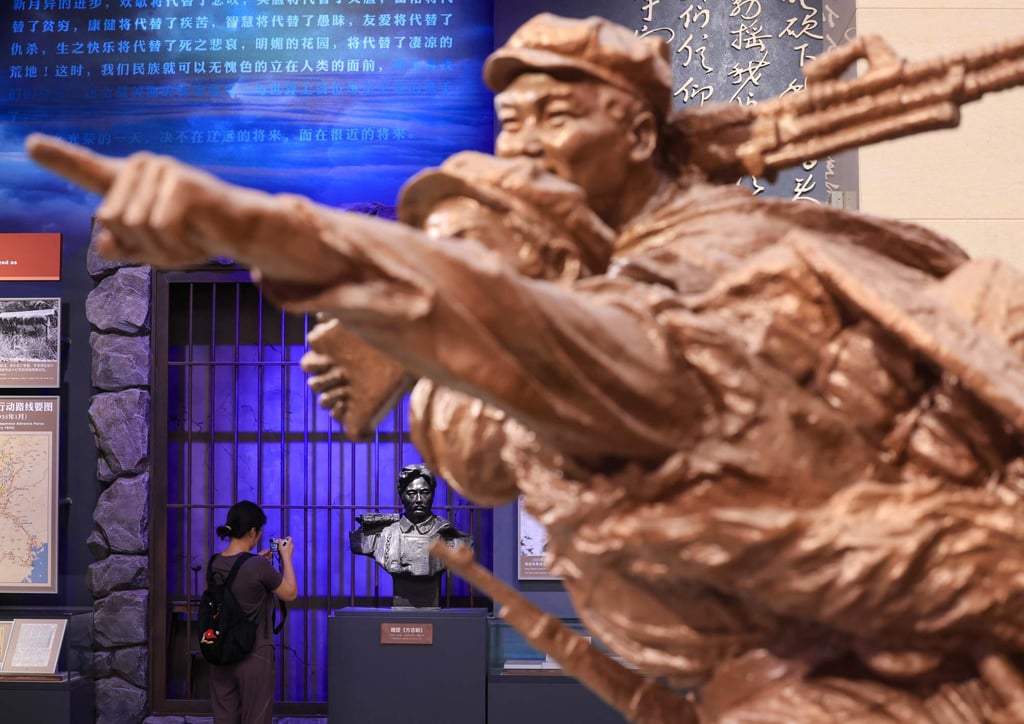
One of those exhibitions – “Promoting the Great Long March Spirit, Embarking on the Long March of the New Era” – has drawn large crowds since it opened at the Military Museum of the Chinese People’s Revolution on Friday.
Politburo Standing Committee member Cai Qi attended the exhibition opening along with some 600 representatives of the military and the party and members of the public. Cai called on Chinese to embrace the Long March spirit and to unite around the party leadership under Xi to drive national rejuvenation.
Interactive highlights of the exhibition include the “Frozen Memories” installation, which allows visitors to physically feel the biting cold experienced by Red Army soldiers as they crossed the snow-capped mountains, according to official newspaper Beijing Daily.
Meanwhile, a five-episode documentary series titled Three Days in Zunyi – produced under the joint guidance of National Radio and Television Administration and Guizhou authorities – was released on Monday to mark the anniversary.
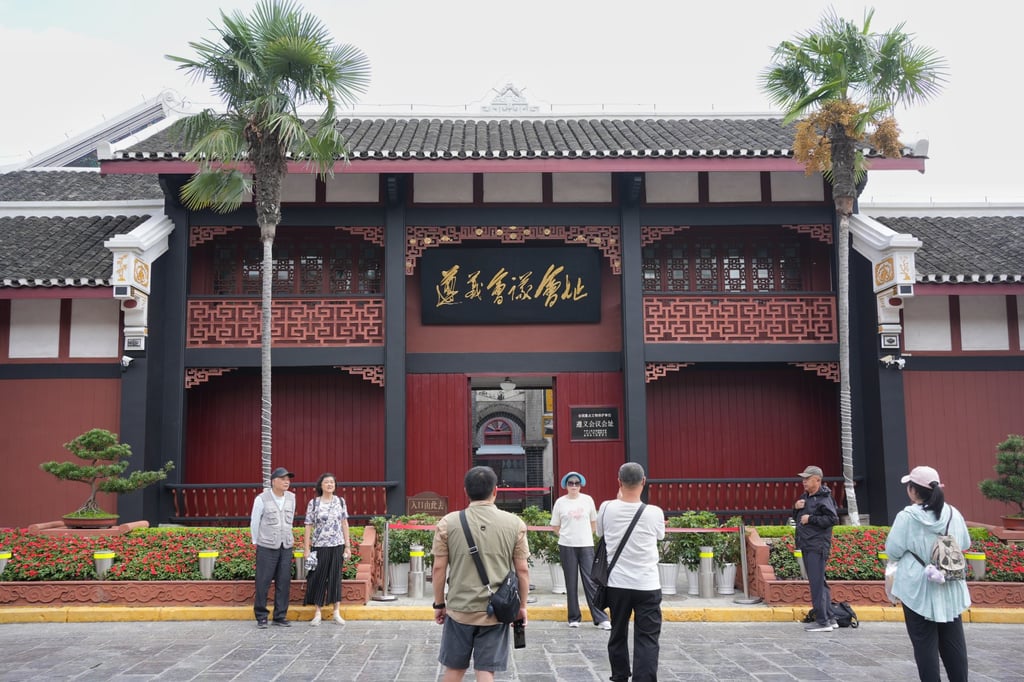
The southwestern province of Guizhou was a crucial battleground during the Long March and it played host to the Zunyi Conference in January 1935, which is seen as a turning point in the party’s history.
Facing setbacks against the Kuomintang forces, Communist leaders convened in Zunyi to review their strategy. The meeting ended with a leadership change that saw Mao Zedong, who later founded the People’s Republic of China, take the helm of the party and military – a move widely credited with saving the Communist revolution.
The documentary series looks at the historical significance and contemporary value of the meeting and it will be broadcast across television channels nationwide.
During the Long March, the Red Army spent the most time – and endured the harshest conditions – traversing southwestern Sichuan province.
To mark the trek, the Red Army Long March Library opened in the Sichuan city of Luzhou on Wednesday. It houses historical materials related to the Long March and its opening was marked by the release of six new publications on the Red Army’s expedition through the province, according to state-run Sichuan Daily.
It said the publications were based on archival records, field surveys and oral histories and aimed to fill research gaps on the Long March through Sichuan.
In the northwestern province of Gansu – where three main Red Army forces converged to mark the end of the Long March – a tour retracing some of their steps has been launched, aimed at young Chinese.
Visitors can follow some of the Red Army trails through the province, visit revolutionary memorials and sites, and see how the region has developed along the route.
Meanwhile in Shanghai – the birthplace of China’s Communist Party – the Shanghai Symphony Orchestra hosted a special concert to mark the Long March.
Featured pieces included the classic “Ode to the Red Flag”, the world premiere of “The Path of Faith: Spark and Journey”, which was commissioned to mark the anniversary, and the “Long March Symphony”, which debuted in 1962.
Hong Kong and Macau also launched a series of activities, including a tour aimed at young people where they can visit the mainland and retrace the Long March, visit revolutionary heritage sites, watch stage plays and weave the type of straw sandals worn by Red Army soldiers at the time.
Several new Long March-themed films are also set to dominate the big screen during the seven-day National Day holiday that starts on Thursday.
Among the most anticipated releases are The Woven Promise, which follows a Red Army soldier’s decades-long quest to reunite with his fiancée after carrying her handmade sandals during the march, and Light Chaser, which is set in the aftermath of the Battle of Xiangjiang River in 1934 and centres on soldiers stranded in the mountains.
KioskNews shows a cleaned-up reading view extracted from the publisher’s page — the original always lives on their site, not ours.