Prickly pears can generate solar electricity
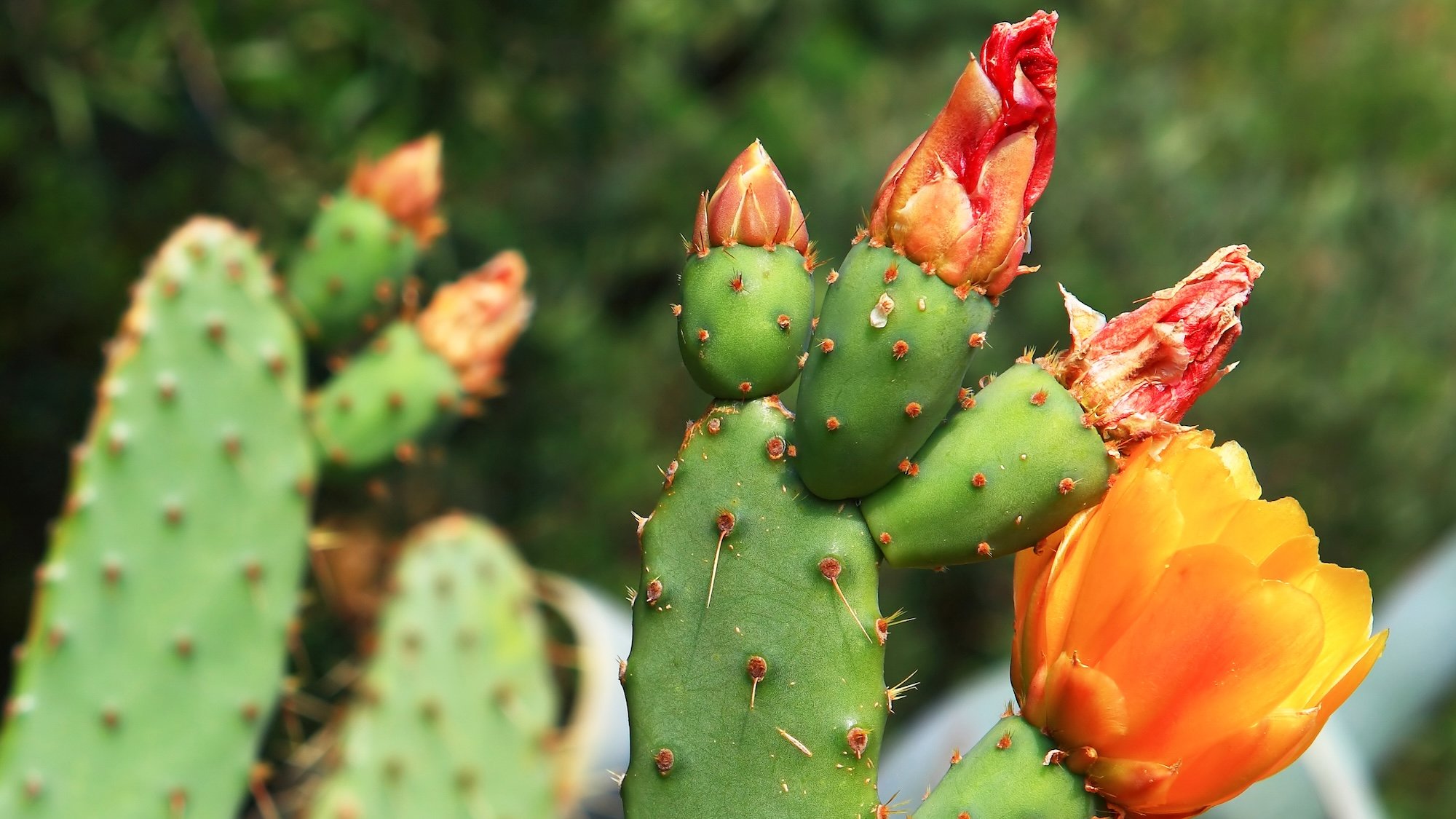
Most plants rely on real-time photosynthesis for food, which means they aren’t generating energy unless the sun is out. Meanwhile, cacti like the prickly pear must get creative in order to survive the harsh conditions they live in. With high temperatures and little water, these plants and similar species like aloe and pineapple evolved a specialized process called crassulacean acid metabolism (CAM). The overall principles are the same, but instead of converting carbon dioxide (CO₂) and water into sugars solely during daylight, CAM allows a prickly pear to extend its photosynthesis over a full 24 hours.
Plants generally absorb carbon dioxide through pores in their leaves, but the prickly pear can’t afford such an evolutionary luxury. The desert heat would turn those same tiny openings into water drains. With CAM, a prickly pear only absorbs carbon dioxide at night, and subsequently turns it into malic acid. Photosynthesis later breaks down the acid—but only on the side of the plant directly exposed to sunlight. The shady side retains its malic acid, creating a pH concentration gradient. Interestingly, this pH imbalance is also one of the underlying principles for generating electricity…see where this is going?
Environmental biologists certainly did. In a study published today in the journal Plants, People, Planet, a team at the University of California, Santa Cruz, (UC Santa Cruz) detailed a new, interdisciplinary system that transforms the common prickly pear into a green solar panel. Although prickly pear voltages aren’t enough to deliver a noticeable jolt, they are strong enough to power the tiny sensors often used by farmers to monitor their crops. With some additional fine-tuning, their novel methods could offer a promising, sustainable adaptation to ongoing climate concerns.
“It was just so nice to have 10 students in a room from all across campus working together on a single project. When we’re looking at climate solutions, that’s what we need,” Charlie Chesney, a UC Santa Cruz environmental scientist and study co-author, said in a statement.
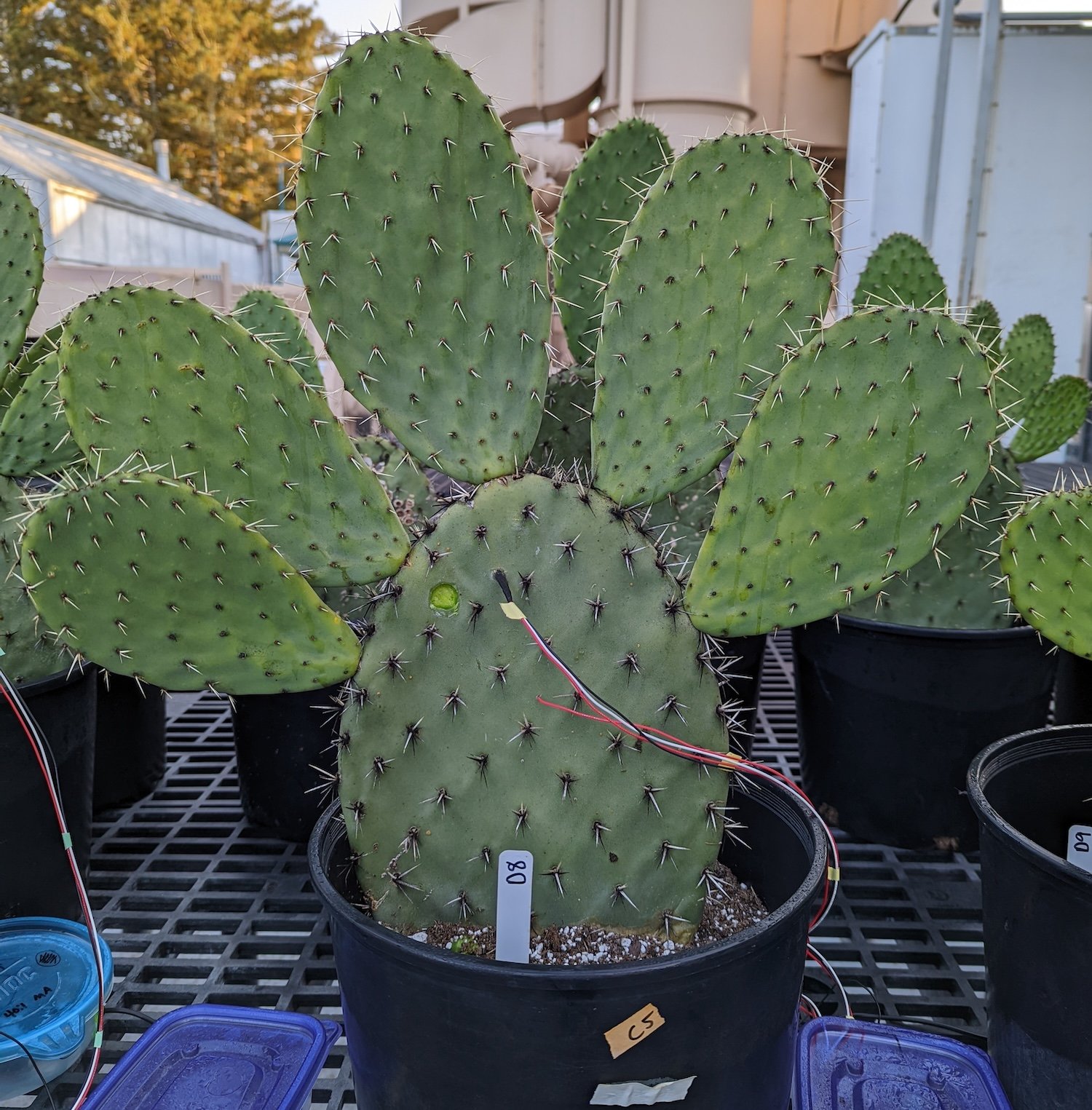
Wiring a single spiky plant doesn’t do much, but linking them together adds up. As few as eight prickly pears are enough to generate 4.5 volts of electricity—nearly three times the charge of a commercial AA battery. That’s more than enough to power the common, low-energy sensors used to assess plants.
“There are many commercial applications of cacti [for] monitoring their health using a low-power system like ours, that is just operating off on the side and is self-powered,” explained UC Santa Cruz ecologist and study co-author Michael Loik.
He offered one such scenario, where wired prickly pears function as organic “sentinels” that monitor field conditions and relay the information back to a farmer’s office.
“This could be a really interesting avenue to pursue,” he added.
The idea isn’t limited to the prickly pear, either. Any plant that uses CAM—aloe, pineapple, agave—could benefit from a similar battery upgrade. The team even assessed how the cacti performed under a standard desert challenge like drought. Even after 15 months without water, sample prickly pears weren’t simply surviving—they were still photosynthesizing. In some cases, the resultant voltages were higher than watered control plants.
“This was a really surprising result, but also showed how resilient a cactus is—it could still produce electricity even when it seems, to us, like it’s near death,” added Chesney.
KioskNews shows a cleaned-up reading view extracted from the publisher’s page — the original always lives on their site, not ours.