‘Cyber crime is like silent virus’: Allahabad High Court denies bail in Rs 16 crore cyber fraud case
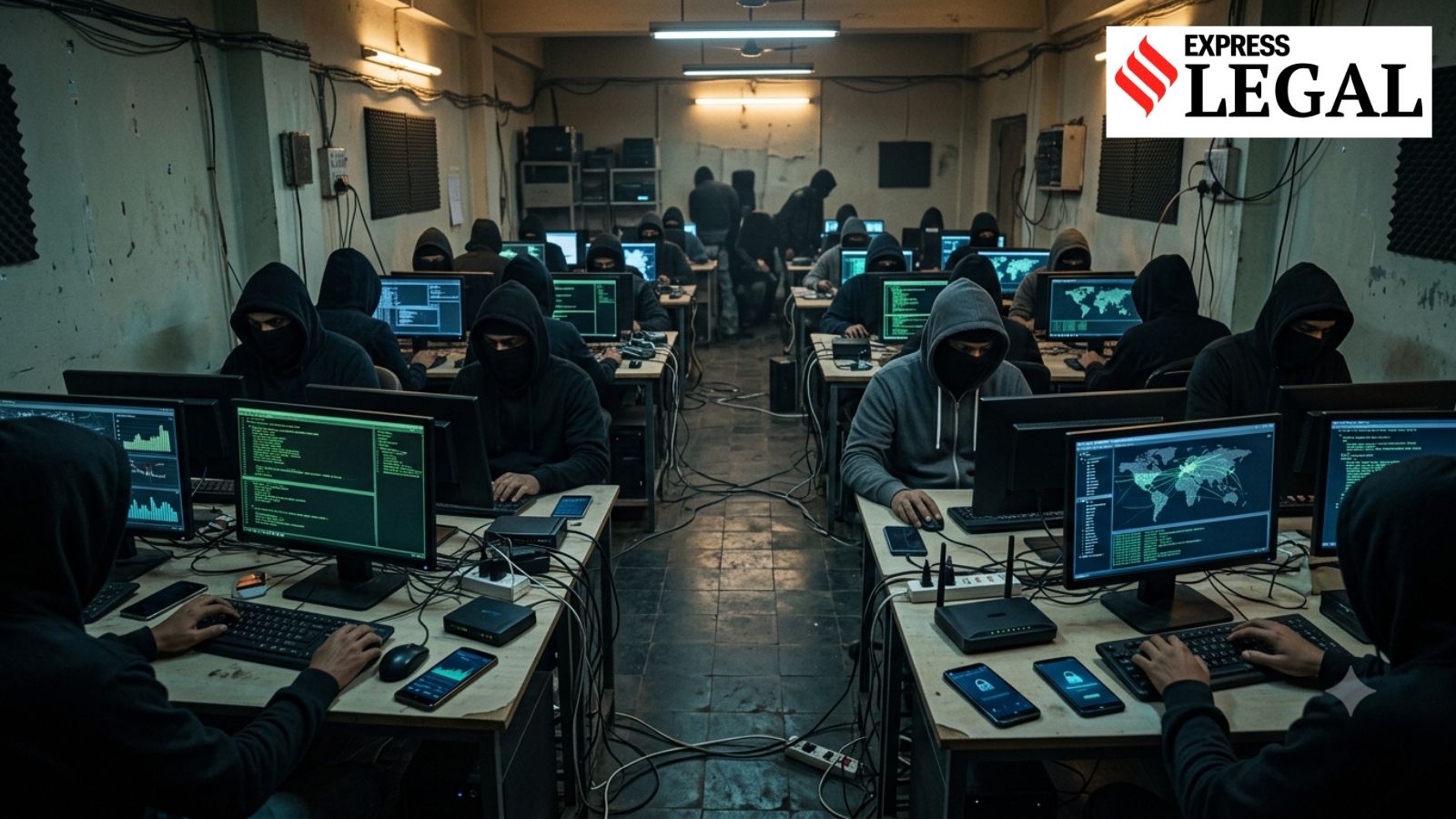
Allahabad High Court observed that the rapid advancement of technology and widespread adoption of digital infrastructure have exposed vulnerabilities exploited by cybercriminals. (Image generated using AI)
Observing that cybercrime in India has become a “silent virus” that is “stealthy” and “disruptive”, costing society not just money but trust, security and progress, the Allahabad High Court said rapid digital expansion has exposed vulnerabilities exploited by cybercriminals and that the menace affects people across religion, region, education and class. The court rejected the second bail plea of a man accused of allegedly siphoning off more than Rs 16 crore by hacking Nainital Bank’s server.
Justice Ashutosh Srivastava was hearing the second bail application filed by one Mohhammad Shahvez in a case registered in 2024 at the Cyber Crime police station in Gautam Budh Nagar. The case involves allegations under Sections 420 (cheating), 467 (forgery of valuable security, will, etc.), 468 (forgery for cheating), 471 (using a forged document as genuine), 120B (criminal conspiracy) and 201 (causing disappearance of evidence or giving false information) of the Indian Penal Code, 1860 and Sections 66/66C (computer-related offences and identity theft) of the Information Technology Act.
“Cyber-crime in our country is like a silent virus, stealthy, disruptive, and costing society more than just money, but trust, security and progress…Cyber-crime has been affecting the people across the nation, irrespective of religion, region, education or class. Newspapers, Magazines, You Tube Channels and Social Media are brimming with ordeals of an uncountable number of innocent victim of the cyber-crime, who are defrauded of their hard earned money. Such cyber-crimes are rampant in our society, and must be curbed,” the court said on August 19.
Shahvez sought bail for the second time after his first bail plea was rejected by the high court on November 27, 2025. He has been in jail since April 21, 2025, the order said.
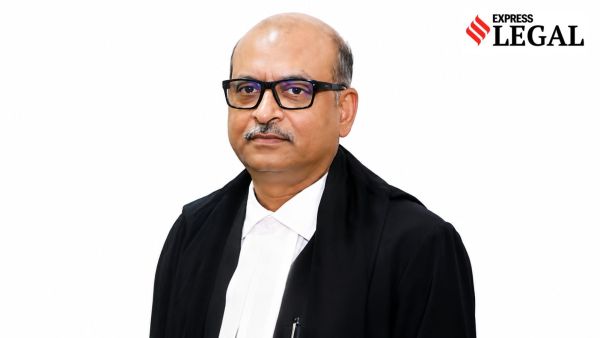 Justice Ashutosh Srivastava observed that parity with co-accused cannot be the sole ground for granting bail and the accused’s role must also be considered. (Image enhanced using AI)
Growing cybercrime threat
The high court observed that the rapid advancement of technology and widespread adoption of digital infrastructure had led to a significant rise in cybercrimes, including phishing scams, ransomware attacks, cyber-stalking and data breaches.
“This Court finds that in India, the rapid advancement of technology and the widespread adoption of digital infrastructure have led to a significant rise in cyber-crimes including phishing scams, ransomware attacks, cyber-stalking and data breaches,” the court said.
It added, “Initiatives like Digital India have accelerated the country’s’ digital transformation, but they have also exposed vulnerabilities that cyber-criminals exploit.”
Story continues below this ad
Arguments
Opposing the bail plea, the state alleged that Shahvez, along with other accused, acted in connivance to siphon off “Rs 16 crores and odd” by hacking the server of Nainital Bank. Further alleging that Shahvez provided mule accounts to co-accused Umealakei Emeka alias Alex on a two per cent commission basis, the state submitted that in the statement of co-accused Danish, Shahvez’s name surfaced during the investigation.
It also argued that documents prepared during the investigation showed Shahvez to be an active member of a syndicate allegedly involved in cyber fraud and opposed his release on bail, saying there was a possibility that his presence could not be secured during the pending trial and that he could interfere with prosecution evidence.
Shahvez’s counsel argued that the accused was innocent and had been falsely implicated and pointed out that the trial was pending and charges against him had not yet been framed. Informing the court that the case was being fixed for summoning co-accused Harsh Bansal, his counsel also submitted that Shahvez had no criminal antecedents and there was no likelihood of him fleeing from the course of justice or tampering with evidence if released on bail.
Seeking his bail on the ground of parity, pointing out that co-accused Kuldeep Singh and Shubham Bansal had already been granted bail by the high court, the counsel said that their bail applications were allowed on August 27, 2025 and August 14, 2025.
Story continues below this ad
Parity not enough, no new ground
Referring to the Supreme Court’s ruling in Sagar versus State of U P and another, the high court said parity was not the sole ground on which bail could be granted. It noted that the court must examine the position of the particular accused, including his role in the alleged crime.
The court also said that factors such as the nature of the allegations, severity of punishment, criminal antecedents and the prima facie case must be considered while exercising bail discretion. However, after examining the submissions and documents placed on record in the second bail application, the high court found that no new ground had been made out for enlarging Shahvez on bail.
The court said the alleged fraud against a public sector government bank was “heinous in nature” and observed that “cherishing of such type of crime is bad example for the society”. It also added that there was every likelihood of interference with prosecution evidence if the applicant was released.
“Considering all the above, no case for bail is made out,” the court said, rejecting the second bail application.

Vineet Upadhyay is an Assistant Editor with The Indian Express (Digital), where he leads specialized coverage of the Indian judicial system. Expertise Specialized Legal Authority: Vineet has spent the better part of his career analyzing the intricacies of the law. His expertise lies in "demystifying" judgments from the Supreme Court of India, various High Courts, and District Courts. His reporting covers a vast spectrum of legal issues, including: Constitutional & Civil Rights: Reporting on landmark rulings regarding privacy, equality, and state accountability. Criminal Justice & Enforcement: Detailed coverage of high-profile cases involving the Enforcement Directorate (ED), NIA, and POCSO matters. Consumer Rights & Environmental Law: Authoritative pieces on medical negligence compensation, environmental protection (such as the "living person" status of rivers), and labor rights. Over a Decade of Professional Experience: Prior to joining The Indian Express, he served as a Principal Correspondent/Legal Reporter for The Times of India and held significant roles at The New Indian Express. His tenure has seen him report from critical legal hubs, including Delhi and Uttarakhand. ... Read More
KioskNews shows a cleaned-up reading view extracted from the publisher’s page — the original always lives on their site, not ours.