SC asks govt to expedite regulating prices of life saving drugs
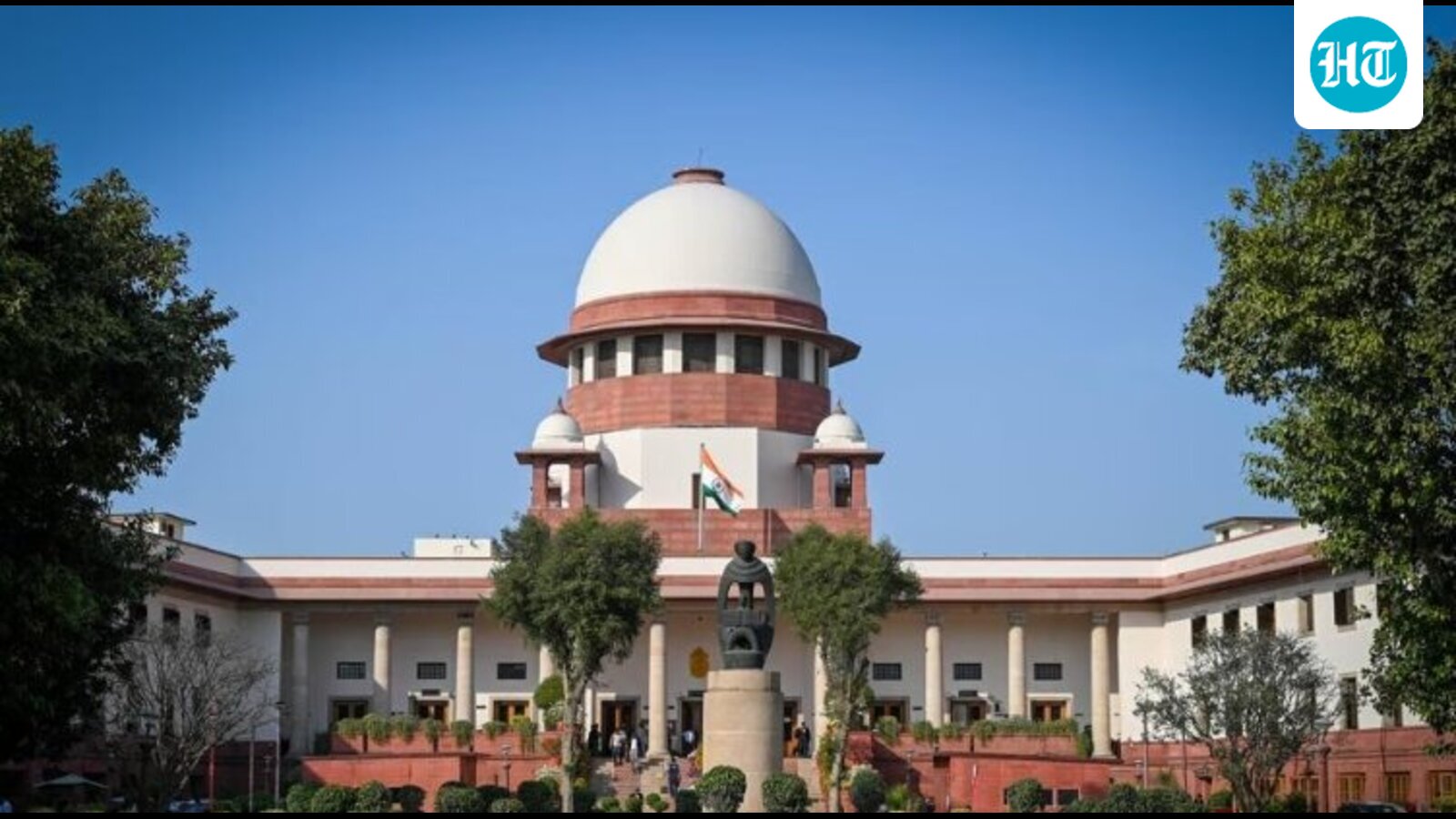
The Supreme Court on Monday told the Centre to show urgency in the matter of regulating prices of life saving drugs and devices even as the government said that anti-cancer drugs will now be significantly reduced by up to 70% with the recent decision to cap the trade margin of these drugs at 30% of the maximum retail price (MRP).
“How does the manufacturer fix a price and sell it at a price to retailer (PTR) which is one-tenth or one-fifth of the MRP…Can there be anything more important than this in the entire country,” the bench of justices Vikram Nath and Sandeep Mehta said.
The decision of the Centre was disclosed to the court in an affidavit filed by the department of pharmaceuticals, ministry of chemicals and fertilizers on Monday during the hearing on two petitions filed by advocate Kishan Chand Jain and a medical practitioner Sanjay Kulshrestha seeking regulation of prices of non-scheduled medicines.
The affidavit said that the government on October 8 has decided to cap the trade margin of anti-cancer drugs at 30% of the MRP of these drugs which are priced as high as ₹27,000. The Centre said that with the proposed trade margin rationalisation (TMR), there will be significant reductions in the MRP of anti-cancer drugs, estimated to be in the range of 20% to 70%.
To choose the list of anti-cancer drugs whose prices will be rationalised, the ministry of health and family welfare (MHFW) has constituted an Expert Committee on October 9 under the chairmanship of the Director General of Health Services (DGHS) that is expected to submit a report within 10 to 15 days. “The said list is to include all drugs approved for the treatment of cancer, except those which are inexpensive,” the affidavit said.
A bench postponed the hearing on the two petitions till October 27 to enable finalisation of the report and the subsequent decision.
The government said that upon receipt of the Expert Committee’s report, the National Pharmaceutical Pricing Authority (NPPA) will place the matter for deliberation and suitable directions before the ministry. Once finalised, the TMR of non-scheduled anti-cancer drugs will be notified along with a set of instructions and procedures to be followed by the manufacturers, so as to ensure that the benefits are passed on to the patients.
Solicitor general Tushar Mehta appearing for the Centre said, “I request the court to go through the affidavit. We are not averse to what the court is saying but we need to await the report.” Mehta said that he has discussed the matter with the bureaucrats who have said that the issue involves consultation with stakeholders.
Additional solicitor general (ASG) Aishwarya Bhati who also appeared for Centre said that the TMR on anti-cancer drugs will result in an expected annual savings of approximately ₹2,500 crore for the patients and will greatly reduce the out-of-pocket expenditure for patients undergoing cancer treatment. The decision taken by the government is aimed at “greater affordability and accessibility of anti-cancer medicines” and will reduce excessive trade mark-ups without directly reducing the manufacturer’s selling price.
The affidavit stressed that once the list of anti-cancer drugs to be covered under this policy is finalised by the Expert Committee, there will be greater transparency in the price actually applicable to patients.
The decision follows observations made by the Supreme Court which expressed concern over an anti-cancer drug was being sold at up to ₹27,000, despite being provided to retailers for just ₹2,700.
On Monday, the court continued to cite other examples such as a drip line for saline available to retailers at ₹11 that is priced for customers at ₹270, a cardiac stent which is Indian made available to retailers at ₹5,000 but sold to consumers at ₹25,000.
“How does the manufacturer fix a price and sell it at a PTR which is one-tenth or one-fifth of the MRP. We believe the MRP includes all components of cost, including research and development.”
Bhati told the court that there are concerns of pharmaceutical companies that needs to be considered. Even the pharmaceutical companies were represented in court by senior advocate Kapil Sibal who urged the court to have it in the week commencing October 26. The private hospitals association also joined the proceedings by filing an applictaion to be heard in the matter.
During the past occasions when the case was heard, the court had questioned the exorbitant rates for devices and drugs charged by private hospitals. While the price is reimbursed by the government in case of beneficiaries under the central government health scheme (CGHS) or any central or state scheme, the bench questioned that even this amount is borne out of the public funds, which is meant for the common man.
Drugs are regulated as an essential commodity under Section 3 of the Essential Commodities Act, 1955 and the Drugs (Prices Control) Order, 2013 (DPCO) is issued by the Centre in exercise of the powers conferred under this provision. The National List of Essential Medicines, last issued in 2022, comprises 388 drugs and more than 900 formulations. These are made part of DPCO 2013.
The affidavit filed by the Centre said that having regard to the high trade margins in anti-cancer medicines, in 2019 too, the NPPA notified the imposition of a cap of 30% on the trade margin in respect of 42 select non-scheduled anti-cancer medicines. The said intervention of 2019 resulted in a substantial reduction in the MRP of 526 brands, with annual savings of approximately ₹984 crore to patients, based on information provided by companies.
KioskNews shows a cleaned-up reading view extracted from the publisher’s page — the original always lives on their site, not ours.