Chiang Rai rice buying resumes after arsenic safety tests, prices rise
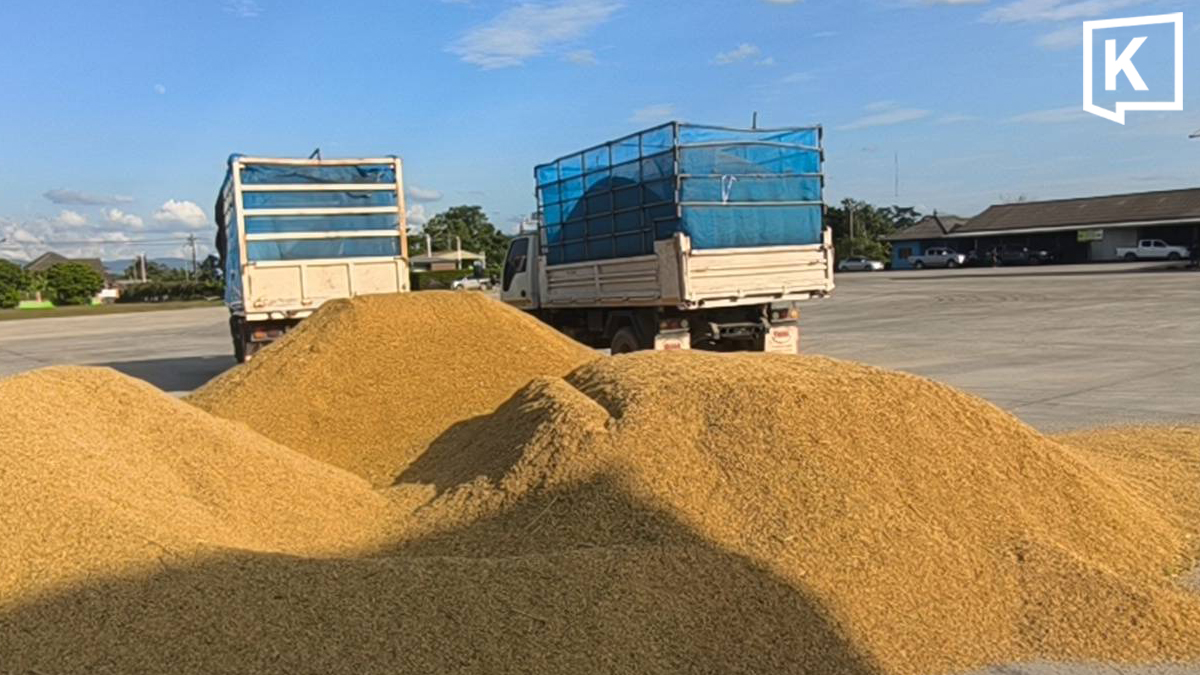
CHIANG RAI — 22 November 2026, rice farmers in Mae Sai district have welcomed the resumption of paddy purchases after laboratory tests found sampled rice met safety standards, easing concerns over possible arsenic contamination linked to the Sai River. Fresh paddy prices have risen to as much as 9,500 baht per tonne, with local millers expecting further increases.
Trading activity has resumed at the Mae Sai Agricultural Cooperative’s Si Mueang Chum branch after concerns over arsenic contamination in the Sai River prompted some rice mills and buyers to delay purchases.
The disruption had left farmers uncertain about where they could sell their harvests, adding to concerns over production costs and household debts.
According to local officials, tests conducted by Rajamangala University of Technology Lanna in Chiang Rai found that the rice samples examined met applicable safety standards, helping restore confidence among buyers.
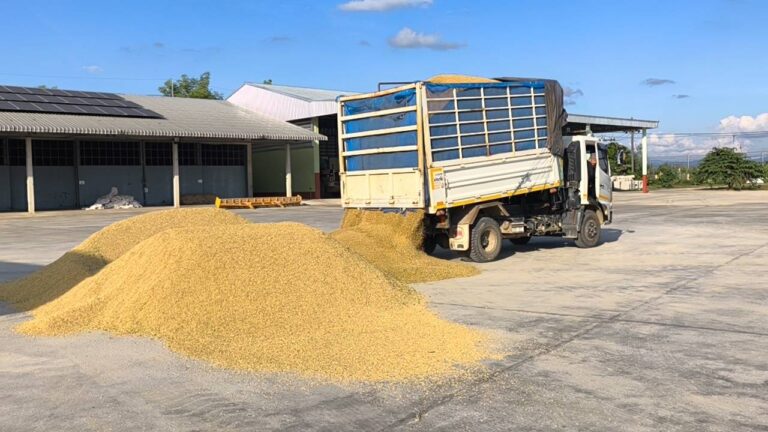
Farmers relieved as rice purchases resume
Wannee Jaikham, 49, a farmer from Ban Si Pa Sak in Si Mueang Chum subdistrict, said she was relieved to learn that the tested rice met safety standards and that the cooperative had resumed buying.
She said the earlier uncertainty had caused considerable anxiety, particularly because of household expenses and outstanding debts.
Wannee brought glutinous rice of the RD6 variety from approximately 20 rai of farmland to sell, receiving more than 9 baht per kilogram, a price she considered better than initially expected.
She still has about three rai awaiting harvest and said her rice fields rely on irrigation and groundwater.
Wannee also expressed concern that reports about possible contamination had sometimes treated rice from across Chiang Rai as equally affected, despite differences in water sources and environmental conditions.
She urged authorities and the public to distinguish between locations and rely on specific test results rather than generalisations that could damage farmers’ livelihoods.
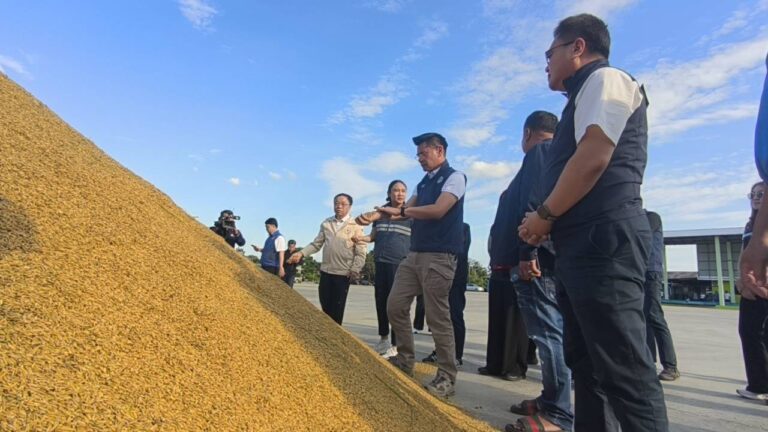
Paddy prices climb towards 10,000 baht per tonne
Wattanasak Sueaiam, director-general of the Department of Internal Trade, visited the cooperative with provincial officials, rice mill representatives and agricultural agencies to assess trading conditions for the 2026/27 production season.
He said the visit followed government concerns about reports that some rice mills had stopped purchasing paddy in Chiang Rai.
Following discussions, local mill operators confirmed their readiness to purchase farmers’ remaining harvests.
According to Wattanasak, fresh paddy prices stood at approximately 9,100–9,200 baht per tonne on 21 November before rising to 9,300–9,400 baht, with some buyers offering as much as 9,500 baht per tonne.
The Chiang Rai Rice Millers Club expects prices could reach 10 baht per kilogram, or 10,000 baht per tonne, although this remains a market projection rather than a guaranteed price.
Officials attributed the improvement partly to stronger demand for locally produced glutinous rice and the relatively small volume of unharvested rice remaining in the province.
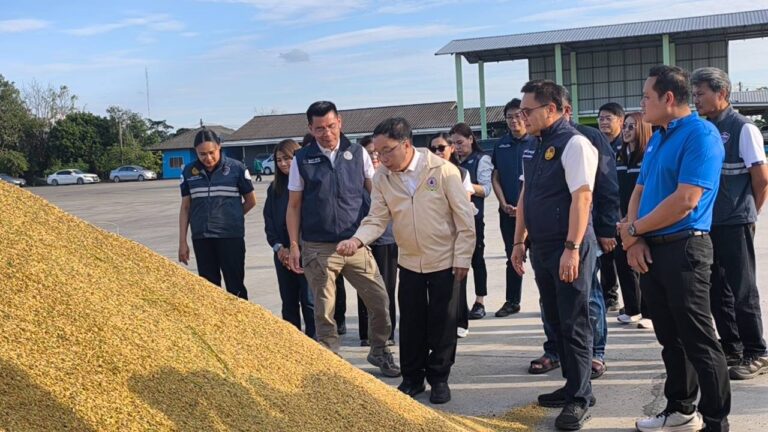
Government plans rice market from 28–30 November
Wattanasak said agricultural cooperatives would continue serving as major purchasing channels, while rice mills had agreed to support purchases from farmers.
The Bank for Agriculture and Agricultural Cooperatives (BAAC) is also prepared to provide financial support.
The Department of Internal Trade has approved a paddy rice market event in Chiang Rai from 28 to 30 November 2026 to expand sales channels and encourage competition among buyers.
Authorities also plan to coordinate direct supplies of fertilisers and other agricultural inputs to help reduce farmers’ production costs.
Officials continue monitoring water and rice quality
Concerns over the next rice-growing season remain, particularly regarding irrigation water and possible contamination.
Wattanasak said agricultural agencies had reported conducting regular monitoring of water quality, water sources and environmental conditions, with no abnormalities identified in the monitoring results cited to him.
However, the rice safety findings reported so far relate to the samples tested and do not establish that every rice field or water source in Chiang Rai is free from contamination.
Banjong Tangjitwattanakul, president of the Thai Rice Millers Association, said testing by relevant institutions had helped restore buyer confidence and support a recovery in prices.
He said the association was coordinating with rice mills in Chiang Rai and parts of central Thailand to help absorb remaining production.
Banjong added that formal testing and certification by authorised institutions would remain important for maintaining consumer confidence in rice produced in Chiang Rai.
Officials said continued monitoring and cooperation among farmers, cooperatives, rice mills and government agencies would be necessary to maintain market confidence.
KioskNews shows a cleaned-up reading view extracted from the publisher’s page — the original always lives on their site, not ours.