Growing Vietnam ties test Japan’s commitment to rules-based regional order
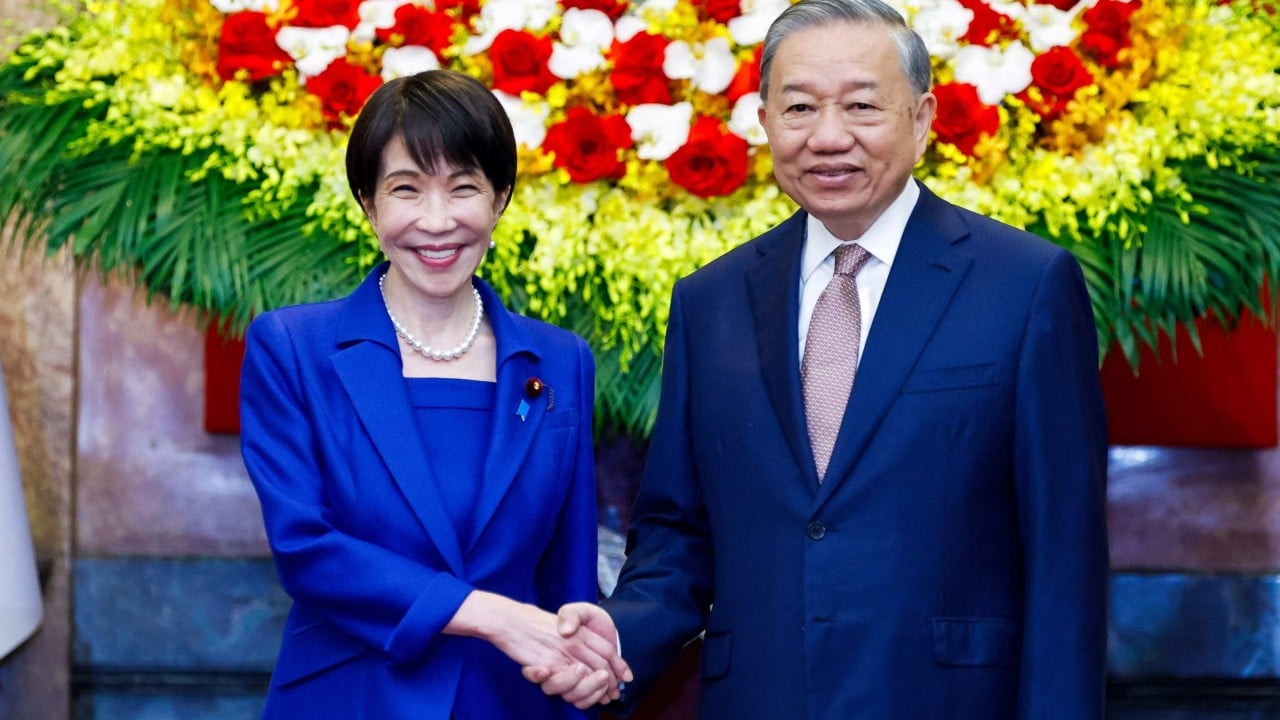
Japan’s growing strategic partnership with Vietnam is putting Tokyo’s commitment to a rules-based regional order under scrutiny, as Prime Minister Sanae Takaichi faces calls to press Hanoi over its failure to honour labour rights commitments.
The issue is expected to surface during Vietnamese President To Lam’s four-day visit to Tokyo from Sunday, raising questions about how far Japan is prepared to defend the principles underpinning a major Pacific trade agreement when its economic and security interests are at stake.
The Tokyo office of Human Rights Watch (HRW) has urged Takaichi to confront Lam over Vietnam’s failure to deliver promised labour reforms, but analysts say Tokyo is unlikely to jeopardise a growing partnership with a country that shares its concerns about China’s increasingly assertive maritime activities.
Lam’s visit builds on Takaichi’s trip to Hanoi in May, when the two leaders agreed to strengthen cooperation in several strategic sectors.
According to a statement from Japan’s foreign ministry, key discussion areas will include energy security, critical minerals and rare earths, Japanese investment and partnerships to strengthen Vietnam’s position in global technology supply chains, and cooperation in semiconductor manufacturing, AI and digital infrastructure.
Defence and maritime security are also expected to feature prominently, with both Tokyo and Hanoi concerned about China’s activities in regional waters, particularly around disputed islands and atolls in the South China Sea.
“This relationship between Japan and Vietnam has developed enormously in recent years,” said James Brown, a professor of international relations at Temple University’s Tokyo campus.
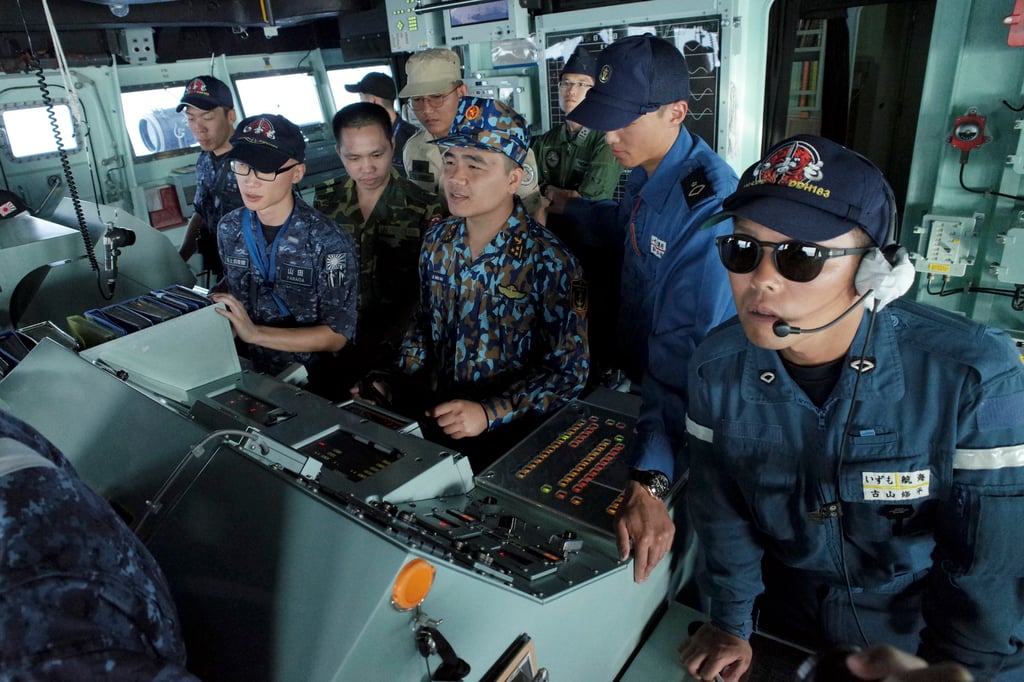
“In the past, it was primarily an economic relationship and an opportunity for Japanese businesses. More recently, shared security issues have become more prominent in the relationship and in many ways, Vietnam is a natural partner for Japan,” he said, pointing to Hanoi’s territorial disputes with Beijing, and Japan’s contributions to strengthening the Vietnamese navy and other capabilities.
The Japanese Maritime Self-Defence Force destroyer Onami paid a port call to Vung Tau in March, the first time a Japanese warship had docked in the city in 18 years.
In April, the JS Asahi destroyer docked at Tien Sa port in Da Nang for a four-day visit, while the Izumo – officially classified as an aircraft-carrying multi-role cruiser – visited Cam Ranh in 2023 and 2019.
But the growing partnership raises questions about Japan’s willingness to press a strategically important neighbour to honour commitments under a trade agreement Tokyo has helped champion.
HRW’s Tokyo office has written directly to Takaichi to urge her to raise Vietnam’s failure to uphold workers’ rights under the 2018 Comprehensive and Progressive Agreement for Trans-Pacific Partnership (CPTPP), which includes provisions on freedom of association and collective bargaining.
Japan assumed a leading role in the pact after the United States withdrew from its predecessor in January 2017, helping sustain a framework intended to promote free and fair trade among its members.

HRW argues that Tokyo’s standing as a champion of rules-based trade could be undermined if it fails to press Hanoi to fulfil its obligations, particularly as Japan seeks to strengthen its influence in Southeast Asia.
“The Vietnamese government has broken its pledges for reform and continues to crack down on basic freedoms,” said Kanae Doi, director of Japan operations for the organisation. “Prime Minister Takaichi should communicate clearly and publicly to President To Lam Japan’s serious concerns about human rights and labour rights violations.”
In a statement, Doi said the Vietnamese government had intensified its repression of basic freedoms over the last decade, initiating a “far-reaching crackdown that decimated the country’s civil society, stepped up transnational repression and expanded the scope and use of draconian laws that criminalise the exercise of freedom of expression, in contravention of international human rights law”.
With more than 160 political prisoners serving sentences, Hanoi had failed to introduce the legal reforms it promised under the CPTPP, including provisions on the “freedom of association and the effective recognition of the right to collective bargaining”, Doi added.
HRW also criticised Vietnam for failing to fulfil a commitment to ratify International Labour Organization Convention No 87 on freedom of association by January 2024, a measure intended to strengthen workers’ ability to organise independently.
Hanoi has also failed to pass legislation permitting independent trade unions, according to HRW, which argues this contradicts Japan’s own description of the CPTPP as an agreement rooted in shared principles.
Tokyo has said the pact “has great strategic significance in that it will establish a free and fair economic order with countries sharing fundamental values and principles, including freedom, democracy, fundamental human rights and the rule of law”.
For Japan, the dispute raises a broader question about the consistency of its approach to regional diplomacy, particularly whether its commitment to rules-based trade can withstand the competing demands of strategic cooperation.
Teppei Kasai, senior programmes officer in HRW’s Tokyo office, said the possibility of Takaichi exerting pressure on Vietnam seemed unlikely.
“Considering that Japan has been quiet about Vietnam’s rights abuses, partly as it competes against China for regional influence, it’s difficult to be optimistic” that Tokyo would press Hanoi on rights-related reforms, he said.
“That being said, Japan should uphold its commitment to human rights diplomacy by publicly urging Vietnam to undertake the necessary reforms.”
Brown was similarly unconvinced that Takaichi would jeopardise the deepening security relationship with Hanoi over its human rights record.
“I would be astonished if Takaichi prioritised Vietnam’s rights record over economics and security,” Brown said.
“Leadership of the pact comes with a burden, of course, and I’m sure Japan would want all the members to uphold all the rules, but I see the risk of another member nation criticising Japan for failing to lead as very low.”
KioskNews shows a cleaned-up reading view extracted from the publisher’s page — the original always lives on their site, not ours.