'Don't Beg': Pakistan's Strict Warning To Hajj Pilgrims In Saudi Arabia
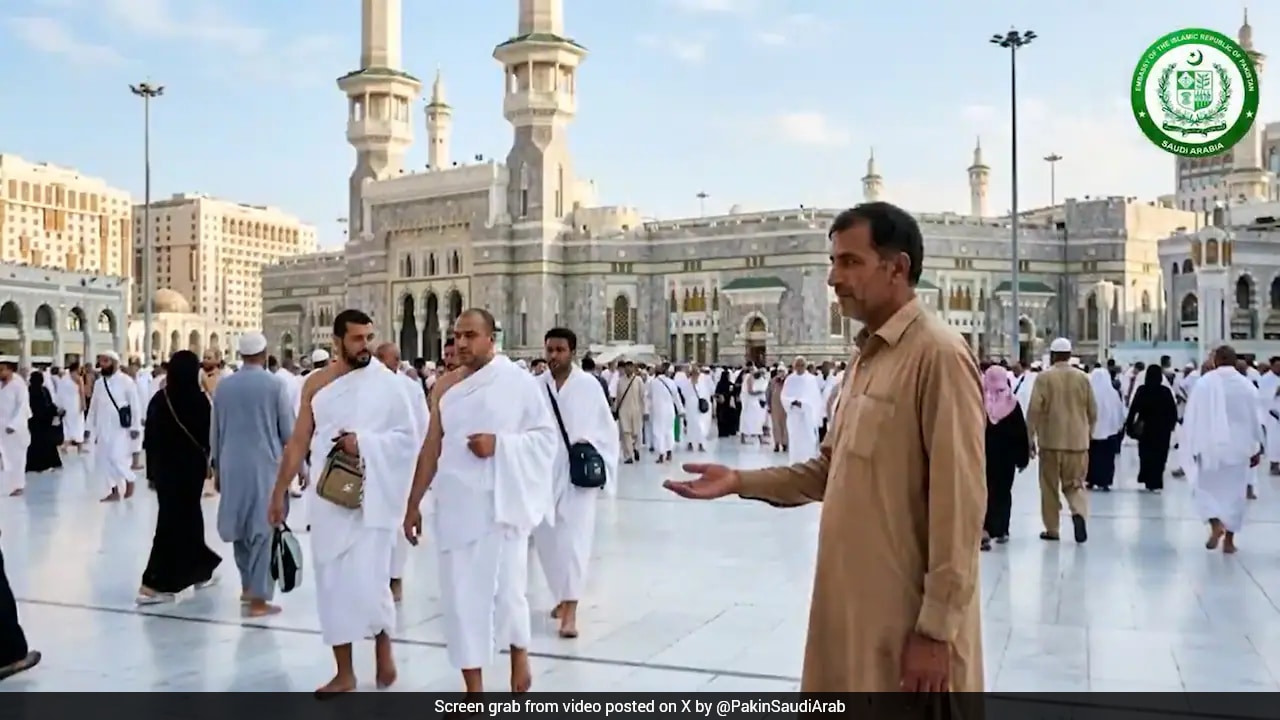
Pakistan has issued a strict advisory to its citizens travelling to Saudi Arabia for Hajj pilgrimage, warning them against begging, unauthorised collection of money and violations of Saudi visa rules.
The Pakistani Embassy in Saudi Arabia, in a message aimed at incoming Umrah pilgrims and workers, urged Pakistani nationals to comply fully with Saudi laws and the conditions attached to their visas. It warned that violations could result in arrest, detention and deportation.
The embassy also shared an AI-generated video on social media under the caption, "Important Message for All Umrah Pilgrims and Workers Coming from Pakistan".
پاکستان سے انے والے تمام عمرہ زائرین اور ورکرز کے نام اہم پیغام pic.twitter.com/BzOScR3lFP
— Pakistan Embassy Saudi Arabia (@PakinSaudiArab) August 16, 2026
The video depicts an AI-generated man being arrested by Saudi authorities and taken to jail. It accompanies the embassy's warning about the consequences of breaking local laws.
The embassy said Saudi authorities have adopted a zero-tolerance approach towards begging and unauthorised solicitation, particularly around the holy sites in Mecca and Medina.
Visitors from Pakistan have been advised not to provide or use unauthorised local services and to ensure that any financial collection or assistance is carried out through legal channels.
The embassy also reminded pilgrims and workers that they must follow the terms and duration of their visas. They were specifically advised against overstaying their visas or engaging in activities that are not permitted under their visa category.
Last year, the total number of Hajj pilgrims reached 1,673,320, including 1,506,576 pilgrims who travelled to Saudi Arabia from outside the kingdom.
Hajj is one of the five pillars of Islam and is required at least once in a Muslim's lifetime for those who have the means to undertake the pilgrimage.
The pilgrimage involves a series of rituals carried out over several days, many of them outdoors.
KioskNews shows a cleaned-up reading view extracted from the publisher’s page — the original always lives on their site, not ours.