Mauricio Pochettino’s USMNT time will be remembered fondly, but it wasn’t transformational

In a theater high up in a midtown Manhattan skyscraper built from lots of glass, a highlight reel played to deafening music. And then, on “a monumental day for US Soccer”, federation president, Cindy Parlow Cone, announced they had bagged their man, Mauricio Pochettino, to become the highest-profile United States manager in the men’s national team’s history.
Pochettino held court for three-quarters of an hour in his signature blend of Spanglish before the assembled media and a grab bag of sponsors. Then he recorded some TV hits. And after that, in a bit of accidental prescience, he went off to record a podcast with Gary Neville.
Two years, two months, and a week later, he presided over the USMNT’s untroubled 2-0 win over Haiti in Cincinnati on Tuesday, putting a bow on an 8-0 aggregate victory in the Concacaf Nations League quarter-finals. He did a lot of hugging afterwards, a staple of what was briefly mooted as Pochismo. He posed for a group picture with federation staffers. There were tears in the locker room.
After a 6-0 romp in the first leg on Saturday, Pochettino left his starting XI unchanged, raising some eyebrows. Perhaps he hoped to leave with another emphatic result; maybe he was buffing up his final stats in charge of the USA; or possibly he was legitimately concerned about giving away a lead of half a dozen goals.
It will probably be the last time in quite a long while that Pochettino enjoys a pair of consecutive lopsided victories. He boarded a private jet after the game to take over Manchester United just as soon it landed in England in the morning, leaving a situation where he enjoyed a bank vault’s worth of credit for one where his every result will be dissected and scrutinized for his viability in the job.
For all the hype, for the $6m annual salary – about double what the previous record earner at the federation, Jürgen Klinsmann, had made – and for all the talk of belief and culture and fight, what did Pochettino actually leave behind for his successor to build on? He was impactful, certainly, turning around a moody and slumping generation ambling into a home World Cup bereft of momentum or much discernible enthusiasm. The Argentinian roused the ballyhooed golden generation for four-fifths of a very strong World Cup, turning in displays more convincing and dominant than the program has ever managed on that stage – until it all came undone against Belgium in the last 16.
His time in charge was notable, absolutely. Pochettino got, and brought, lots of attention to the team, although it’s hard to say whether a more workaday manager might not have ridden that same World Cup wave, as the voice of the co-hosts.
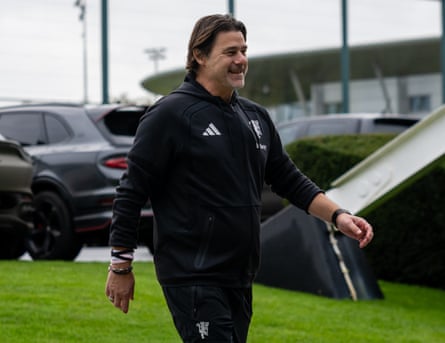
Pochettino wasn’t the first USMNT manager to try to play more expansively, more technically, in a more aesthetically pleasing way. Klinsmann tried it, and Gregg Berhalter tried it, too. But Klinsmann didn’t have the players, and Berhalter’s weren’t ready for it. Pochettino did and they were, at long last, and he introduced a tactical sophistication, with deft attacking patterns that regularly unlocked useful spaces.
He also wasn’t the first USMNT manager to fixate on culture and give young talent a chance. But through his selections and his messaging, he reinstated an internal competition for playing time that had seeped away under several consecutive and at times complacent administrations. And he deepened the player pool considerably. Perhaps any old head coach would have spotted the glut of gifted teenagers pushing through and had the wherewithal to bring them along, but Pochettino deserves credit for leaning on the young players, handing them meaningful minutes and responsibility.
after newsletter promotion
While Pochettino leaves the USMNT better than he found them, his spell in charge was not transformational. He brought the Americans no further at a World Cup than they had been before. His statistics – victories in 62% of his matches; 2.08 goals scored per game; 1.29 conceded – are more or less in line with the numbers put up by his permanent predecessors. He did not win the Concacaf Gold Cup or the Nations League when he was occasioned to.
Nor did he take the US to their first World Cup in four decades, as Bob Gansler did in 1990. Or make them respectable on that stage, as Bora Milutinovic did in 1994. Or bring about their breakthrough, as Bruce Arena did in 2002. Or rebuild the program from its modern nadir, as Berhalter did in his first tenure. It is a sign of growth, perhaps, that the strides available to be made were smaller. You can only overcome the challenges you are faced with, after all.
Whatever the case, Pochettino will be remembered fondly by most. He smiled and joked a lot and did his best to say interesting things. He could be spiky, from time to time, but mostly injected an environment that had grown stale and dour with joy.
Pochettino, by all accounts, had a good time stateside, commuting here from his homes in London and Barcelona. He enjoyed watching NFL games and attended the Cincinnati Bengals’ home victory over the Pittsburgh Steelers on Sunday. He got into country music, apparently. “Only we can say thank you,” Pochettino said in his final news conference, on behalf of his staff. “Thank you so much, and always we are going to keep the good memories.”
The USMNT, too, largely enjoyed their time with their famous coach. They made some nice memories together. But he may not have been here long enough to fundamentally change their trajectory.
-
Leander Schaerlaeckens is the author of The Long Game: US Men’s Soccer and Its Savage, Four-Decade Journey to the Top, or Thereabouts, which is out now. He teaches at Marist University.
KioskNews shows a cleaned-up reading view extracted from the publisher’s page — the original always lives on their site, not ours.