10 Classic Movies Without a Single Flaw

Michael Block is a 14 time GLAM Award nominated writer, producer, and host of the podcast Block Talk. Throughout his time in the entertainment industry, he has worked on and off Broadway as a stage manager, written several produced plays, critiqued hundreds of theatrical performances, drag and cabaret shows, and has produced events randing from drag competitoons to variety concerts!
On Block Talk, he interviews nightlife personalities, covers the wide world of entertainment through features, ranking episodes, and recaps ALL of Drag Race, as well as Dragula and Survivor. He has interviewed hundreds of RuGirls that span the globe at DragCon NYC, DragCon LA, and DragCon UK.
In his free time, he makes one-of-a-kind jewelry and gift baskets with his mom. He is a proud member of the LGBTQ+ community.
Sign in to your Collider account
They say they don’t make movies like they used to. While that statement may be hyperbolic, it is true that we still revere many of cinema's all-time great classics. As both influential and a beacon for future filmmaking, the classics remain part of Hollywood history, and their legacies keep improving with each year.
While we love some classics for being iconic, we adore others for being flawless. The ten classic films on this list came out without a single flaw. From sensational performances and brilliant writing to extraordinary craft and memorable moments, these movies are simply perfect. While many more movies could be added to this list, these ten represent a wonderful array of historic and diverse titles from the classic era of cinema.
'2001: A Space Odyssey' (1968)

There may not ever be a more perfect science fiction film than 2001: A Space Odyssey. In the Stanley Kubrick classic, human evolution, artificial intelligence, and our place in the universe are explored in prolific fashion. Using a black monolith as a recurring image, the film builds to a fever pitch when the crew of the spacecraft Discovery One confronts HAL 9000, the advanced artificial intelligence controlling the ship.
2001: A Space Odyssey thrives on visual storytelling. For its time, Kubrick achieved groundbreaking realism through practical effects, using physical models and a massive rotating centrifuge set to create zero-gravity and artificial gravity effects that felt tangible. By consulting experts, Kubrick ensured scientific accuracy, which made the film feel authentic. Rather than an exposition-filled film, Kubrick relies on a narrative built on sight and sound, combining long silent passages with classical music. Pair it with the presence of HAL 9000, and the film becomes an eerie voyage of cosmic dread.
'All About Eve' (1950)

One of the most iconic lines in cinema history is "Fasten your seatbelts. It's going to be a bumpy night," and we owe it to All About Eve. Written and directed by Joseph Mankiewicz, the classic drama tells the story of the ruthlessly ambitious Eve Harrington (Anne Baxter) who manipulates her way into the life of aging Broadway star Margo Channing (Bette Davis) to steal her career and status. Only cynical theater critic Addison DeWitt (George Sanders) sees through Eve's facade and ultimately exposes the truth.
All About Eve is more than just a backstage drama; instead, it’s a biting exploration of the cyclical nature of fame, envy, and the price of success. The endlessly quotable film features razor-sharp, sophisticated dialogue that gets straight to the point. Davis is simply divine as the aging star, grappling with a fading career, highlighting the insecurity of older artists against a younger generation. Baxter eases into the calculated, manipulative hunger of Eve, giving Margo something tangible to fear. All About Eve prophesied how media and fan culture have enabled toxicity.
'Casablanca' (1942)
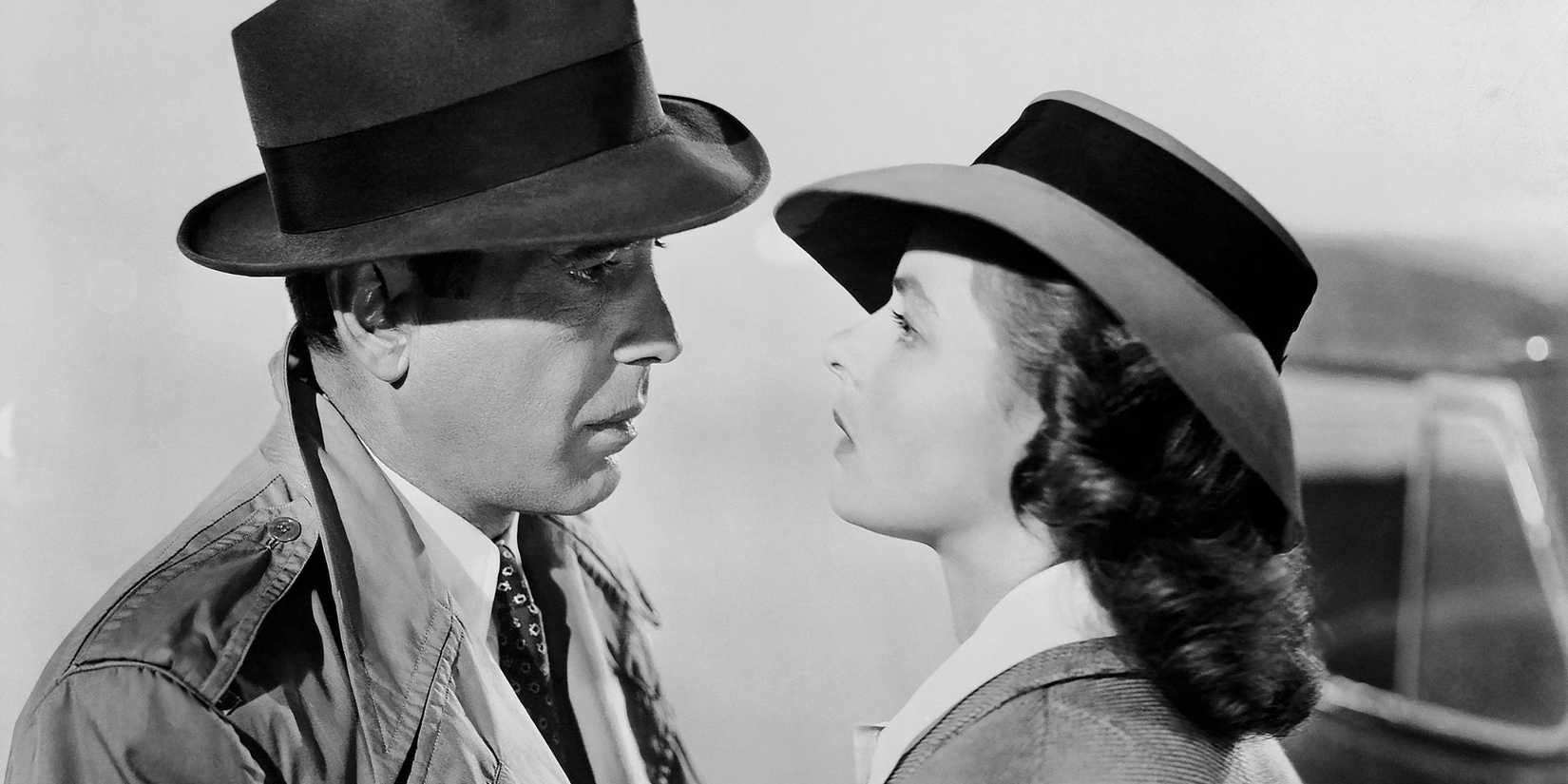
As time goes by, Casablanca remains one of the greatest films ever made. Directed by Michael Curtiz, Casablanca tells the story of Rick Blaine (Humphrey Bogart), owner of Rick's Café Américain, who must choose between keeping his former lover, Ilsa Lund (Ingrid Bergman), close by or helping her and her freedom-fighter husband, Victor Laszlo (Paul Henreid), escape the Nazis in World War II Morocco. One of the most romantic films of all time, Casablanca is a flawless masterwork that left a profound moral message.
A major reason the film shines is its exceptional script by Julius J. Epstein, Philip G. Epstein, and Howard Koch. Casablanca seamlessly balances dramatic romance, cynical wit, and political suspense to heighten the melodrama while offering some of the most memorable lines in cinema. At its core, the story is about an individual’s responsibility and duty on a macro level. Though Rick may experience heartbreak by allowing Ilsa to go, the sentiment that they’ll “always have Paris” becomes transcendent. Casablanca features one of the most unforgettable endings, allowing the film’s long-lasting legacy.
'It Happened One Night' (1934)

One of the most delightful classic screwball comedies of the Golden Age is Frank Capra’s It Happened One Night. The film follows Ellie Andrews (Claudette Colbert), a rich, spoiled runaway heiress, as she meets cynical reporter Peter Warne (Clark Gable) while they take a bus to New York City. After travel troubles along the way, Ellie and Peter fall in love and find a happily ever after in the end.
Establishing the romantic comedy template, It Happened One Night is an effortlessly simple film with a delightful dynamic that ignited our passion for cliché-free narratives. It brought the beloved mismatched pair trope to the screen, where we fall in love alongside the duo. Their playful bickering and the iconic "Wall of Jericho" blanket hung between their motel twin beds lean into the humor while establishing that romantic tension that made the story so sweet. Released before the enforcement of the Hays Code, It Happened One Night navigates vulnerability without exploitation.
'Lawrence of Arabia' (1962)

Widely considered one of the greatest epics of all time, David Lean's Lawrence of Arabia is a biographical drama depicting the life of T.E. Lawrence (Peter O'Toole), a British officer who helped unite Arab tribes against the Ottoman Empire during World War I. During his crusade, Lawrence becomes torn between his duty to the British Empire and his deep loyalty to the Arab people. Lawrence of Arabia explores the psychological toll of violence and internal struggle with the killing he witnesses and commits.
A flawless film, it blends breathtaking practical scale with a deeply compelling narrative and complex character study. O’Toole is magnificent as the heroic figure whose ego and psyche slowly unravel as he gets deeper into his journey. He represents an individual who is changed by the moral costs of war. In a time when special effects were still developing, Lean opted for a practical visual spectacle where every horse, dune, and extra is real; you can almost feel the heat of the blazing sun. At 216 minutes, Lawrence of Arabia has the weight of an epic, yet earns every minute of its large-scale storytelling.
Collider Exclusive · Oscar Best Picture Quiz
Which Oscar Best Picture
Is Your Perfect Movie?
Parasite · Everything Everywhere · Oppenheimer · Birdman · No Country
Five Oscar Best Picture winners. Five completely different visions of what cinema can be — and what it can do to you. One of them is the film that was made for the way your mind works. Ten questions will figure out which one.
🪜Parasite
🌀Everything Everywhere
☢️Oppenheimer
🐦Birdman
🪙No Country for Old Men
01
What kind of film experience do you actually want? The best movies don't just entertain — they leave something behind.
02
Which idea grabs you most in a film? Great films are driven by a central obsession. What's yours?
03
How do you like your story told? Form is content. The way a story is shaped changes what it means.
04
What makes a truly great antagonist? The opposition defines the protagonist. What kind of opposition fascinates you?
05
What do you want from a film's ending? The final note is the one that lingers. What do you want it to sound like?
06
Which setting pulls you in most? Where a film takes place shapes everything — mood, stakes, what's even possible.
07
What cinematic craft impresses you most? Every great film has a signature — a technical or artistic element that makes it unmistakable.
08
What kind of main character do you root for? The protagonist is the lens. Who you choose to follow says something about you.
09
How do you feel about a film that takes its time? Pace is a choice. Some films sprint; others let tension accumulate slowly, deliberately.
10
What do you want to feel walking out of the cinema? The best films leave a mark. What kind of mark do you want?
The Academy Has Decided Your Perfect Film Is…
Your answers have pointed to one Oscar Best Picture winner above all others. This is the film that was made for the way your mind works.
Parasite
You are drawn to films that operate on multiple levels simultaneously — that begin in one genre and quietly, brilliantly migrate into another. Bong Joon-ho's Parasite is a film about class, desire, and the architecture of inequality that manages to be darkly funny, deeply suspenseful, and genuinely shocking across a single extraordinary running time. Your instinct is for cinema that hides its true intentions until the moment it's ready to reveal them. Parasite is exactly that — a film that rewards close attention and punishes assumptions, right up to its devastating final image.
Everything Everywhere All at Once
You want it all — and this film gives you all of it. The Daniels' Everything Everywhere All at Once is one of the most maximalist films ever made: action comedy, multiverse sci-fi, family drama, existential crisis, and a genuinely earned emotional core that sneaks up on you amid the chaos. You are someone who responds to ambition, who doesn't want cinema to choose between being entertaining and being meaningful. This film refuses that choice entirely. It is overwhelming by design, and its overwhelming nature is precisely the point — because the feeling of being crushed by infinite possibility is exactly what it's about.
Oppenheimer
You are drawn to cinema on a grand scale — films that understand history not as a backdrop but as a force, and that place their characters inside that force and watch what happens. Christopher Nolan's Oppenheimer is a film about the terrifying gap between what we can do and what we should do, told with the full weight of one of the most consequential moments in human history behind it. You want your films to feel important without feeling self-important — to earn their ambition through sheer craft and the gravity of their subject. Oppenheimer does exactly that. It is enormous, complicated, and refuses easy comfort.
Birdman
You are drawn to films that foreground their own construction — that make the how of the filmmaking part of the what it's about. Alejandro González Iñárritu's Birdman, shot to appear as a single continuous take, is cinema examining itself through the cracked mirror of a fading actor's ego. You respond to formal daring, to the feeling that a film is doing something that probably shouldn't be possible. Michael Keaton's performance and Emmanuel Lubezki's restless camera create something genuinely unlike anything else — a film that is simultaneously about creativity, relevance, self-destruction, and the impossibility of ever truly knowing if your work means anything at all.
No Country for Old Men
You are drawn to cinema that trusts silence, that refuses to explain itself, and that treats dread as a form of meaning. The Coen Brothers' No Country for Old Men is a film about the arrival of a new kind of evil — implacable, arbitrary, and utterly indifferent to the moral frameworks we use to make sense of the world. It is one of the most formally controlled films ever made, and its controlled restraint is what makes it so terrifying. You want your films to haunt you, not comfort you. You are not interested in resolution if resolution would be dishonest. No Country for Old Men is honest in a way that most cinema never dares to be.
'Some Like It Hot' (1959)

From a modern lens, Some Like It Hot may have its flaws, but as a product of its time, it’s simply remarkable. The Billy Wilder-directed comedy follows two musicians, Joe (Tony Curtis) and Jerry (Jack Lemmon), who go on the run upon witnessing a mob hit in Chicago. To hide from gangsters, they dress as women and join an all-female jazz band on a train to Florida. Introducing many to the brilliance of Marilyn Monroe as Sugar Kane, Some Like It Hot remains one of the greatest comedies of all time.
With unparalleled star power, an airtight, witty script, and a high-stakes narrative, Some Like It Hot is the perfect comedic masterpiece. While the Valentine’s Day Massacre roots the story in reality, the decision to go undercover in drag becomes a matter of life or death. From there, the comedy arises from the absurdity, as the romance is built on magnetism. The casting of the main trio was literally a lightning-in-a-bottle moment. The film is profoundly ahead of its time for how it treats identity, gender-bending, and sexuality with a bias-free lens.
'Sunset Boulevard' (1950)

One of the most quotable classics, Sunset Boulevard remains as big now as it was then. Ready for her close-up, Sunset Boulevard tells the story of Norma Desmond (Gloria Swanson), a forgotten silent-screen star, who embarks on a professional and personal relationship with Joe Gillis (William Holden), a struggling writer, who is hired to edit a terrible script she wrote for her grand return to the screen. As Joe secretly falls in love with a younger, aspiring writer named Betty Schaefer (Nancy Olson), Norma’s obsession reaches a breaking point as a dark web of delusion and murder in Hollywood unfurls.
With a Gothic noir style that captures the glory of old Hollywood, Sunset Boulevard remains the pinnacle movie about the movie business. Directed by Billy Wilder, this classic is an extraordinary fusion of dark satire of an idolized entertainment industry and tragic psychological character study of two strikingly complex individuals. Though we relate Glenn Close to the musical version of the story, Norma Desmond begins and ends with Swanson and her operatic performance. From horrific delusion to tragic heartbreak, it's her greatest on-screen work. If you love the movies, Sunset Boulevard is essential viewing.
'The Godfather: Part II' (1974)

Sequels can be hard. Then there is The Godfather Part II, the greatest sequel of all time. Francis Ford Coppola's gangster crime drama presents two parallel timelines. In the past, Vito Corleone (Robert De Niro) flees Sicily after the local mafia boss kills his family, and he eventually rises to power by helping his neighbors and forming his own criminal empire. In the present, Michael Corleone (Al Pacino) attempts to keep a hold on the family business as he devolves into a cold, paranoid mob boss.
By telling two uniquely profound simultaneous stories, the film shows how Vito built his empire as Michael watches it tumble. The second film is an internal tale that centers on betrayal, which leads to the heartbreaking turning of Fredo (John Cazale). Pacino continues his domination on screen, while De Niro’s quiet, chilling performance provides the perfect prequel fodder, building Vito into the man we previously saw Marlon Brando portray. The Godfather Part II removes the romanticized image of the mafia to show how power causes true corruption and moral depletion.
'The Wizard of Oz' (1939)

Very few films have stood the test of time quite like The Wizard of Oz. Passed down from generation to generation, this Technicolor masterpiece follows young Kansas girl Dorothy Gale (Judy Garland) as she gets swept away by a tornado to the magical Land of Oz. On her journey to find a way home, she encounters three magical friends, a good witch, a bad witch, and the Wonderful Wizard of Oz (Frank Morgan), who teach her that what she’s been longing for has been inside her.
The Wizard of Oz is a timeless classic. Through a flawless combination of groundbreaking visual storytelling, a magical score, and a remarkably resonant emotional core, the film is unforgettable. It weaves a musical score that elevates the heart and soul of the core story about friendship, courage, and the true meaning of home. Garland’s career-defining performance has impacted pop culture while connecting to generations of viewers who see her as a beacon of acceptance. The Wizard of Oz has an enduring quality, as the film’s humanity still resonates today.
'West Side Story' (1961)
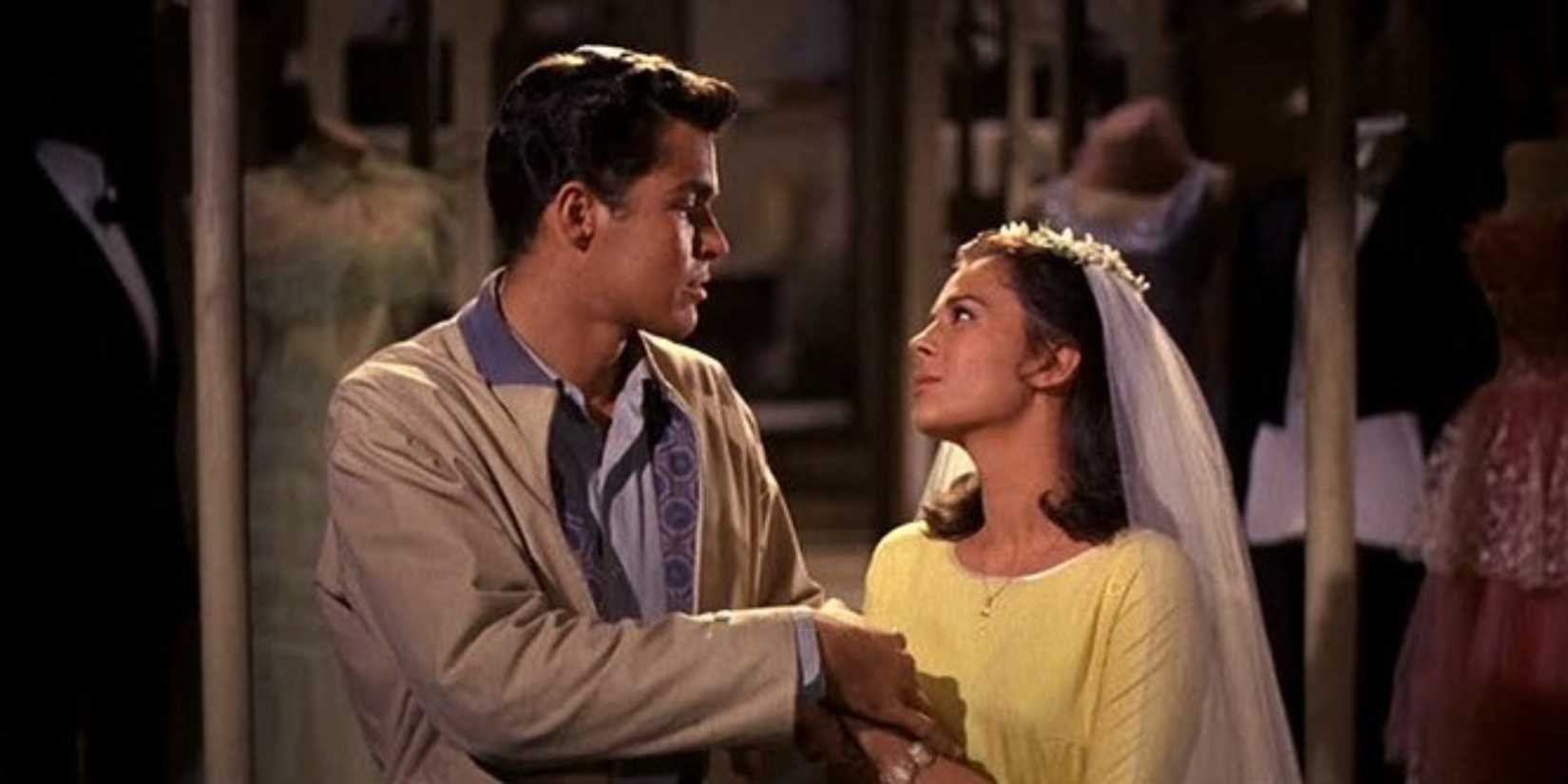
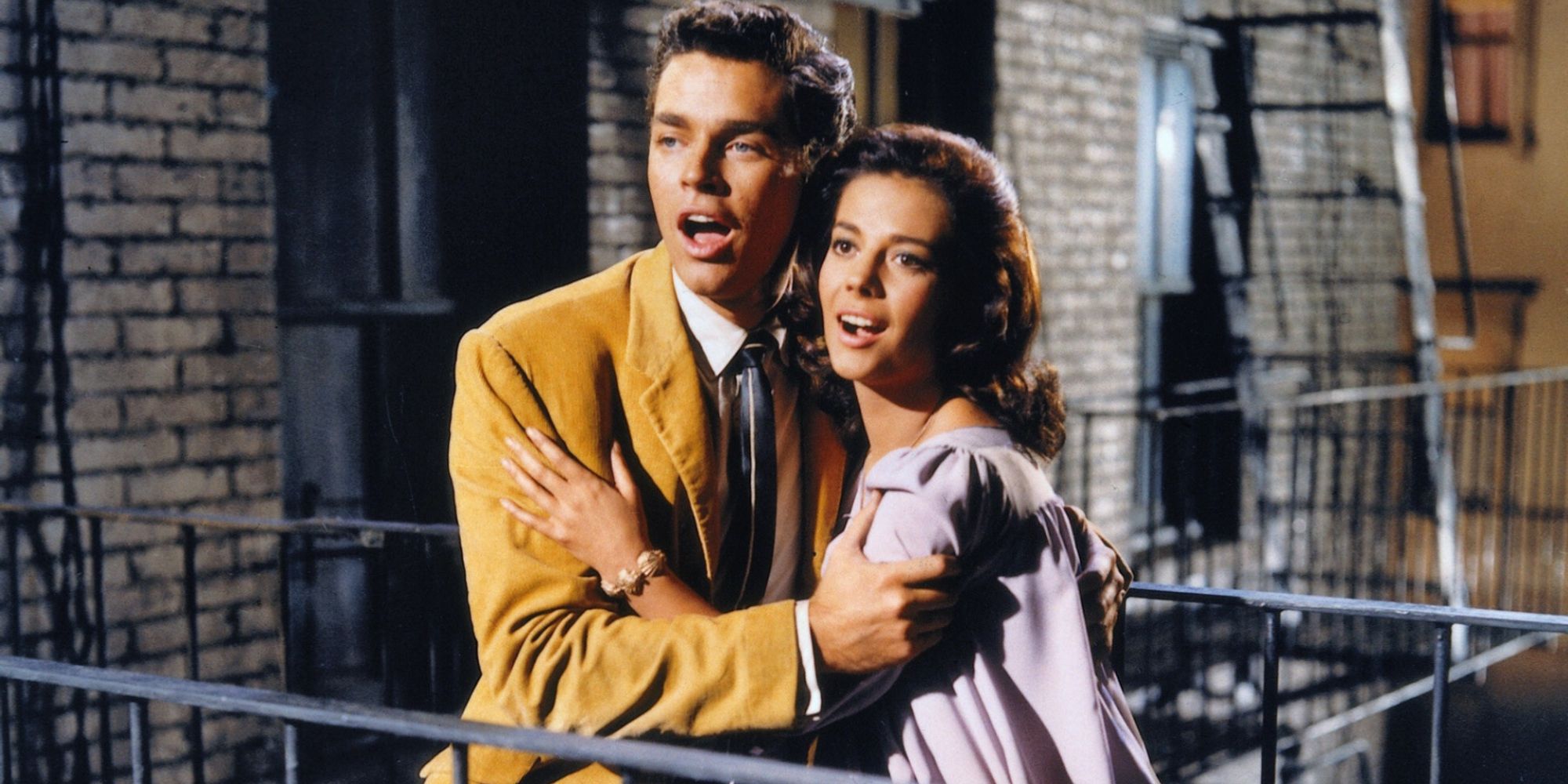
The Golden Age of Hollywood introduced viewers to many exceptional movie musicals, but West Side Story is the most flawless adaptation of them all. The 1961 film is a retelling of Romeo & Juliet set in 1950s New York City, centered onstar-crossed lovers, Tony (Richard Beymer), an Italian-American former co-founder of the Jets, and Maria (Natalie Wood), the Puerto Rican younger sister of the Sharks’ leader.
West Side Story is a visual wonder. Directed by Robert Wise and Jerome Robbins, who also choreographed the film, it captures the essence of the gritty streets and the hearts of the people who live there. The choreography reflects the characters' angst, love, and passion. Leonard Bernstein's music and Stephen Sondheim's lyrics evoke a soaring emotional center where pride and joy receive the same glory as heartbreak and despair. Whether you know the outcome from its source material or not, the ending will forever operate as an emotional gut punch. West Side Story remains a beautifully crafted romantic musical.

West Side Story
- Release Date
- December 13, 1961
- Cast
- Natalie Wood, Richard Beymer, Russ Tamblyn, Rita Moreno, George Chakiris, Simon Oakland, Ned Glass, William Bramley, Tony Mordente, David Winters, Eliot Feld, Bert Michaels, David Bean, Robert Banas, Scooter Teague, Harvey Evans, Tommy Abbott, Susan Oakes, Gina Trikonis, Carole D'Andrea, Jose De Vega, Jay Norman, Gus Trikonis, Eddie Verso, Jaime Rogers
- Runtime
- 153 minutes
- Director
- Jerome Robbins, Robert Wise
- Writers
- Ernest Lehman
KioskNews shows a cleaned-up reading view extracted from the publisher’s page — the original always lives on their site, not ours.