In China gene-editing trial, 2 children improved, 1 died and 1 withdrew
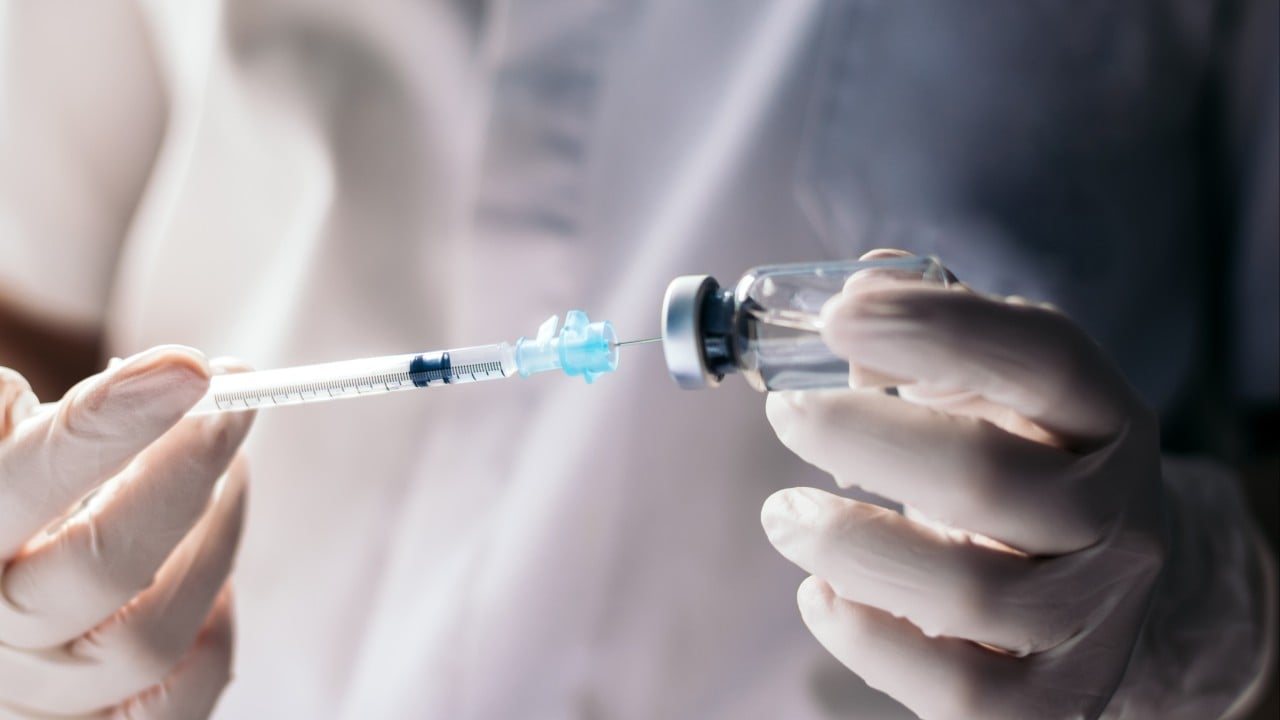
Four seriously ill Chinese boys who would almost certainly have died in their 20s from a rare inherited disease have received the same highly anticipated gene-editing drug.
More than a year later, a set of cruel and contradictory data emerged.
Two boys gained the strength to walk farther. One boy showed no improvement in gait and subsequently withdrew from the trial. And the fourth boy’s heart stopped beating 81 hours after receiving the medication intravenously, owing to a severe systemic immune storm and respiratory failure.
The harsh reality of fast-advancing but imperfect technological innovation is that experimental treatments can be truly promising yet still leave parents to gamble with their child’s life.
02:53
Chinese scientist under investigation after 6-year-old girl dies ‘following gene therapy’
On Monday, the scientific journal Cell published the clinical trial results for a gene-editing therapy developed by Shanghai-headquartered HuidaGene Therapeutics, which was tested on the four boys with Duchenne muscular dystrophy (DMD).
DMD is a severe genetic muscle-wasting disease caused by mutations in the dystrophin gene on the X chromosome, with a global incidence of about 1 in 3,500 to 5,000 male newborns.
Existing therapies still have significant limitations in delaying or preventing progressive muscle degeneration, and patients often eventually progress to heart and respiratory failure, with life expectancy typically extending into the late 20s to 30s.
According to the paper, the four boys, aged 4 to 8, took part in a clinical trial evaluating HG302.
HG302 is an investigational CRISPR-based gene-editing therapy designed to restore the expression of dystrophin in people with DMD. It has received Orphan Drug Designation from the US Food and Drug Administration, as it is meant to treat, diagnose or prevent rare diseases.
All four, each able to walk independently, received a single intravenous dose of the experimental gene-editing therapy.
In preclinical mouse studies, a single systemic dose of HG302 achieved sustained DNA editing in both skeletal and cardiac muscle, resulting in improved exercise endurance that lasted over six months.
On December 12, 2024, the first boy was enrolled in the trial, according to news reports on HuidaGene’s official website.
“This is a pivotal moment for HuidaGene and the field of gene editing,” Alvin Luk, co-founder and then CEO of HuidaGene, said on the website.
Researchers split the four boys into two groups, administering a low dose to three boys and a high dose to one.
The high dose was twice that of the low dose, at 100 trillion viral genomes per kilogram of body weight, also written as 1.0 × 10^14 vg/kg (E14).
09:08
No more painful biopsies? How a new blood test will transform cancer detection in Hong Kong
In previous experiments with monkeys, gene editing was more pronounced in the high-dose group than in the low-dose group, enabling highly efficient targeted editing.
What is more, no serious adverse events were observed in the two monkeys receiving the same high dose amount used in humans.
After completing 12 months of follow-up, two of the boys in the low-dose group showed considerable improvement of eight and 10 points respectively in their North Star Ambulatory Assessment (NSAA) scores, and an increase of 106 metres (348 feet) and 162 metres respectively in their six-minute walk test distance.
The NSAA is a 17-item rating scale designed to measure functional motor abilities and ambulatory status in people with DMD, such as standing, walking, running and climbing.
The total score ranges from zero to 34 points, with a higher score indicating normal motor function. In clinical trials, a change of two or more points is generally considered clinically meaningful.
The third boy in the low-dose group showed no significant improvement in symptoms at the 180-day follow-up, with his NSAA score unchanged and his six-minute walk test distance reduced by 20 metres.
He opted not to take part in the 360-day follow-up.
The deceased boy was the last of the four to be enrolled, starting the trial on July 30 last year.
After an infusion of high-dose HG302, he experienced intermittent abdominal pain within 24 hours, showed rapid clinical deterioration at about 75 hours and died after 81 hours.
An autopsy performed with parental consent cited acute respiratory distress syndrome (Ards) as the cause of death.
This was not the first case of death following gene therapy.
At the 2022 Muscular Dystrophy Association summit on safety and challenges in gene transfer therapy in the US state of Tennessee, a case was reported of a DMD patient older than the four boys.
Because that patient’s cardiopulmonary muscles had atrophied, Ards occurred after the infusion of gene-editing vectors, followed by cardiac arrest. He died six days after treatment due to cardiogenic shock.
In a clinical trial for a congenital myopathy sponsored by Astellas Gene Therapies, three patients who received high-dose treatment ultimately died, as did one patient who received low-dose treatment.
In that trial, the deaths associated with both high and low doses were attributed to cholestatic liver failure.
On Tuesday, a day after the Cell paper was published, HuidaGene released its research results on its official website.
The company provided the same molecular evidence of in vivo gene editing and dystrophin expression in human skeletal muscle, reporting the fatal adverse event related to the treatment.
HuidaGene pointed to “the significant limitations of existing preclinical models in predicting and managing severe toxicity associated with systemically administered AAV”.
AAV is an adeno-associated virus, a small, naturally occurring, non-pathogenic virus that scientists use as a delivery vehicle in gene therapy.
“Continuous improvements are needed in safety assessment and clinical monitoring,” it added.
Luk, who once touted the therapy’s bright prospects, reportedly left HuidaGene in the summer of 2025, as did the company’s CTO, T.J. Cradick.
According to the Cell paper, the boys who stayed with the trial were going to enter long-term efficacy and safety follow-up.
KioskNews shows a cleaned-up reading view extracted from the publisher’s page — the original always lives on their site, not ours.