19 Years Later, Christopher Nolan's Greatest Final Line Defines His Entire Career

Christopher Nolan is a director who loves to keep you on the edge of your seat until the last moment. Whether it’s the spinning top in Inception, the nod at the end of The Dark Knight Rises, or the half-heard truth at the end of Oppenheimer, he’s a storyteller who makes every part of his narrative matter. It’s no surprise, then, that one of his greatest films ends with a line that typifies exactly who he is as a director.
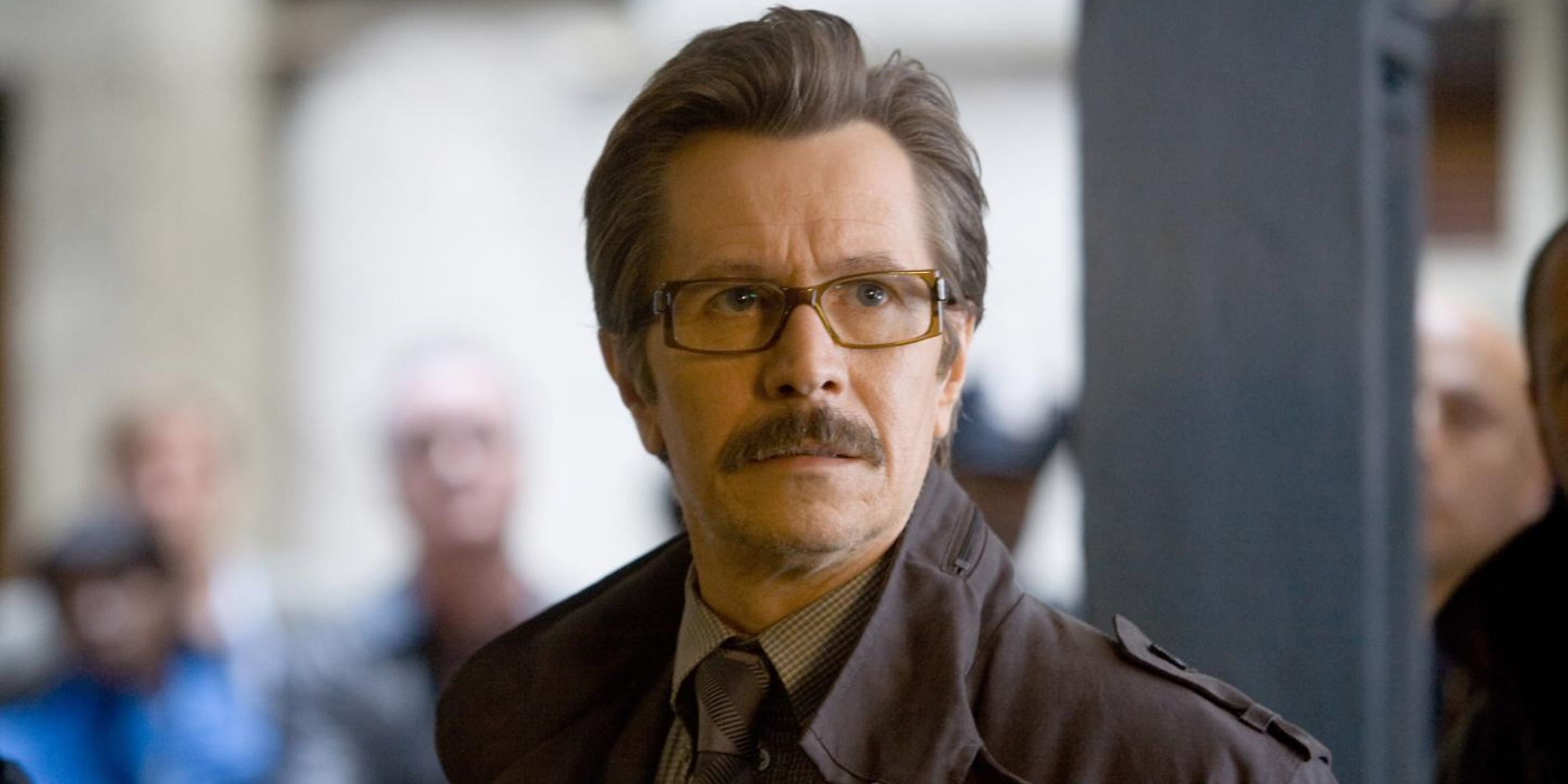
2008’s The Dark Knight finishes with a line from Gary Oldman that exemplifies what Nolan is trying to say about DC’s most iconic hero, and one of the finest examples of the director’s approach surrounding the legends of our culture.
Gary Oldman Delivers the Final Line of ‘The Dark Knight’

The Dark Knight leans into Batman (Christian Bale) as a detective, as he hunts down the crazed Joker (Heath Ledger), whose devotion to sheer chaos threatens to destroy Gotham, Batman, and the city’s political hope for the future, District Attorney Harvey Dent (Aaron Eckhart). The latter becomes the criminal’s target and apparent victory, as he drives Dent mad with grief to the point where he becomes the twisted Two-Face, going on a killing spree to gain some form of justice for his pain. Batman confronts him as he takes Police Commissioner James Gordon’s (Oldman) son hostage, only to fall to his death as Batman saves the child.
Seeing him dead and guilty of horrific crimes, Batman surmises that all the good Dent did as an attorney would be undone if Gotham ever knew. He then tells Gordon to ‘frame’ him for the murders, so that Dent’s legacy is secured, before leaving as the police give chase. As his son asks why the police are chasing Batman when he did nothing wrong, Gordon replies that he is not Gotham’s hero. “He’s a silent guardian,” he concludes, “a watchful protector… a Dark Knight.” On one hand, it’s a slick way to end the blockbuster with the title of the film. On the other, it is a mission statement for everything Nolan wanted to do with the Caped Crusader.
This Grandstanding Final Line Highlights the Movie’s Portrayal of a Hero

In Nolan’s version of Gotham, there are no superpowers or magic. The foes Batman faces are based in reality, or at least a version of it that is explainable on-screen, which is why we never see appearances from Superman or any other superpowered entity. That same realism is found in the movie’s moral core, when working out exactly what it means to be a hero — which is why Gordon tries to explain to his son that the act of heroism can sometimes go uncelebrated, or that a hero can even be reviled by a public unaware of the truth.
Batman is a symbol, something that is interpreted by those he seeks to defeat. His image is meant to terrify criminals and assure innocent citizens, until that need changes. To defeat the Joker’s plot, Harvey Dent must remain a hero, and that means making Batman a villain. Nolan asks us to view the role of a hero as one of complex sacrifice, where even those he is protecting do not understand what he is doing. The truth of an icon is often more complicated than the reality, and that’s something Nolan has spent his career exploring.
Christopher Nolan has Spent His Career Deconstructing the Myth of the Hero
From his early breakthrough movies to his most recent blockbuster, Christopher Nolan has asked us to look differently at his leading men. 2000’s Memento saw him ask audiences to follow a man with memory loss (Guy Pearce) as he seeks the killer of his wife, only to find that he is the villain of his own story, resetting his own memory as he becomes unable to accept the truth. We’re presented with a deconstruction of the leading man, something also explored in the twist ending of The Prestige, the traumatized soldiers of Dunkirk, and his recent portrayals of historical icons.
In both 2023’s Oppenheimer and this summer’s blockbuster The Odyssey, the director takes icons of history and literature, respectively, and portrays them as flawed men who achieve historical feats. Cillian Murphy’s scientist is not a genius who “won the war,” he is a complicated figure who cannot come to terms with the consequences of his greatest achievement. Likewise, Odysseus (Matt Damon) is not a stoic, faultless leader, but a man haunted by the trauma of what he has seen and done in the pursuit of conquest. They are both men who are celebrated in history books and heralded in song, but who live with the guilt of their actions. Batman may undoubtedly be the true hero of his own story, but Nolan’s interest is in how legends can be multi-faceted.
Christopher Nolan’s work has always asked us to look differently at familiar images, and Batman is no different. The Dark Knight ends with Batman seen as a villain, because that’s what people needed to see him as, and many of his movies offer a distinction between the legend and the reality of great men. They are not just stories of historical or heroic deeds, but explorations of what it takes to become those figures, both good and bad.
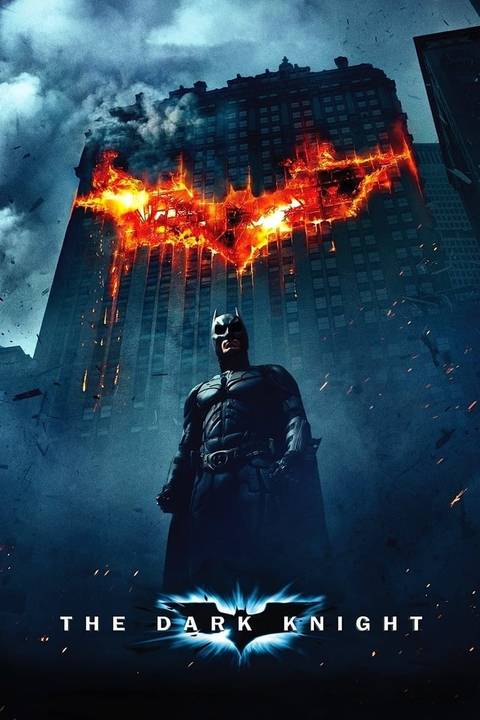
- Release Date
- July 16, 2008
- Runtime
- 152 minutes
- Director
- Christopher Nolan
- Writers
- Christopher Nolan, Bob Kane, Jonathan Nolan, David S. Goyer
- Producers
- Benjamin Melniker, Charles Roven, Emma Thomas, Kevin De La Noy, Michael Uslan
KioskNews shows a cleaned-up reading view extracted from the publisher’s page — the original always lives on their site, not ours.