18 Deaths, 2 Dozen Strikes, 15,000 sqkm Lost: A Month Of Houthi-Saudi War
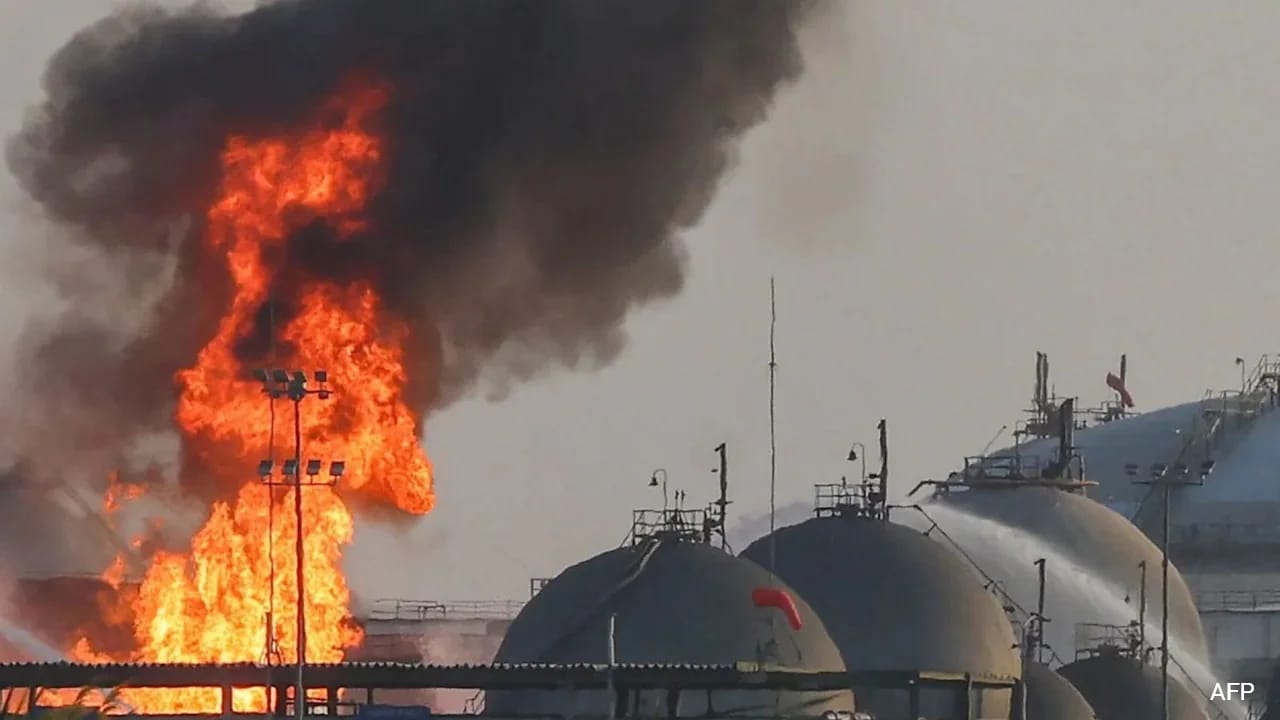
A month has passed since the Houthis struck four Saudi cities on September 7, marking a major escalation in the conflict between Yemen's Iran-aligned rebels and the Saudi-backed government.
Since then, the Houthis have hit the kingdom with a series of blows, targeting airports, energy facilities, and major cities, including Mecca, while seizing more than 15,000 square kilometres of territory inside Yemen.
#Datafy | Houthis make big gains in Yemen The rebels now control strategic coastal areas near the Bab al-Mandab maritime chokepoint https://t.co/1MwZYNu5jS
— NDTV World (@NDTVWorld) October 13, 2026
The Sanaa Centre for Strategic Studies, a Yemeni think tank, describes this period as "a decisive phase unlike any that came before." "What is at stake is nothing less than the future of the Yemeni state, the kind of society Yemenis will live in, and who will decide that future," it says.
A Month Of Strikes
Data compiled by NDTV Datafy shows that since September 7, the Houthis have carried out at least two dozen major attacks on Saudi airports, oil refineries, pipelines, gas processing and storage sites, and military installations. Some targets lie more than 1,250 km from Houthi-controlled territory.
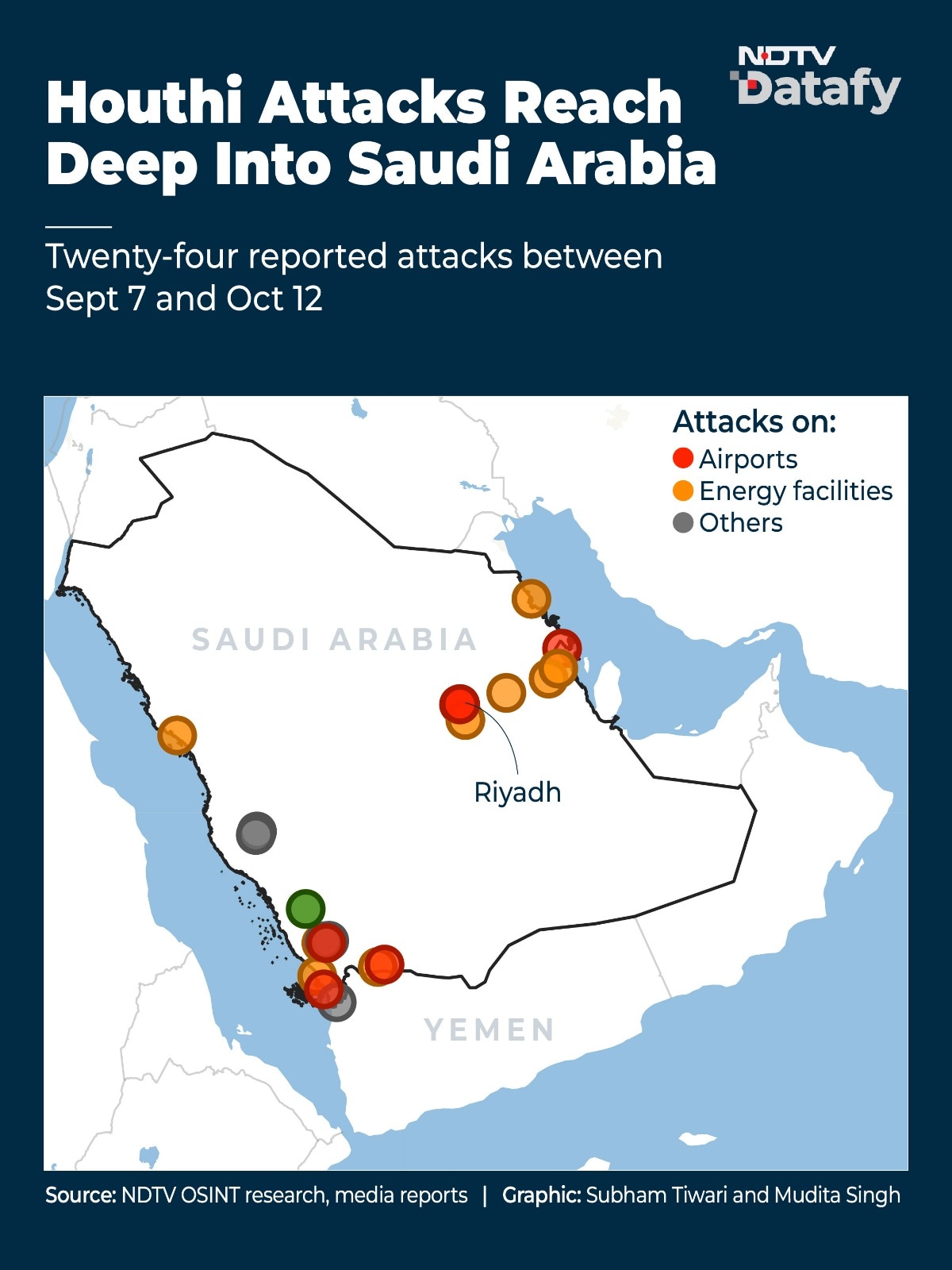
Some targets were over 1250-km inside Saudi Arabia
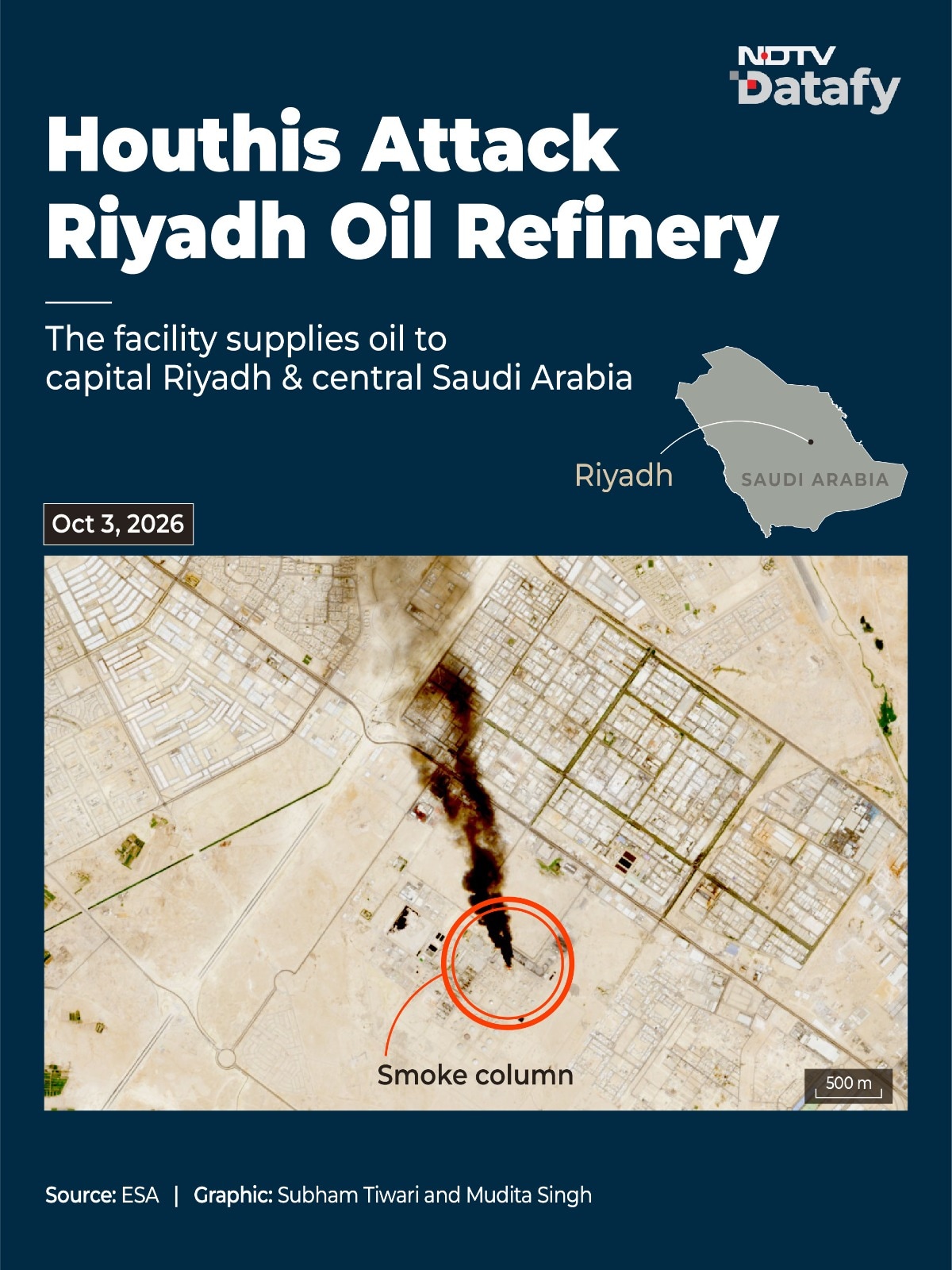
King Khalid International Airport in Riyadh was hit at least three times in four days, forcing authorities to suspend flights. At least 18 people have been killed and around 300 injured in the attacks on the airport, according to Reuters.
Airports in the southwestern cities of Abha, Najran and Jizan were also hit.
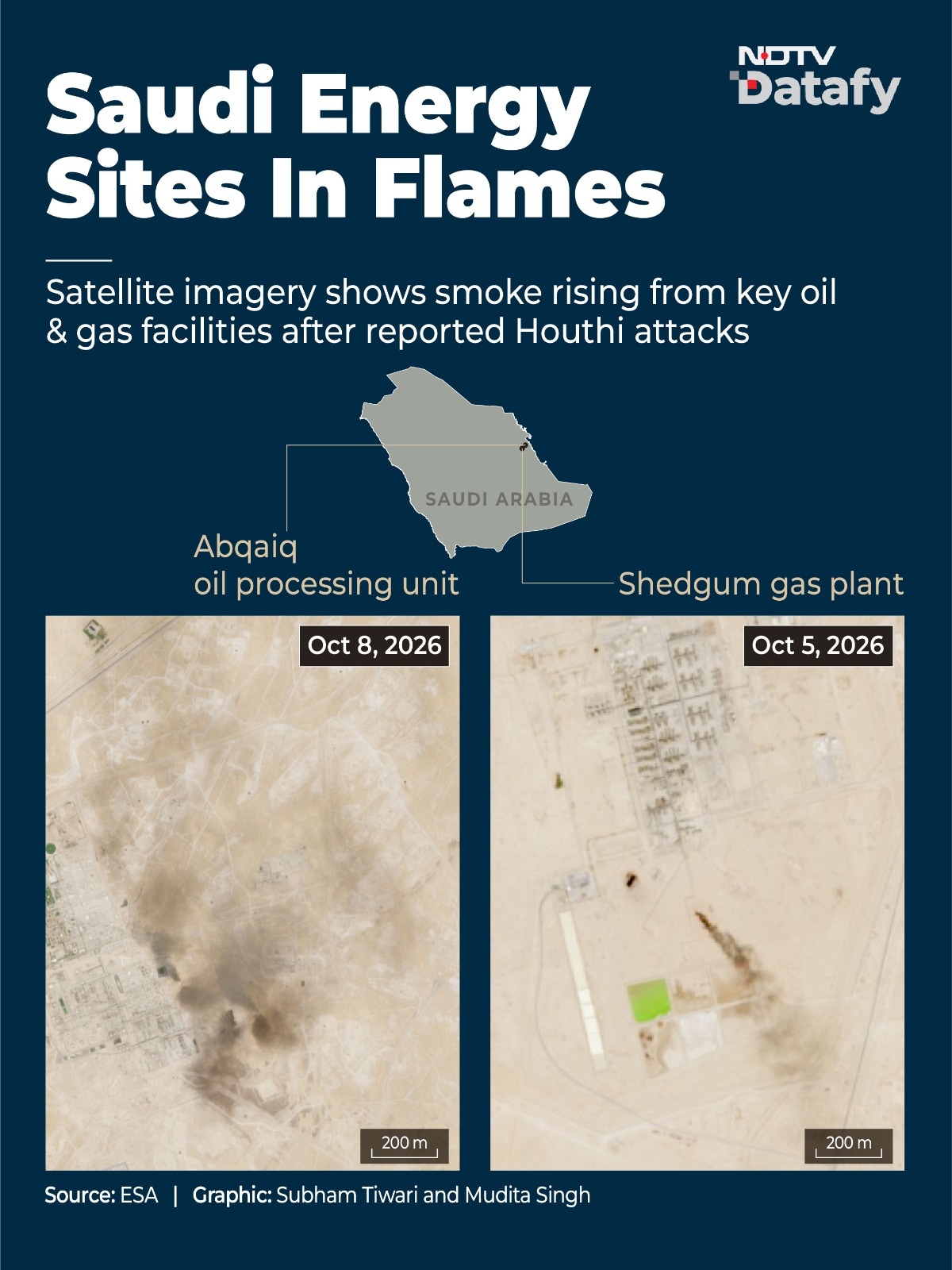
At least nine energy facilities, including refineries, oil fields and gas plants, have been struck by Houthi missiles and drones, satellite images show.
The attacks have exposed serious gaps in the kingdom's air defences, which failed to protect key installations, and raised fresh questions about its reliance on the United States for security.
How It Escalated
Tensions began building in late July, when the rebels declared a maritime blockade on Saudi ships in the Red Sea. They escalated sharply with the strikes on Khamis Mushait, Najran, Jizan and Abha cities, which injured more than 70 people and set oil facilities ablaze.
The Houthis followed up with a lightning ground offensive, capturing stretches of the Red Sea coast near the Bab al-Mandab strait, a vital maritime chokepoint.
Saudi Arabia has responded with air strikes in support of a military campaign by Yemen's internationally recognised government, whose forces have made gains in some areas since October 4.
What Lies Ahead
Osamah Al-Rawhani, co-executive director of the Sanaa Centre, says the Houthis will not be easy to defeat, having built up significant military capabilities.
"But holding ground and counterattacking will require financial resources, political commitment, and resolve, particularly from Riyadh. Saudi Arabia's track record does not inspire confidence that it has the stamina to carry a long war through to its conclusion," he argues.
But further escalation means more potential attacks on Saudi's energy infrastructure that could have a significant impact on the global energy supplies, which is already affected by Iran's attacks in the Strait of Hormuz. It could also trigger Houthi attacks on shipping in the Red Sea.
KioskNews shows a cleaned-up reading view extracted from the publisher’s page — the original always lives on their site, not ours.