Trump says ‘great dislike of Israel’ contributed to Republican midterm losses
Jerusalem
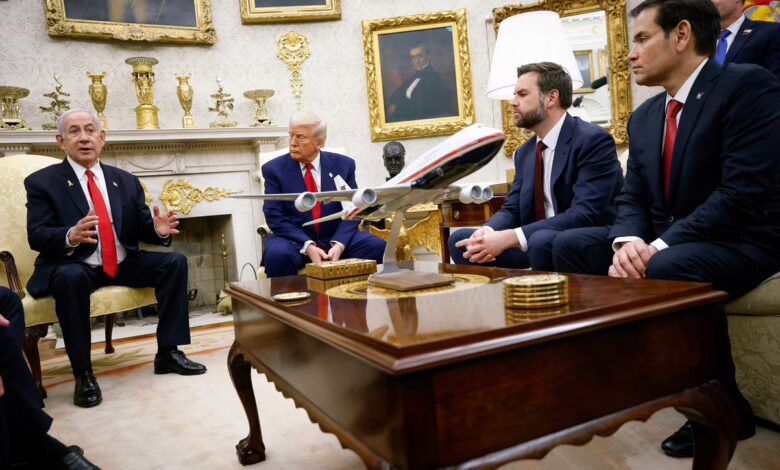
President Donald Trump said a “great dislike for Israel” was one of the reasons the Republicans lost in the midterm elections, along with the Iran war and the subsequent rise in gasoline prices.
“I think if I was on the ballot, it would’ve been a much different situation because you saw the level of popularity and love,” Trump said in an interview with CBS’ “60 Minutes” that aired Sunday. “But there’s something beyond that. They didn’t like the war. They didn’t like the fact that gasoline went up, ‘cause I had it down at a low, and there’s a great dislike, incredibly, for Israel.”
Trump’s comments underscore a sea change in US politics where Israel once had bipartisan support, as well as strong backing from Republican and Democratic presidents. But the extent of US military and financial support for Israel emerged as a frequent political liability during the midterm elections.
Michigan’s Democratic Sen.-elect Abdul El-Sayed may have been the most prominent critic of Israel during the elections, but he was far from the only one. Even Vice President JD Vance suggested Republicans would have to rethink their once-stalwart support of Israel moving forward.
Trump said he agrees with Vance’s position that the war with Iran is among the reasons for the Republican loss. But he said he doesn’t regret his decision to launch the war. “You can’t let Iran have a nuclear weapon. I think, historically, this will be a very good decision. Is it a good decision for today and tomorrow? Maybe not. But you know, I have to go with what’s right for our country. If they had a nuclear weapon during my term, I would be excoriated far worse than what’s happened.”
The president also said that other countries, including Israel, would have to share the costs of the war.
“Those countries that we’ve protected are going to pay us back any and all costs that we’ve had for the war ‘cause without us, they wouldn’t exist. Without us, Israel would not exist,” Trump said.
Israeli Prime Minister Benjamin Netanyahu has long presented himself as the leader best able to manage the relationship with the United States and particularly Trump. But in just a matter of days, Trump has signaled major changes may be coming.
“Democrats and Republicans are competing to see who can distance themselves from us more,” wrote Israeli journalist Amir Tibon on X. “And if we don’t act quickly, the new Congress will start holding up arms sales.” Tibon called for a new government that can begin “repairing the damage Netanyahu is leaving behind.”
On the day of the US elections, Trump said he would end $4 billion in annual aid to Israel this year, potentially cutting off one of the key elements of Israel’s security strategy. Days later, Netanyahu said the aid would shift to a “partnership,” but didn’t say whether Trump had given him a heads-up about the surprise announcement.
Israeli President Isaac Herzog made an oblique reference to the shift in American and international perceptions of the country on Sunday, as he tasked Netanyahu’s rival, Gadi Eizenkot, with forming the next government.
“The challenges facing the State of Israel are immense. Some demand urgent and immediate attention,” he said. “Iran does not pause for a moment in its schemes and threats. We must work to build a diplomatic horizon in the region and for the day after the war.”
KioskNews shows a cleaned-up reading view extracted from the publisher’s page — the original always lives on their site, not ours.