Harvard team's $350 concussion headset wins $40,000 global Dyson prize
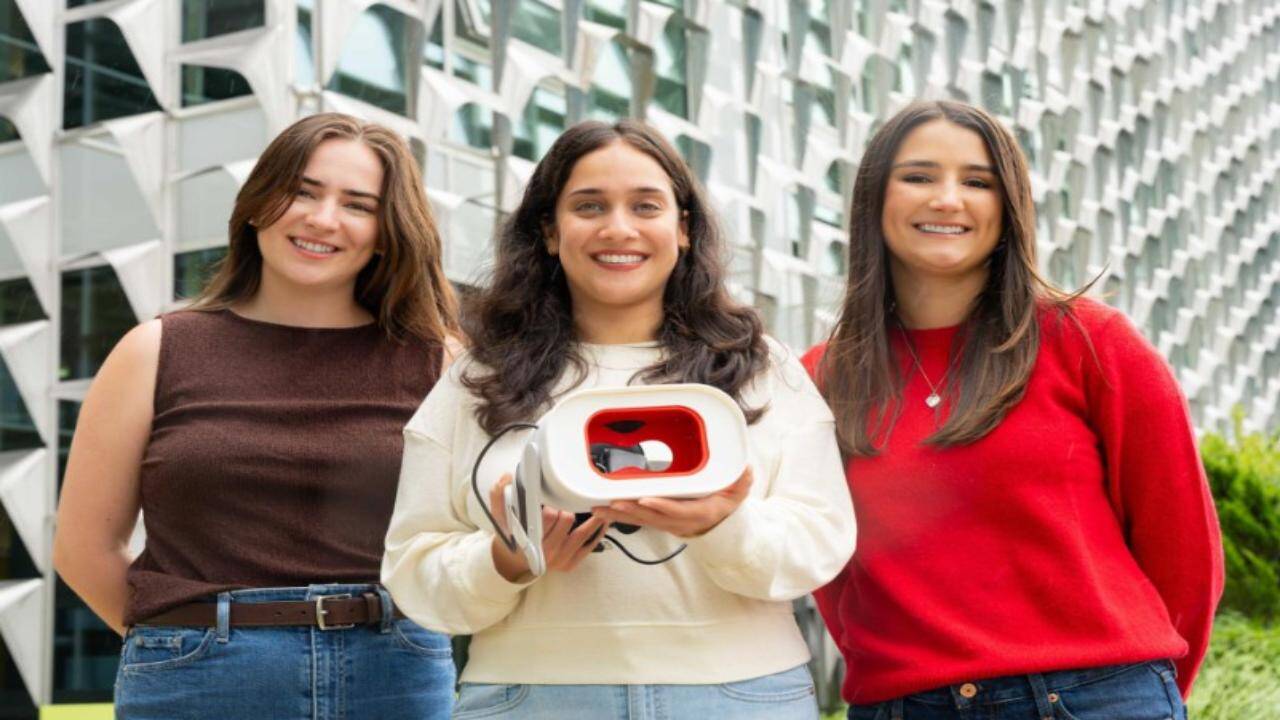
Radhika Saran, Cleo Pontone and Sophia DeVito with their invention (PC: James Dyson Award)
For any sportsperson, a head injury can cause some serious problems. An athlete may look perfectly fine or show no immediate signs of a concussion but they might not be well from within.
Understanding this issue, an Indian-origin Harvard University student, Radhika Saran, along with her two teammates, has created a concussion-screening headset. Saran and team's invention is a low-cost concussion-screening headset called Rumble Rims. Their creation has now won the global medical category of the 2026 James Dyson Award. For those who don’t know, it is among the world's prominent design and engineering competitions.More about Saran’s intelligent deviceSaran has developed this device with fellow Harvard students Cleo Pontone and Sophia DeVito. On November 4, 2026, their invention was selected by Sir James Dyson as one of the two global winners announced. The team will receive £30,000 in prize money to support the further development of the technology.What makes their achievement important is that their current prototype has been built for under $350.
It makes the device more accessible to schools, community sports programmes and grassroots-level teams.Why detecting a concussion can be difficult
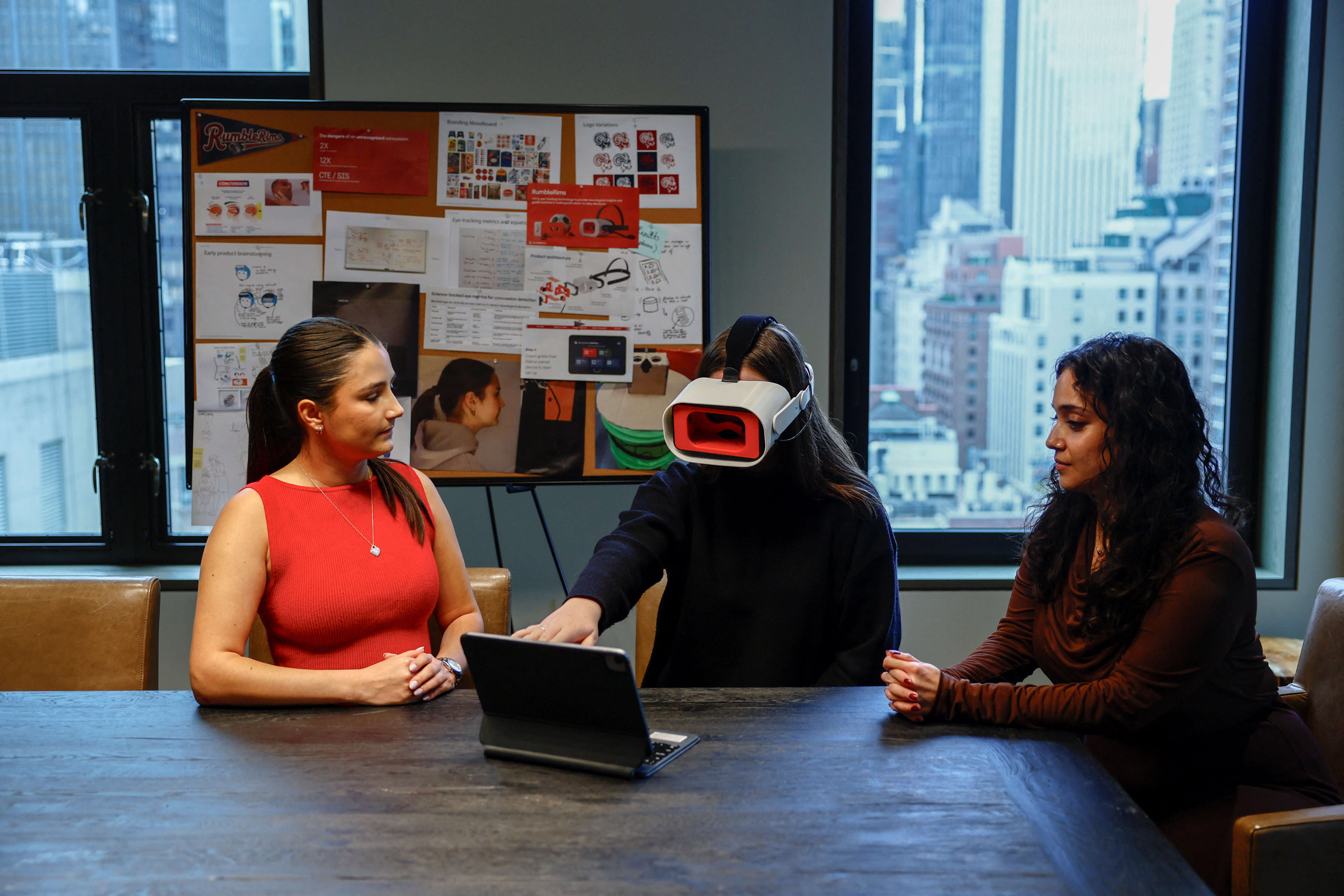
Cleo Pontone, Sophia DeVito, and Radhika Saran, creators of Rumble Rims and winners of the James Dyson Award, demonstrate the device in New York City, US, November 5, 2026. REUTERS/Jeenah Moon
Detecting a concussion is a serious concern in sports. Especially among young athletes who participate in contact sports such as football and rugby, among other games. A player who sustains a blow to the head may not immediately recognise the seriousness of the injury.
As per the James Dyson Award, it may take up to 72 hours to develop.The problem is that decisions about whether an athlete should continue playing are often made on the sidelines, where coaches and trainers have limited time and resources. Also symptoms depend from person to person.How does Rumble Rims headset work?
Cleo Pontone, co-creator of Rumble Rims and one of the winners of the James Dyson Award, wears the device in New York City, US, November 5, 2026. REUTERS/Jeenah Moon
The screening process is relatively simple as the device uses infrared cameras to track an athlete's eye movements.
It draws on research that suggests neurological disruption following a concussion can affect how the eyes move and follow objects.An athlete wears the headset and follows a moving target displayed on an iPad screen held at arm's length. During a short test lasting approximately two to three minutes, the infrared cameras measure how the eyes follow, focus on and move in response to the target.The collected measurements are then processed and translated into information on a mobile display.
This provides coaches and trainers with additional insights. The device also includes a recovery dashboard that allows repeated testing over time.An affordable inventionAccording to the James Dyson Award, the students initially explored different ways of incorporating eye-tracking technology into helmets, mouthguards and chin rests.In an interview published by the James Dyson Award, the students said they were surprised to discover how commonly simple methods, such as asking an athlete to follow a finger, were still being used to assess possible concussions.
While such checks can offer initial observations, they depend considerably on the judgement of the person conducting them.The team also pointed out that some comparable eye-tracking technologies can cost around $25,000 or more, putting them beyond the reach of many community sports organisations. By keeping their prototype below $350, they hope to make objective screening more accessible.What's next for the Harvard students?
Radhika Saran sits for a photograph in New York City, US, November 5, 2026. REUTERS/Jeenah Moon
For Saran, Pontone and DeVito, winning the global medical award is an important step, but the work is far from over. Their next goal is to develop a more advanced prototype, improve the accuracy of the eye-movement test and validate the technology with athletes, coaches, trainers and medical advisers.For young athletes who dream of playing their favourite sport, a few minutes of screening could eventually become another important step towards protecting their health.
KioskNews shows a cleaned-up reading view extracted from the publisher’s page — the original always lives on their site, not ours.