World Chess Championship: The importance of knowing the rival
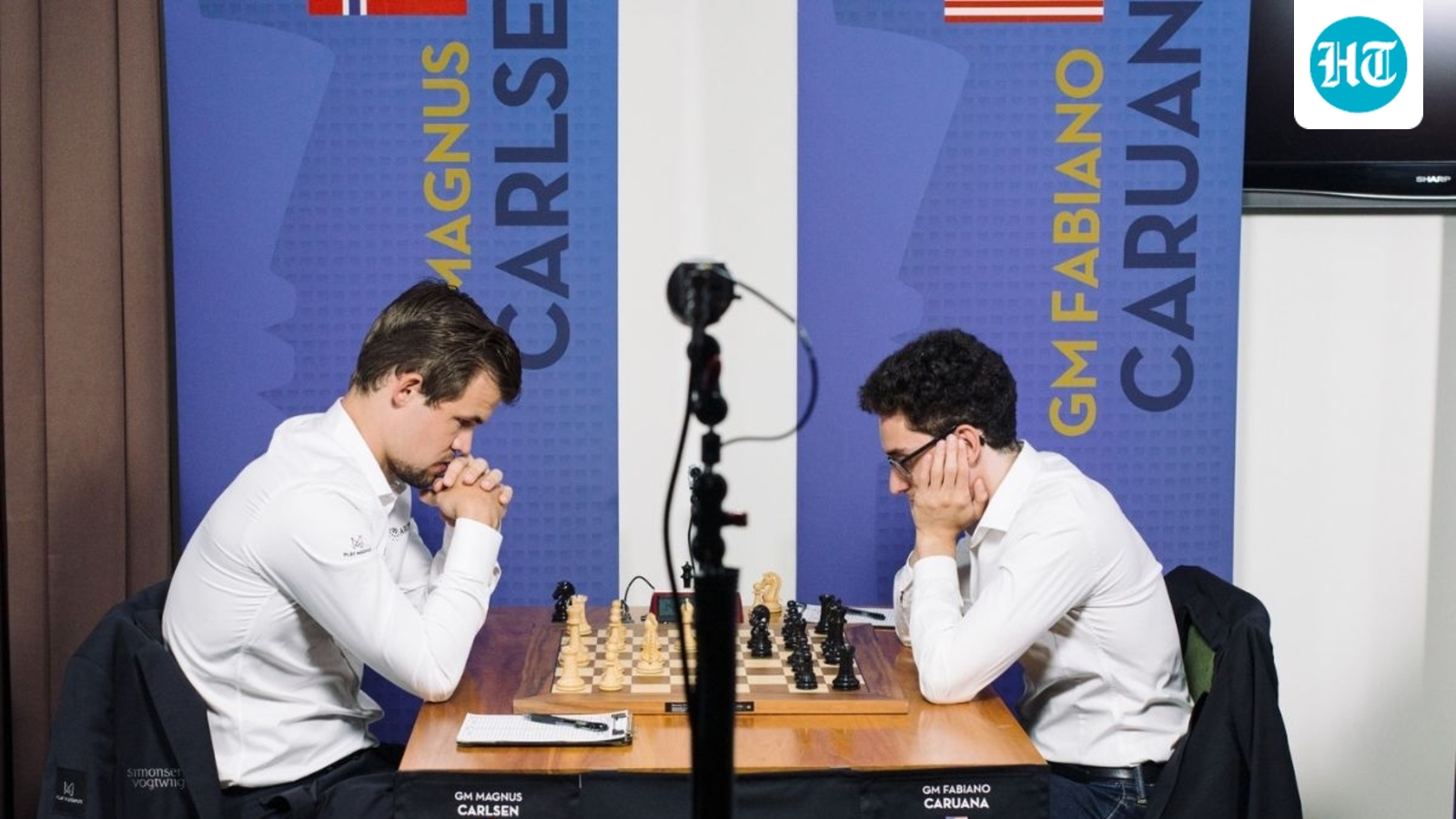
Bengaluru: Garry Kasparov and Anatoly Karpov spent much of the 1980s staring at each other across the chessboard. So much so that their rivalry almost began to resemble a long, exhausting relationship.
Between 1984 and 1990, the two men played five World Championship matches — 144 games, 5540 moves, studying each other's faces, probing for weaknesses, searching for a way through. It was a rivalry of extraordinary skill and almost absurd endurance. When Kasparov retained his title in Seville in 1987, his victory cry to his team was, “Three more years!” He had won himself another three years as world champion. He had also earned himself a reprieve from the seemingly endless business of facing Karpov across the board.
It is one of the peculiarities of the World Chess Championship. Unlike in regular chess tournaments, there is only one opponent, one mind to unravel, game after game. It is almost like a boxing match, a prolonged duel in which each player must keep returning to the ring, trying to outthink and outlast the other. There is nowhere to hide, no fresh opponent to turn to after a bad day. It is what makes the match so brutal and unforgiving.
Defending world champion D Gukesh has been through the wringer before. For his challenger, Javokhir Sindarov, the 14-game contest in Geneva that begins on November 24, will be a first encounter with the unique demands of a World Championship match, where the opponent across the board becomes, for weeks, the centre of one's existence.
Kasparov made a telling observation about his marathon 1984–85 World Championship match against Karpov: “My team and I spent so much time thinking about how Karpov played, which strategies he would employ, that I uncannily felt as if I were becoming Karpov.”
Also Read - World Chess Championship: Resignation by letter, an aborted match and a champion who walked away
Magnus Carlsen once recalled an anecdote about Kasparov being asked why he continued discussing chess with Karpov, a man he so fiercely disliked. Kasparov's reported answer was disarmingly simple: “He's the only one who understands me.”
After years spent trying to outthink each other, perhaps nobody understood their chess quite as intimately as they did.
Ian Nepomniachtchi knows a thing or two about these matches. He’s played two of them — against Magnus Carlsen in 2021 and Ding Liren in 2023. “Typically, the tension rises through the match. Especially, when it comes down to a sequence of decisive games. You get into some rollercoaster, and this is exactly the moment when you need some external help — of your team, your friends, loved ones, because it's difficult to sometimes not to crumble under all the pressure,” the Russian GM told HT in an interview.
“History of rivalry”
There is also the matter of familiarity. World Championship opponents rarely arrive at the board knowing little about each other. Years of encounters, across formats, provide clues to their strength and vulnerabilities.
“You hardly ever play against a complete stranger. Usually, there’s a history of rivalry. Even between these two youngsters, Gukesh and Javokhir, I think they’ve played a decent number of games with each other, like some blitz, rapid, and maybe classical. Of course, you can look for some extra tells from the other side,” Nepomniachtchi said.
What made five-time world champion Carlsen such a formidable force in these matches was his ability to get inside his opponent’s head, to understand not just the positions on the board but the player across it. “One of the things I realised is that Magnus at some point had thought about me in a way that he figured out my strengths and weaknesses,” Fabiano Caruana, who challenged Carlsen for the world title in 2018, said in an earlier Chess.com interview.
“I probably wasn’t as diligent in my approach towards his chess. In a tournament that doesn’t matter — I’m playing nine other people, or in the Candidates seven other people — and I can’t think about that, psychoanalyze every single player. I just need to make sure that my chess is as good as it can be. But when it’s one on one, then that really has a lot of importance. He did that better than me, that’s for sure.”
In a curious way, Gukesh already seems to be taking a leaf out of his challenger’s book. He recently spoke of finding inspiration in Sindarov’s joyful approach to chess and his ability to enjoy life beyond the board. The usually reserved Indian has lately shown a more playful side to his public persona — skateboarding, horse riding, catching a movie with friends, poking fun at himself and even dishing out a savage reply to a fan.
Perhaps, in trying to understand your opponent, you begin to think a little like him.
KioskNews shows a cleaned-up reading view extracted from the publisher’s page — the original always lives on their site, not ours.