China promises to help Thailand and Myanmar fight Mekong basin pollution
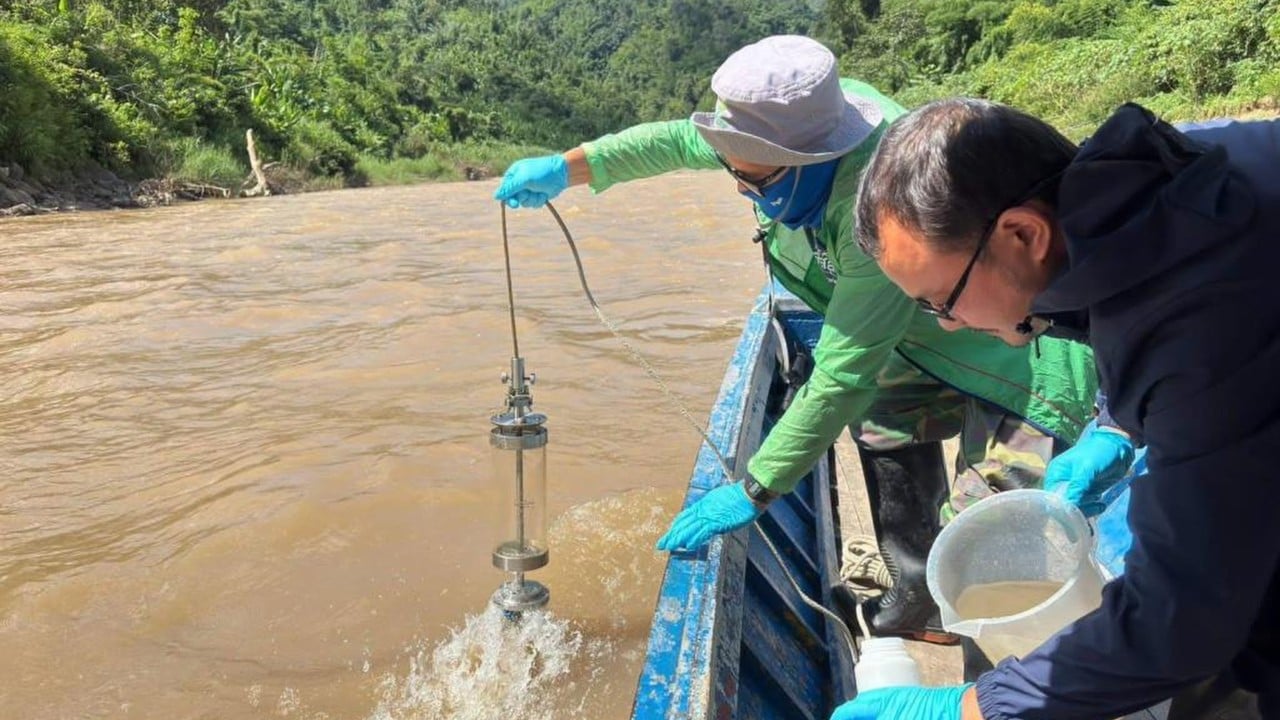
China pledged on Wednesday to work with Thailand and Myanmar to tackle river pollution along the border between the two Southeast Asian nations.
Residents in northern Thailand are facing potential water shortages and supply disruptions due to unregulated gold and rare earth mining upstream in northeastern Myanmar that has severely contaminated some tributaries of the Mekong with unsafe levels of arsenic.
Bangkok asked Beijing to help close down the mines during talks between the three countries to discuss the crisis on Tuesday.
It also asked for help in identifying the mines and tracing the minerals produced there.
Thai officials said all three countries had agreed that mining operations in Shan State were the source of the contamination of Thailand’s Kok and Sai rivers.
Beijing also acknowledged during the meeting that private Chinese companies operated some mines in the area and that some of the resources extracted were shipped to China, they added.
China did not issue an official statement following the meeting.
Chinese foreign ministry spokesman Guo Jiakun said the country would dispatch specialists and provide technical support to a joint Thailand-Myanmar working group investigating the problem.
However, he stopped short of explicitly endorsing Thailand’s call to halt the mining for at least six months, instead urging the authorities to “identify the root causes” through “science-based, professional and objective” investigations before drawing conclusions.
“We stand ready to work with Thailand and Myanmar to enhance cooperation on water resources governance, share experience, strengthen capacity and jointly protect the environment of the Mekong River basin,” Guo said.
Guo said Beijing required Chinese enterprises overseas to comply with their host countries’ laws and regulations and opposed activities that harmed the environment.
02:15
Rare earth mining is poisoning Thailand’s Mekong tributaries
The pollution has been linked to a surge in mining activity in Myanmar following the 2021 coup and the subsequent conflict and economic collapse that left the industry largely unregulated.
Last weekend, Bangkok announced plans to tighten controls on mineral imports and exports passing through Thailand from Myanmar.
The measures were designed to close legal loopholes and prevent Thailand from serving as a conduit for Myanmar’s uncontrolled mining operations, according to local media.
Thailand has also committed to identifying the source of the contamination by analysing the arsenic’s unique characteristics.
Thai Deputy Prime Minister Yodchanan Wongsawat said the government was collaborating with a Chinese scientific institute and Mae Fah Luang University in Chiang Rai to establish an advanced testing laboratory based on Chinese standards.
KioskNews shows a cleaned-up reading view extracted from the publisher’s page — the original always lives on their site, not ours.