South China Sea disruptions could hit Malaysia’s economy, supply chains, food security
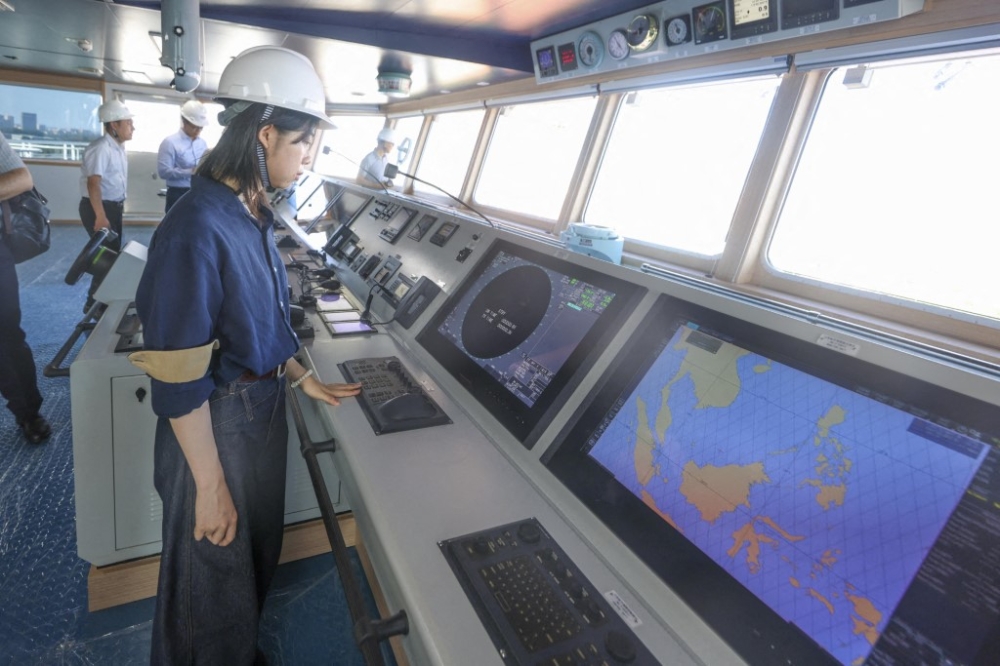

Malaysia relies on maritime routes, including the South China Sea, for more than 96 per cent of its international trade, according to Deputy Transport Minister Datuk Hasbi Habibollah. — Imaginechina pic via AFP
First Published: Tuesday, 13 Oct 2026 4:32 PM MYT
KUALA LUMPUR, Oct 13 — Disruptions, unsafe encounters or legal ambiguities in the South China Sea could threaten Malaysia’s economic stability, national supply chains and regional food security, said Deputy Transport Minister Datuk Hasbi Habibollah.
In his keynote address at the 9th Maritime Institute of Malaysia (Mima) South China Sea Conference 2026 here today, Hasbi stressed that maintaining freedom of navigation and unimpeded lawful commerce in these waters was a national imperative rather than an abstract legal principle.
“The South China Sea is the physical bridge connecting Peninsular Malaysia with Sabah and Sarawak. It sustains our domestic trade, powers our offshore energy sector and links our industries to global value chains,” he said.
Highlighting the nation’s reliance on maritime trade, Hasbi said more than 96.4 per cent of Malaysia’s total international trade was seaborne.
He said Malaysian ports handled 33.07 million twenty-foot equivalent units (TEUs) in 2025, with Port Klang recording 15.14 million TEUs to rank as the world’s 10th-busiest container port in the Lloyd’s List One Hundred Ports 2026 ranking.
Meanwhile, Hasbi said the Port of Tanjung Pelepas handled 14.03 million TEUs, becoming the first single terminal in the country to surpass the 14-million-TEU threshold.
“This high level of connectivity also means that any disruption in the South China Sea instantly threatens our economic stability, national supply chains and regional food security,” he said.
Hasbi said conflicts in the Black Sea, Red Sea and Strait of Hormuz had shown how geopolitical tensions could disrupt maritime trade, increase freight and insurance costs, force vessels to take alternative routes and fuel inflation.
He also highlighted the risks posed by dark fleet or shadow fleet vessels, which engage in deceptive shipping practices such as illegal ship-to-ship transfers, disabling Automatic Identification Systems (AIS) and operating without valid insurance or meeting required safety standards.
“The lesson for our region is crystal clear: resilience cannot be reactive; it must be built proactively,” he said.
Hasbi also stressed that the Transport Ministry, together with the Marine Department Malaysia and the Malaysian Maritime Enforcement Agency (MMEA), had intensified vessel screening and maritime intelligence operations to detect and deter illicit shipping activities.
The measures include the use of advanced Vessel Traffic Services (VTS), International Maritime Organization (IMO) registration verification and integrated port database cross-checks, in line with IMO Resolution A.1192(33).
“We will not allow our waters or ports to become safe havens for non-compliant shipping activities that endanger innocent lives and our marine environment,” he said.
Reaffirming Malaysia’s position, Hasbi said disputes in the South China Sea should be resolved peacefully through dialogue, restraint and adherence to international law, including the 1982 United Nations Convention on the Law of the Sea.
The 9th Mima South China Sea Conference 2026, themed “South China Sea 2026: Rules, Resilience, and Regional Order”, brings together policymakers, diplomats, academics, industry representatives and maritime experts to discuss regional maritime challenges and cooperation.
Also in attendance were representatives from the Australian High Commission, the Delegation of the European Union, the Embassy of Japan, the Embassy of the United States, the Embassy of the People’s Republic of China and the High Commission of Canada. — Bernama
KioskNews shows a cleaned-up reading view extracted from the publisher’s page — the original always lives on their site, not ours.