Which everyday foods can help keep blood pressure in check?
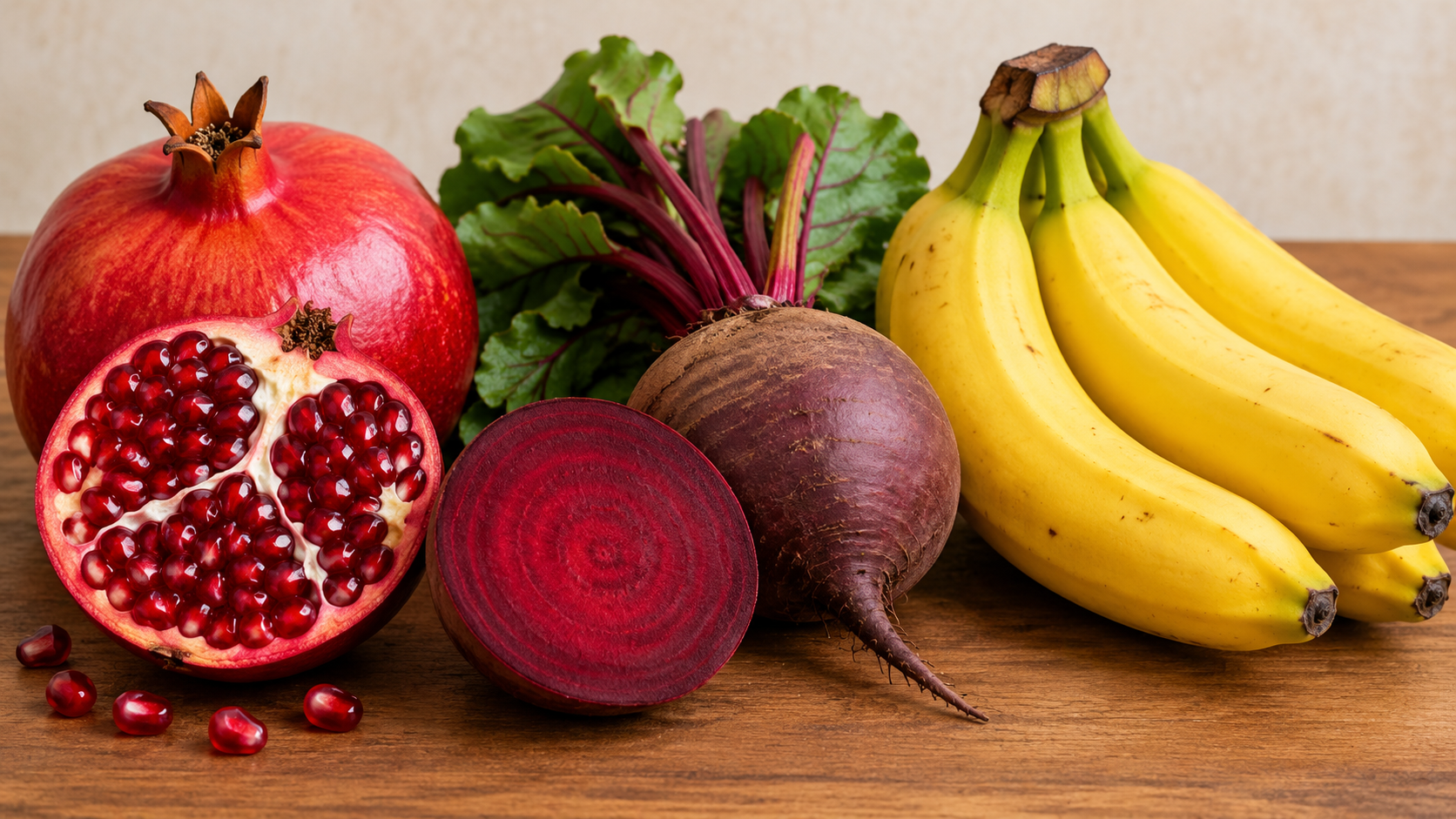
Pomegranate can complement a heart-healthy diet while beetroot improves blood flow and bananas supports normal muscle and nerve function. (Image generated by AI)
Can a banana a day, a serving of beetroot or a bowl of pomegranate help keep your blood pressure in check? These everyday foods offer nutrients that support heart health, but none is a magic solution. The real benefits come from making them part of a balanced diet, cutting back on excess salt and adopting healthy lifestyle habits.
High blood pressure often goes unnoticed, yet it can increase the risk of heart disease, stroke and kidney problems. While medication may be necessary, the right food choices can play an important supporting role.
Pomegranate: A source of antioxidants
Pomegranate is rich in polyphenols, plant compounds with antioxidant properties that help protect cells from damage. Some clinical trials suggest that pomegranate juice may modestly reduce blood pressure, but the evidence remains mixed and further research is needed. Eating the whole fruit provides antioxidants and dietary fibre. If you prefer juice, choose an unsweetened variety and limit the serving to around 150 ml. Whole fruit is generally preferable because it is more filling and retains its fibre.
Pomegranate can complement a heart-healthy diet, but it is not a quick remedy for elevated blood pressure.
Beetroot: Supporting healthy blood flow
Beetroot contains natural nitrates that the body converts into nitric oxide, a compound that helps blood vessels relax and widen, improving blood flow.
Evidence for beetroot juice is encouraging. A 2022 systematic review and meta-analysis of seven randomised controlled trials involving 218 people with hypertension found that nitrate-rich beetroot juice reduced systolic blood pressure by approximately 5 mmHg compared with control conditions. The reduction in diastolic blood pressure was not statistically significant.
One small beetroot (75–100 g) can be eaten as a salad, sabzi or cooked vegetable. Alternatively, around 150–200 ml of beetroot juice is a practical serving suggestion, not a scientifically established therapeutic dose. Nitrate content varies between products.
Story continues below this ad
People prone to kidney stones may need dietary advice because beetroot contains oxalates. Beetroot should complement, never replace, prescribed treatment.
Bananas: The importance of potassium
Bananas provide potassium, a mineral that regulates fluid balance, supports normal muscle and nerve function, and helps counter some blood pressure-raising effects of excess sodium.
One medium banana contains approximately 400–450 mg of potassium. Eating one can contribute to daily potassium intake, alongside vegetables, pulses and other fruits. However, a banana alone will not automatically lower blood pressure. The benefits come from an overall healthy dietary pattern.
People with chronic kidney disease or those taking medicines that can raise potassium levels should consult their doctor before substantially increasing their intake of potassium-rich foods.
Story continues below this ad
Look beyond these three foods
Spinach and amaranth provide potassium and magnesium, while tomatoes, broccoli and pulses supply valuable nutrients and fibre. Watermelon contains citrulline, which the body uses to produce nitric oxide, although evidence for a direct blood pressure-lowering effect remains limited. Variety matters more than relying on so-called superfoods.
The strongest evidence supports an overall healthy eating pattern. The DASH (Dietary Approaches to Stop Hypertension) diet emphasises fruits, vegetables, whole grains, pulses, nuts and low-fat dairy products while limiting sodium and saturated fat.
The landmark DASH clinical trial found that a diet rich in fruits and vegetables reduced blood pressure, with the full DASH eating plan producing greater benefits. Subsequent research showed that combining DASH with reduced sodium intake could lower blood pressure further.
Reduce excess salt, packaged snacks, pickles and highly processed foods. The World Health Organization recommends that adults consume less than 5 g of salt daily from all sources. Regular physical activity, maintaining a healthy weight, adequate sleep and limiting alcohol also support blood pressure management.
Story continues below this ad
Pomegranate, beetroot and bananas can support heart health, but none is a cure for hypertension. A varied, balanced diet offers greater benefits than relying on individual foods. Monitor your blood pressure regularly, follow your doctor’s advice and take prescribed medication as directed. Healthy eating complements medical treatment; it does not replace it.
KioskNews shows a cleaned-up reading view extracted from the publisher’s page — the original always lives on their site, not ours.