Gram sabhas’ consent mandatory to acquire land for mining: Supreme Court
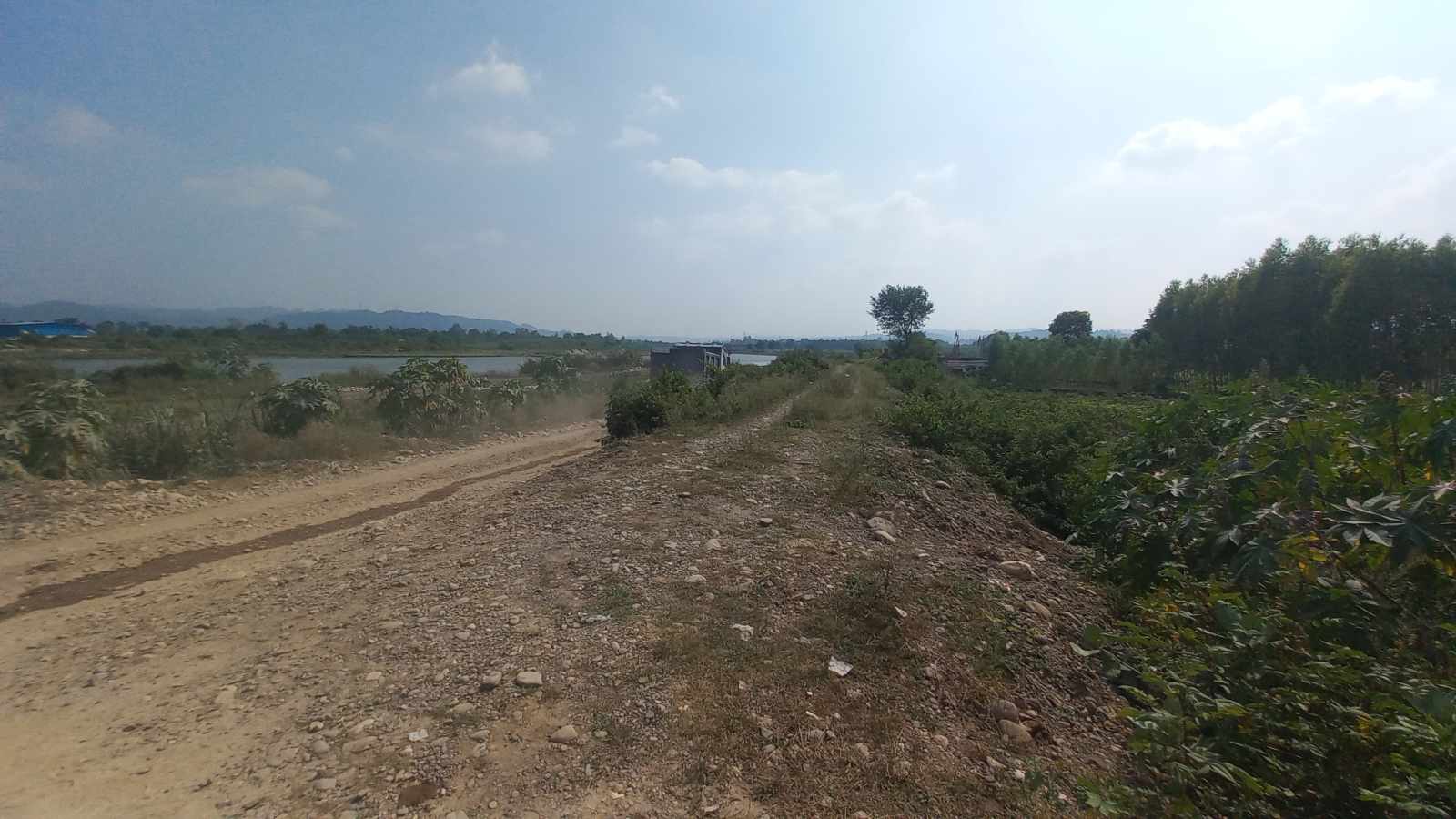
Prior consent of gram sabhas is “mandatory” to acquire land under the Right to Fair Compensation and Transparency in Land Acquisition, Rehabilitation and Resettlement Act, 2013, which cannot be started only by paying some compensation, the Supreme Court ruled on Wednesday as it set aside a 2021 land acquisition proceeding of the Odisha government in Sundargarh district for mining.
Residents of three villages — Kukuda, Bihabandha and Lanjiberna — in Sundargarh district challenged the acquisition of land by the Odisha government for the purpose of mining by Dalmia Cements Bharat Limited. It also overturned a 2024 judgment of the Orissa High Court that upheld the acquisition process, saying the requirement of consent of the gram sabhas is only “directory”.
A Bench of Justices Dipankar Datta and Satish Chandra Sharma held that as required by the Act, prior consent of at least 80% of the affected families shall be obtained when the land is sought to be acquired for a private company for carrying out a public purpose. “A straightforward examination of the Act makes it clear that the subject acquisition not only required the prior consent of at least 80% of the affected families, but also that such consent was to be obtained along with the SIA (Social Impact Assessment) study,” the order said.
“It cannot be construed to mean that a mining lessee can start mining activity on any land by simply paying some compensation to the occupier, and without acquiring the land in accordance with the 2013 Act. Compensation payable on account of loss or damage caused to the land, and that payable on account of acquisition of land, cannot be equated,” the court said.
The court observed that the state government had proceeded with the land acquisition process without obtaining the prior consent of the gram sabhas. It also noted that the Orissa High Court’s judgment had the effect of reducing a mandatory statutory requirement (prior consent of the gram sabha) “into a paper formality”. “What is more concerning is that the present case is on an even worse footing. Far from a meaningful consent, there is not even paper consent of Gram Sabha in this case,” the court order read.
Section 41 of the Right to Fair Compensation and Transparency in Land Acquisition, Rehabilitation and Resettlement Act, 2013 deals with special safeguards for Scheduled Castes and Scheduled Tribes, particularly in Scheduled Areas. It states that in case of acquisition or alienation of any land in the Scheduled Areas, the prior consent of the concerned Gram Sabha or the Panchayats or the autonomous District Councils will be obtained, in all cases of land acquisition in such areas.
The case
The Odisha government had granted a mining lease to the company to conduct mining operations over an area of 893.55 hectares, which was extended from time to time. In June 2016, the lease period was extended till February 2040. While the company was carrying out mining operations over 335 hectares, it exercised its rights to mine an additional 273 hectares, comprising land parcels in Kukuda, Bihabandha and Lanjiberna villages. Although the company already had mining rights over the area, it also needed surface rights over the land to conduct mining operations. For this, acquisition of the land was required.
Story continues below this ad
Although the state government had issued a notification in March 2021 to hold public hearings in the three affected villages, no public meeting or hearing could be conducted on the proposed date, April 16, 2021, according to replies obtained under the Right to Information Act. In July 2021, three preliminary notifications were issued under Section 11 (preliminary notification for award of land) of the Land Acquisition Act in respect of land situated in the three villages. The appellants filed objections to these notifications.
The villagers initially filed objections and subsequently moved the Orissa High Court, which ruled that the procedural requirements for land acquisition had been complied with and found no merit in the challenge. The villagers then moved the Supreme Court.
The Supreme Court observed that Section 41 had been incorporated as a special provision in the land acquisition law applicable to the acquisition of land in Scheduled Areas under the Fifth Schedule to the Constitution. “The land in question falls in the Scheduled Area of Sundergarh District of Odisha,” it ruled.
The court held that the land acquisition in question was unsustainable. “The acquisition, along with the relevant notifications, orders etc., is hereby set aside,” the court order read.
KioskNews shows a cleaned-up reading view extracted from the publisher’s page — the original always lives on their site, not ours.