Ink Review: Danny Boyle Tries To Recreate The Social Network, And Falls Flat [TIFF]
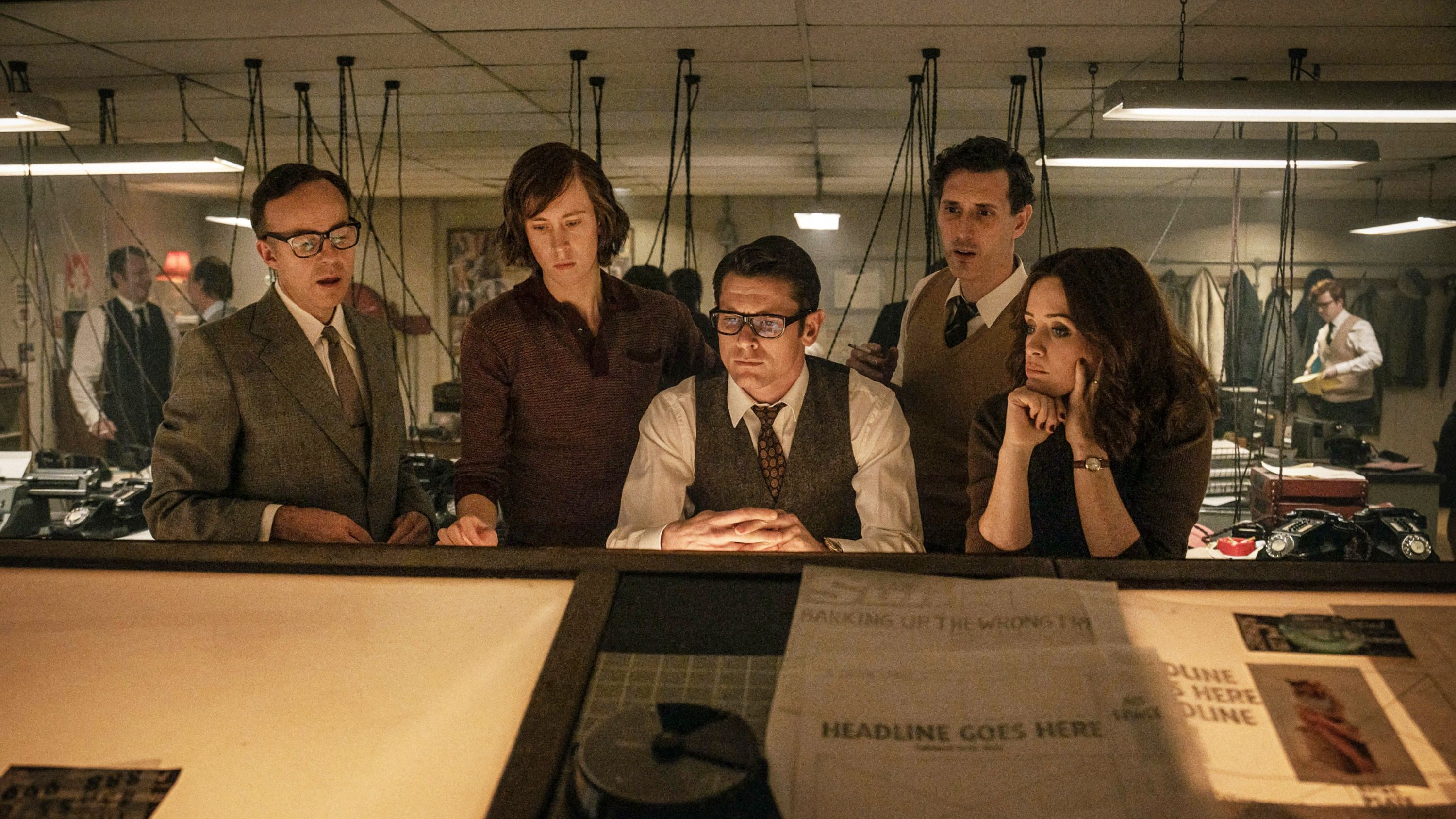
On top of its underdog story structure being misguided, Ink's attempts to channel The Social Network only underscore how it doesn't measure up.

Josh is a film critic and journalist with over nine years of experience in the entertainment industry. Entering the field at just 17 years old, Josh went on to make his own website, The HoloFiles, and social media brand Star Wars Holocron, the most followed Star Wars fan account on Twitter/X.
A member of both the Chicago Indie Critics and the Hollywood Critics Alliance, Josh has covered major industry events including Star Wars Celebration and, most recently, CinemaCon for ScreenRant. His work has appeared in outlets such as Game Rant and Comic Book Resources (CBR), and he has been featured in publications including the BBC and The New York Times.
In the 21st Century, English director Danny Boyle has made a name for himself as one of the most exciting working filmmakers working. Having picked up numerous accolades, including an Academy Award and a Golden Globe, Boyle has consistently delivered interesting, boundary-pushing films that audiences (typically) resonate with.
That track record is why anticipation is so high for Ink, which screened at the 2026 Toronto International Film Festival. Based on a true story (and adapted from a book of the same name), Ink follows ambitious news editor Larry Lamb (Jack O'Connell) and now-world-famous businessman Rupert Murdoch (Guy Pearce) as they revitalize The Sun, a British newspaper. In doing so, Lamb and Murdoch attempt to revolutionize the printing press world.
Ink’s Underdog Story Feels Disingenuous
Ink plays very much as a traditional underdog story. Lamb is a writer for The Mirror, a publication he doesn't put much stock in. He feels stuck – hence why the offer from Rupert Murdoch to take on a lead editor role is so enticing. Murdoch himself is similarly underestimated, being laughed off as a silly Australian who’s overly ambitious and out of his depth.
All of that would be perfectly fine if it wasn’t for the real-world impact that Lamb and Murdoch had. Together, the two let the genie out of the bottle, so to speak, sensationalizing news and publishing almost anything that could lead to an increase in readers. This, of course, resulted in a number of scandals around their coverage, from the Hillsborough disaster to the death of Princess Diana, and accusations of phone-tapping.
To portray Lamb and Murdoch as two ambitious individuals punching above their weight feels like not only a betrayal to the audience, but an act of disrespect as well. Viewers (especially those in the United Kingdom) are, more likely than not, going to be aware of the harm this pair have caused, but the movie almost completely ignores that in favor of what is, at times, told as a feel-good story. Boyle may not have intended for his new film to come off this way (the montage showcasing various controversial public figures suggests he didn’t), but regardless, that’s ultimately how Ink lands.
These struggles continue with the portrayal of Murdoch in particular. Lamb’s decent into tabloid fiction is well documented in the film, and while that’s happening, Murdoch is shown to be the voice of reason at The Sun. He’s warning Lamb not to publish sensitive articles about an ongoing kidnapping case, and tries to stop him from including images of naked women in the paper as well. Again, most audiences are informed enough to know that the real Rupert Murdoch is much, much more complicated than this, so writing him in this manner feels demeaning to the viewer more than anything else.

A major inspiration for Ink was David Fincher’s The Social Network. That film showed the rise of another infamous figure, Mark Zuckerberg, and highlighted the many morally questionable decisions he made while Facebook was growing. Fincher’s film is ultimately far better, though, and far more in depth with its analysis of the subject matter at hand.
Zuckerberg is shown to be a complicated figure: portrayed as human, with relatable vulnerabilities, but still someone who is clearly making a number of wrong moves. Fincher commits to the idea that Zuckerberg, despite being more than a one-dimensional monster, is a bad guy. Ink isn’t brave enough to do the same with its subjects, Murdoch especially.
Attempts to be like The Social Network also extend to the way in which Ink's story is told. There’s plenty of snappy dialogue, quick conversations, and montages that show The Sun growing in popularity. In that regard, it’s very similar to what Fincher’s film did, except he made all of these sequences count for something as the story moved towards its ultimate conclusion regarding Zuckerberg. Meanwhile, Ink’s conclusion falls completely flat – so much so that one wonders what Danny Boyle was truly going for when he made this film.
Ink screened at the 2026 Toronto International Film Festival. The film releases in select US theaters on December 11, before becoming available to stream on Netflix on January 8, 2027.

- Release Date
- December 11, 2026
- Runtime
- 116 minutes
- Director
- Danny Boyle
- Writers
- James Graham
- Producers
- Tessa Ross, Tracey Seaward, Michael Ellenberg, Danny Boyle
KioskNews shows a cleaned-up reading view extracted from the publisher’s page — the original always lives on their site, not ours.