From Cornell to Kolkata, the dangerous power of the pack
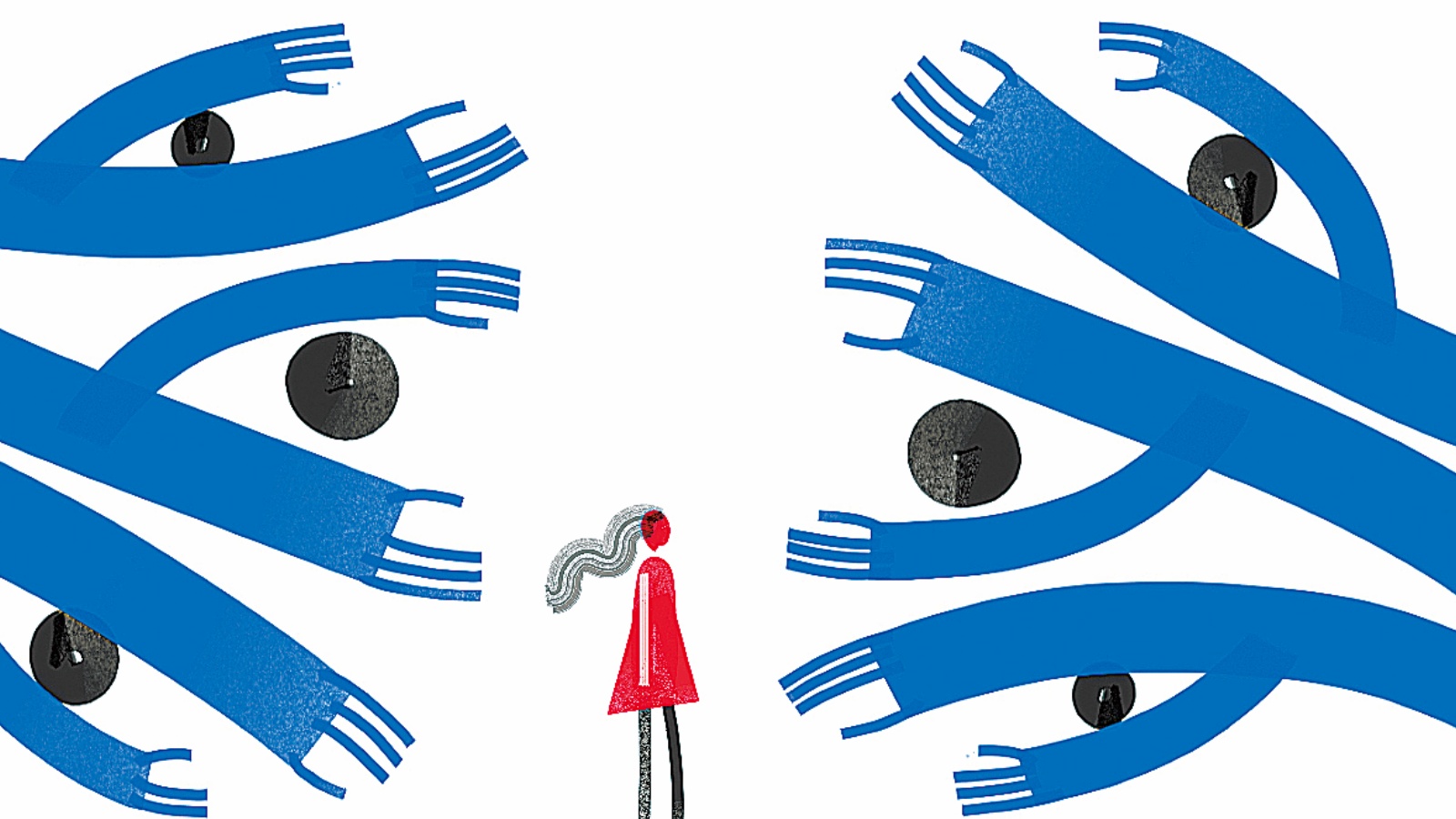
Sad as these events are, they are even sadder as they reinforce stereotypes: Of India as a country where women are inherently unsafe; or, of frat culture in American colleges (Illustration: C R Sasikumar)
South Calcutta Law College is so far away from Cornell in so many ways, and yet they are quite close. They have joined hands in educating us in the inhumanity in-built in the human condition, regardless of whether one is in a guard room in Kolkata or in a frat house in Ithaca, New York. They taught us that a man alone is still a man. In a pack, each man can give himself permission to let go of his humanity because men around him are letting go of theirs. Inside the pack, this becomes the new normal. The broad outlines of what transpired on each campus share common patterns: In both institutions, students used a campus space to sexually assault a woman, a fellow student, as a group and used their phones to facilitate the act with frightening ferocity. In Kolkata, the phone was used as a camera to record; at Cornell, it enabled a group chat to bring others in. The fact that such gang sexual assaults are increasingly recorded and shared tells us something more: The men are performing for others, even those not in the room. The rush of what they feel when they perpetrate these horrendous acts may be nothing compared to the rush of social-media validation to follow.
Sad as these events are, they are even sadder as they reinforce stereotypes: Of India as a country where women are inherently unsafe, with gang rapes happening so frequently that they make international headlines; or, of frat culture in American colleges. The men involved are often in positions of power. The main accused in Kolkata was a former leader of the then ruling party’s student wing. Fraternities in American colleges have unsavoury reputations for binge drinking, peer pressure, and power dynamics involving a few who set the agenda for the pack. These are not the only stereotypical settings. Athletic culture is another one; a Louisiana State University student recently claimed a football player who still plays for the university raped her last year and remains there even after she had filed a complaint.
What’s worse, these incidents are not contained within stereotypical islands. The transformation of a solitary man into a performing wolf doesn’t just happen on college campuses or in dark alleys in India. Mazan is a medieval village in southeastern France, with gentle hills, vineyards and Mont Ventoux looming in the background. It was home to the Pelicots; for nearly a decade, Dominique Pelicot drugged his wife, Gisèle, and invited other ordinary men with ordinary everyday jobs to come and rape her.
If a quiet Provençal village can host such inhumanity, the image of the darkened Indian backstreet, the frat house or the athletes’ dorm explains less than we would like. These places share some common features which turn a man into a wolf and invite a wolf pack: A group for which each man performs, a private space, and confidence that since each is a perpetrator and in on the hideous secret, nobody will tell.
We can, of course, point fingers at so many aspects of the environment in each of these settings. A common culprit is our digital culture, which is a constant everywhere. Truth be told, the internet didn’t invent gang rape. It made it easier to organise, film and share. The wolf pack thrives when each member validates the other — and access to phones, video cameras, platforms, and screens makes it easier to do so. Digital media changes how such assaults are organised, recorded and shared — and, often, provides the motivation for doing it because the act can be shared with a social network. Online, a man with violent fantasies can easily find others who share them. A group chat can create a sense of permission long before anyone meets in person. Recording the act turns the assault into a trophy for the group and a weapon against the victim afterwards.
The one saving grace is that digital tools can cut both ways. The data leave a bread-crumb trail that can lead to the perpetrators. Messages and videos are often the strongest evidence. Pelicot’s own recordings and messages helped convict him and the other men. Online platforms also help survivors, advocacy groups, journalists and others get past institutions that would rather keep mum and wish the whole thing just blows away.
Has internet porn normalised such assaults? The data is not entirely definitive in its conclusions but consider some sobering statistics. England’s Children’s Commissioner, for example, found that 58 per cent of young people surveyed had seen porn depicting strangulation before turning 18, while 44 per cent of children surveyed agreed that “girls may say no at first but then can be persuaded”. In a different survey, 47 per cent of 18-21-year-olds believed girls “expect” physical aggression in sex. This doesn’t prove that pornography causes rape, but sex with an unresponsive woman is exactly what happened in Cornell and Mazan. When such acts become routine online, incapacity can look like an opportunity in real life.
What to do about this?
There are plenty of suggestions that have already been offered about awareness education, preparation for both potential victim and potential perpetrator, ensuring that the institutions do their job.
Consider a few more steps. One is to preserve evidence before deciding anything or before the evidence degrades or disappears. Second, we should work to break up the silence of the group. This, of course, is harder than it seems, but we cannot stop trying. At some point, someone will speak up. Third, institutions and their decision-makers that bury the case should be held accountable, not only to pursue the immediate case but as a cautionary tale for others who might be in the same situation down the road.
The uncomfortable lesson of Kolkata, Ithaca or Mazan is that the conditions for the pack to form are universal and it will come together when it has the opportunity. The pack can show up in both expected locations and in the most unexpected of places. We need to build institutions in each of these that are designed to not look away. We need to use digital tools to look even more closely so that the wolves can be brought to justice before they organise again.
But before we do any of that, we — families, teachers, mentors, friends — must work with the boys, who will one day be men, to respect women. To love them the way they are meant to be loved. To be wary of the pack. Because if we don’t, all other measures are ones that you take only after a heinous crime has been committed.
The writer is dean, Global Business, The Fletcher School, Tufts University; founding executive director of Fletcher’s Institute for Business in the Global Context and nonresident senior fellow, Centre for Social and Economic Progress
KioskNews shows a cleaned-up reading view extracted from the publisher’s page — the original always lives on their site, not ours.